
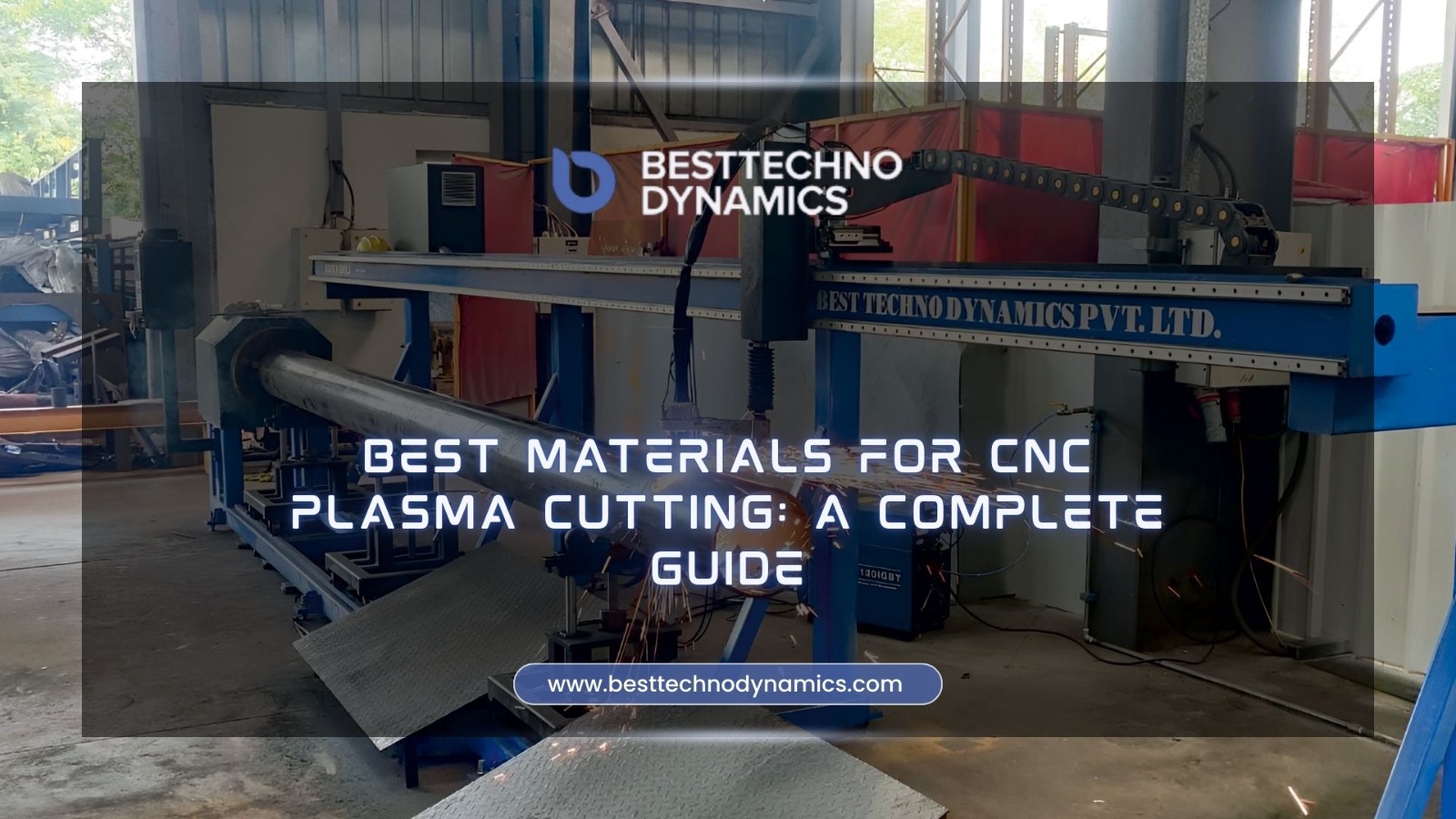
Best Materials for CNC Plasma Cutting: A Complete Guide
Table of Contents
Why material choice matters in CNC plasma cutting? Best materials for CNC plasma cutting Tips for choosing the right material Conclusion Frequently Asked QuestionsWhen we mention clean cuts, smooth edges, and speedy production, the correct material is very important in CNC plasma cutting. Most people are only concerned with the CNC plasma cutting machine they operate, but the material you choose can entirely transform the end product. This guide will assist you in knowing the best materials to use, reasons why they are good, and how to select the most appropriate material to use in your project.
Assuming that you are intending to purchase new equipment, you might already be researching the CNC plasma cutting machine manufacturers in India; however, before that, it is good to know the right materials that would enable you to achieve the best results.
Why material choice matters in CNC plasma cutting?
The choice of the right material is significant since the plasma cutting requires the use of high-temperature ionized gas. As such, each metal responds in a different way to heat. Others melt away, some hold shape well, and some need slow cutting to avoid distortion. Additionally, you save time and waste and increase accuracy when you know the behavior of each material. Therefore, proper material choice also adds life to your consumables and also assists in maintaining consistent performance.
Best materials for CNC plasma cutting
The following are the most widely used materials in CNC plasma cutting, each with its own behavior, benefits, and limitations.
Mild Steel
Mild steel is the most popular and easiest to cut. It produces sharp, smooth edges and can be cut quickly without losing accuracy. Useful for both thin sheets and heavy plates, it is widely used in fabrication workshops.
Stainless Steel
Stainless steel reacts differently to heat but still performs well in plasma cutting. It produces clean edges with minimal burr and is ideal for panels, industrial components, decorative work, and medium-thick sheets.
Aluminum
Aluminum is lightweight and highly conductive, requiring slower cutting speeds—especially for thicker plates. When handled properly, it gives excellent results and is widely used in automotive, furniture, and outdoor/marine applications due to its corrosion resistance.
Galvanized Steel
Galvanized steel has a zinc coating that prevents rust. It can be plasma-cut, but proper ventilation is essential to control fumes. It is commonly used for ducts, frames, brackets, and structural work.
Copper and Brass
These metals conduct heat rapidly, making them challenging for beginners. With proper settings, plasma cutting delivers accurate results. Ideal for electrical components, designs, and artwork.
Weathering Steel (Corten Steel)
Corten steel has a rust-like appearance and high strength. It cuts cleanly and is commonly used for architectural panels, outdoor structures, signage, and long-term heavy-duty applications.
Tips for choosing the right material
Choosing the correct material simplifies work and improves end-quality. Here are practical tips:
- Thickness Matters: Different metals behave differently at higher thicknesses. Aluminum needs slower speed at thick levels; mild steel handles thickness more easily.
- Final Finish: Choose mild steel for smooth edges; choose stainless steel or aluminum if you want a clean, rust-free finish without painting.
- Strength & Durability: Mild steel or Corten steel suits heavy-duty work; aluminum suits lightweight or decorative applications.
- Budget & Availability: Cost and availability matter. Many workshops consult local suppliers or CNC machine dealers in Vadodara for material compatibility and pricing.
- Heat Reaction: Different metals expand differently. Understanding this helps prevent distortion and ensures cleaner cuts.
Conclusion
CNC plasma cutting is not only a matter of skill but also a matter of the appropriate choice of material. The most common are mild steel, aluminum, stainless steel, and galvanized steel, with copper, brass, and weathering steel being used for more special purposes. Knowing how each of them responds to heat, speed, and thickness will make you get the right and cleaner cuts.
Furthermore, whether you are researching the manufacturers of CNC plasma cutting machines in India or you are just planning on upgrading your workshop, it will always help to choose the right material to lead you to greater heights. CNC plasma cutting is easier, quicker, and far more efficient with careful decisions and a clear idea of what you need in your project.
Frequently Asked Questions
1. What materials are most commonly used for CNC plasma cutting?
Mild steel, stainless steel, aluminium, galvanized steel, brass, and copper are most widely used.
2. Does material thickness affect CNC plasma cutting quality?
Yes, thickness affects heat reaction, cutting speed, edge smoothness, and overall accuracy.
3. Is aluminium a good choice for CNC plasma cutting?
Yes, aluminum cuts well with proper speed control and produces lightweight, corrosion-resistant parts.