
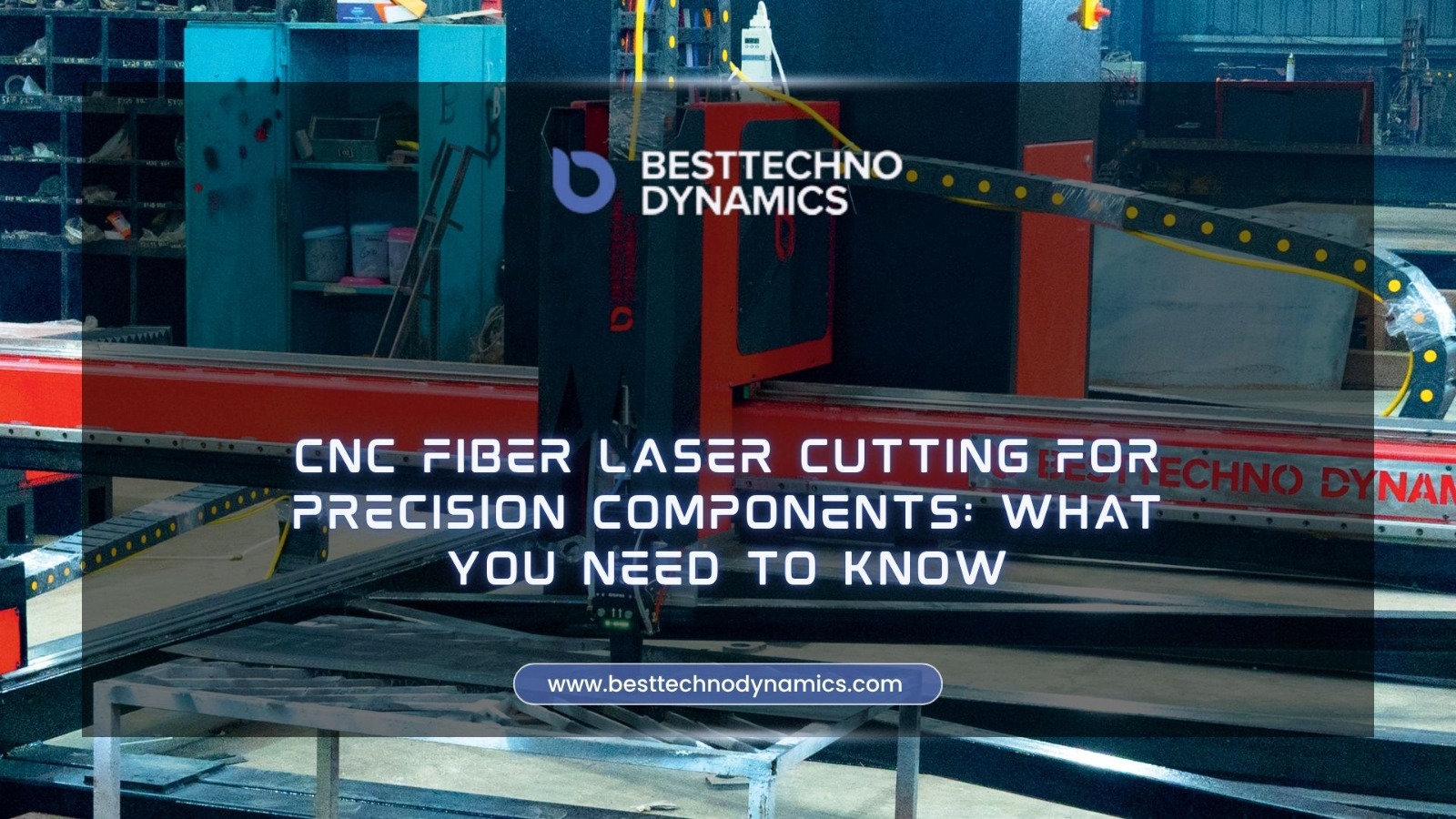
CNC Fiber Laser Cutting for Precision Components: What You Need to Know
Table of Contents
What is CNC fiber laser cutting? How does the process work? Key benefits of CNC fiber laser cutting Applications in precision component manufacturing Choosing the right machine for your needs Conclusion FAQsCNC fiber laser cutting is a computerized technology that uses a focused laser beam to cut materials with extreme precision. In today’s fast-moving manufacturing industries, accuracy and speed are essential. CNC fiber laser cutting has become one of the most important technologies for producing precise, clean, and fast results.
It allows companies to create high-quality, detailed, accurate components at speeds never achieved before. Whether you work in automotive, electronics, fabrication, or metal manufacturing, understanding this technology helps you improve product quality and reduce waste.
In modern times, investing in a fiber laser cutting machine can significantly improve production efficiency while lowering manufacturing costs.
What is CNC fiber laser cutting?
- Design Preparation: A digital design file (CAD drawing) is created for the component.
- Programming: The design is input into the CNC system, which converts it into instructions for the laser machine.
- Laser Cutting: The machine uses a high-power laser to cut the material instantly.
- Finishing: The cut parts usually require little to no additional finishing because the edges are clean and burr-free.
However, with computer control and laser precision, all cuts remain identical even during large-scale production runs.
Many fiber laser cutting machine manufacturers in India are developing new models that offer high speed, energy efficiency, and low maintenance. This makes the technology accessible to a wide range of industries.
Key benefits of CNC fiber laser cutting
CNC fiber laser cutting has so many advantages.
1. Unmatched Precision
The machine cuts very closely, leaving smooth edges on intricate shapes. It suits jobs that require a lot of detail, such as electronics or medical equipment.
2. Speed and Efficiency
Fiber lasers are quicker compared to older procedures. They do not require tool changes to work on both thick and thin materials, saving significant setup time.
3. Lower Operational Costs
Although the initial cost may seem high, long-term savings are substantial. Wear is reduced, scrap decreases, and fewer additional steps are required.
4. Versatility in Materials
An industrial CNC laser cutting machine can cut stainless steel, aluminum, brass, copper, and some plastics. This makes it suitable for production lines that handle multiple materials.
5. Environmentally Friendly
Laser cutting produces less waste and consumes less energy than older cutting techniques. It also reduces the need for consumables such as blades or punches.
Applications in precision component manufacturing
CNC fiber laser cutting has been applied in many industries that require precise and reliable parts. The main applications are listed below:
- Automotive: Used to manufacture gears, brackets, and engine parts with complex shapes.
- Aerospace: Ideal for producing lightweight and strong components that must fit together with high accuracy.
- Electronics: Suitable for fine, small components such as connectors and enclosures.
- Medical Equipment: Used to create surgical instruments and high-precision housings for medical devices.
- Construction and Architecture: Effective for cutting ornamental metal sheets and structural components.
However, it can be used in a variety of ways; hence, new industries are being implemented every year using this technology. As an example, CNC laser machine dealers in vadodara report that local manufacturers would like to have quicker turnaround times on their products and improved finishes.
Choosing the right machine for your needs
When choosing a CNC fiber laser cutting machine, ensure its capabilities match your manufacturing requirements. Below are the key factors to consider:
- Type and thickness of the material: Select a laser power that can cut the materials you use most frequently.
- Cutting speed: Evaluate the machine’s speed to ensure it can handle your routine tasks efficiently.
- Maintenance and support: Choose manufacturers who offer reliable support and easily available spare parts.
- Software compatibility: Ensure the machine is compatible with your design software to maintain smooth workflow.
- Energy efficiency: Newer models consume less energy, helping reduce overall operational costs.
By making a wise selection, you can maintain consistent quality, improve performance, and minimize downtime.
Conclusion
CNC fiber laser cutting is a significant component of contemporary manufacturing. It delivers highly precise, fast, and reliable cuts. It can produce small electronic components as well as large industrial parts, and the technology continues to advance.
A fiber laser cutting machine can help improve product quality while reducing time and material waste in the long run. Additionally, manufacturers in India are continuously enhancing this technology, and dealers in Vadodara are offering better support and updated models. This gives businesses more opportunities to adopt and benefit from modern cutting solutions.
Ultimately, CNC fiber laser cutting is the smartest choice for factories that require high-performance, accurate, and efficient cutting.
FAQs
-
What is CNC fiber laser cutting?
It is an automated cutting process that uses laser beams to cut materials quickly and accurately. -
Which materials can be cut using fiber laser cutting machines?
It can cut silver, aluminum, copper, mild steel, and various other metal materials. -
Why is CNC fiber laser cutting preferred for precision components?
It produces clean edges, maintains close tolerances, and reduces material waste.