
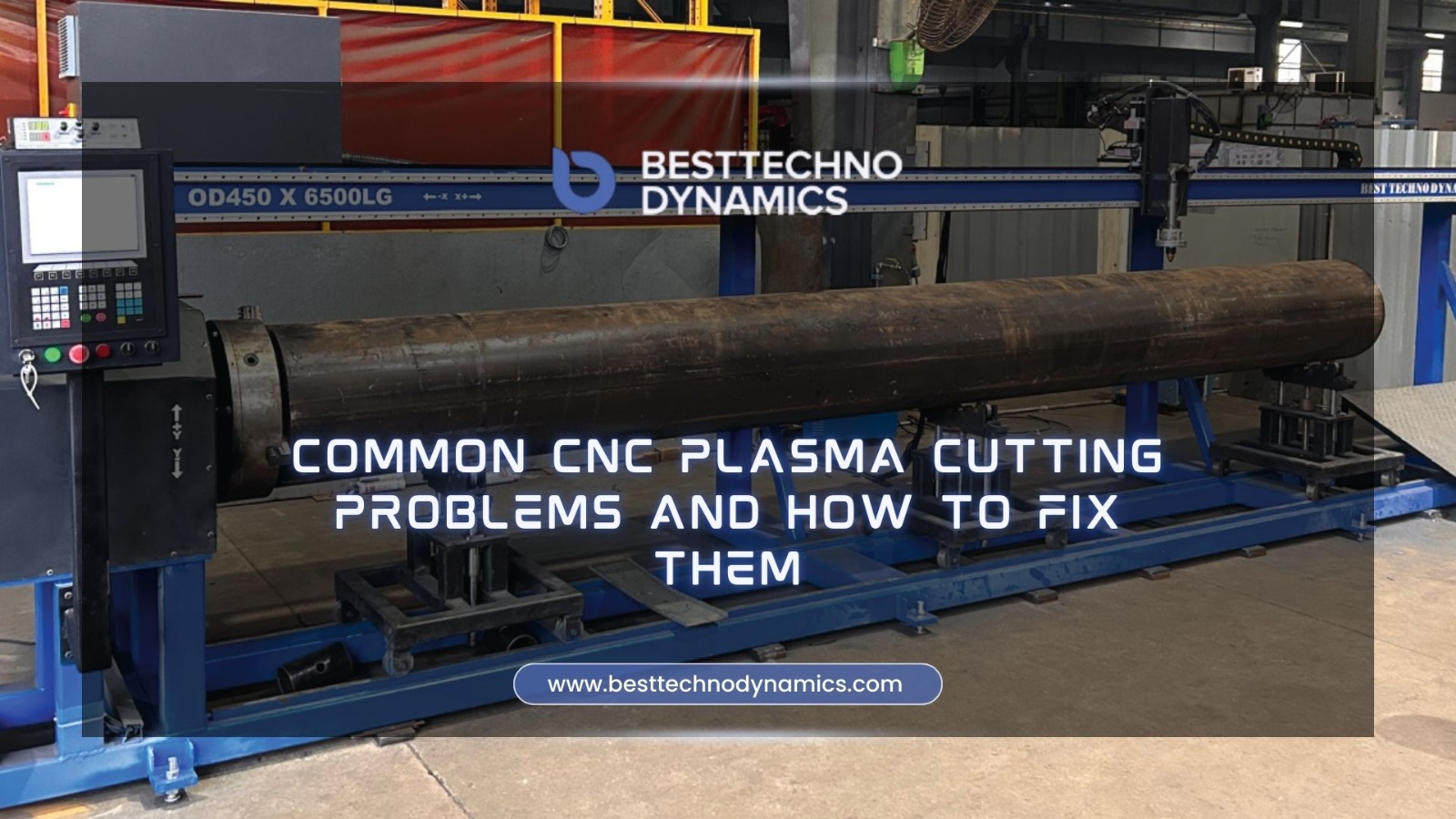
Common CNC Plasma Cutting Problems and How to Fix Them
Table of Contents
Uneven cutting edges Excessive dross on the metal Poor piercing quality Torch height issues Inconsistent cutting speed Material warping Conclusion Frequently Asked QuestionsOne of the greatest methods of metal shaping is plasma cutting. It is quick, strong, and suitable for numerous metal tasks. Even a dependable process may be problematic. Furthermore, a CNC plasma cutting machine may slow down production, increase waste, and reduce the accuracy of the finished part for many operators.
Due to this reason, fabricators tend to consider various CNC plasma cutting machine manufacturers in India to identify models that are smoother running. However, the best machine must be handled and taken care of. Being aware of the typical CNC plasma cutting issues and their solutions can help you to work easier.
This blog will inform you about the most frequent plasma cutting issues and easy solutions to them.
1. Uneven cutting edges
The CNC plasma users have a tendency of having uneven edges. The final part does not appear professional when the edges appear rough or uneven. This normally occurs due to the incorrect height of the torch, unstable gas flow, or incorrect cutting speed.
Maintain the same height of the torch when cutting.
Ensure that the flow of gas is constant and the pressure is adjusted accordingly.
Adjust the cutting speed slightly—little changes can be used to smooth the edges.
Moreover, clean the metal before cutting as well. The arc can be disturbed by dirt, rust, paint, or oil and result in uneven cuts.
2. Excessive dross on the metal
The residue that remains on the bottom of the metal after cutting is called dross. It renders the sheet untidy and adds to the time of finishing. Excessive dross is normally seen when the speed is too slow, the amperage is not correct, or the torch angle is not correct.
How to fix it:
- Speed up the cutting rate when you observe much dross.
- Maintain the torch angle at a constant.
- Control the amperage depending on the thickness of the material.
Additionally, a broken or worn nozzle may result in excessive dross. When the arc flow is not even or the sparks are not even, change the nozzle to achieve clean cuts.
3. Poor piercing quality
The first point of the arc is piercing. When it is not done properly, it may leave large holes, jagged edges, or incomplete piercings. This distorts the form and wastes the material.
How to fix it:
- Adjust the correct pierce delay of the metal thickness.
- Hold the torch in the right position prior to initiating the pierce.
- Do not pierce too near the edge of the sheet.
However, when you begin the pierce, slow down the torch. This assists in making a clean entry prior to the movement of the machine.
4. Torch height issues
Torch height influences the precision and the duration of the consumables. Additionally, when the torch is excessively high, the arc is weak and the cut is not good. When it is too low, it can come in contact with the metal and break the tip.
How to fix it:
- Apply an automatic torch height control system to achieve consistent results.
- Regularly calibrate the height system to prevent erroneous readings.
- Test the consumables frequently, as damaged components may influence height detection.
Furthermore, calibration, though requiring a few minutes, prevents repeat errors and increases the life of machine parts.
5. Inconsistent cutting speed
To have clean cuts, you require a consistent, right cutting speed. When the torch is too slow, the metal will overheat. However, when it travels too rapidly, the arc will not cut completely. The results of the two cases are uneven.
How to fix it:
- The speed should always be set according to the recommended metal thickness chart.
- Maintain the rails, guides, and motors oiled and moving freely.
- It is important not to change direction abruptly when cutting, which may influence the stability of speed.
Moreover, test the cutting speed on a scrap piece also before commencing the main job. This assists you to locate the optimal speed of that material and thickness.
6. Material warping
Warping occurs when the metal becomes overheated during cutting. Thin sheets are highly sensitive to heat and can bend or twist. Therefore, after being warped, the sheet becomes difficult to use and might require rework.
How to fix it:
- Reduce the amperage to minimize heat.
- Raise the cutting rate to reduce heat.
- To prevent vibration and movement, support the sheet.
Furthermore, heat management in CNC cutting sheets is highly essential, particularly in lightweight materials.
Conclusion
CNC plasma cutting is more effective with the knowledge of the frequent problems and correct solutions. Regardless of the scale of the work you do, whether it is small parts or large projects, these simple tips will help you to become more accurate, waste less, and maintain the quality at the same level. The machine can be maintained regularly, calibrated, and set correctly to ensure it lasts a long time.
therefore, following good operating techniques is also very important when many fabricators upgrade to advanced systems by reputed manufacturers of CNC plasma cutting machines in India. Your cutting will remain clean, quick, and dependable for all jobs with the right approach.
Additionally, these fixes can be used to achieve a smoother cut and a more professional finish on all your plasma cutting work, but only with care.
Frequently Asked Questions
-
1. What causes rough or uneven plasma cutting edges?
Rough edges are caused by a wrong height of the torch, unsteady flow of gas, or improper cutting speed.
-
2. Why does excessive dross form during CNC plasma cutting?
Excess dross is produced when the speed is low, the amperage is incorrect, or the nozzle is worn.
-
3. How can I reduce material warping while plasma cutting?
Apply higher speeds and less amperage, and hold thin sheets in place to minimize warping due to heat.