Industry Spotlight
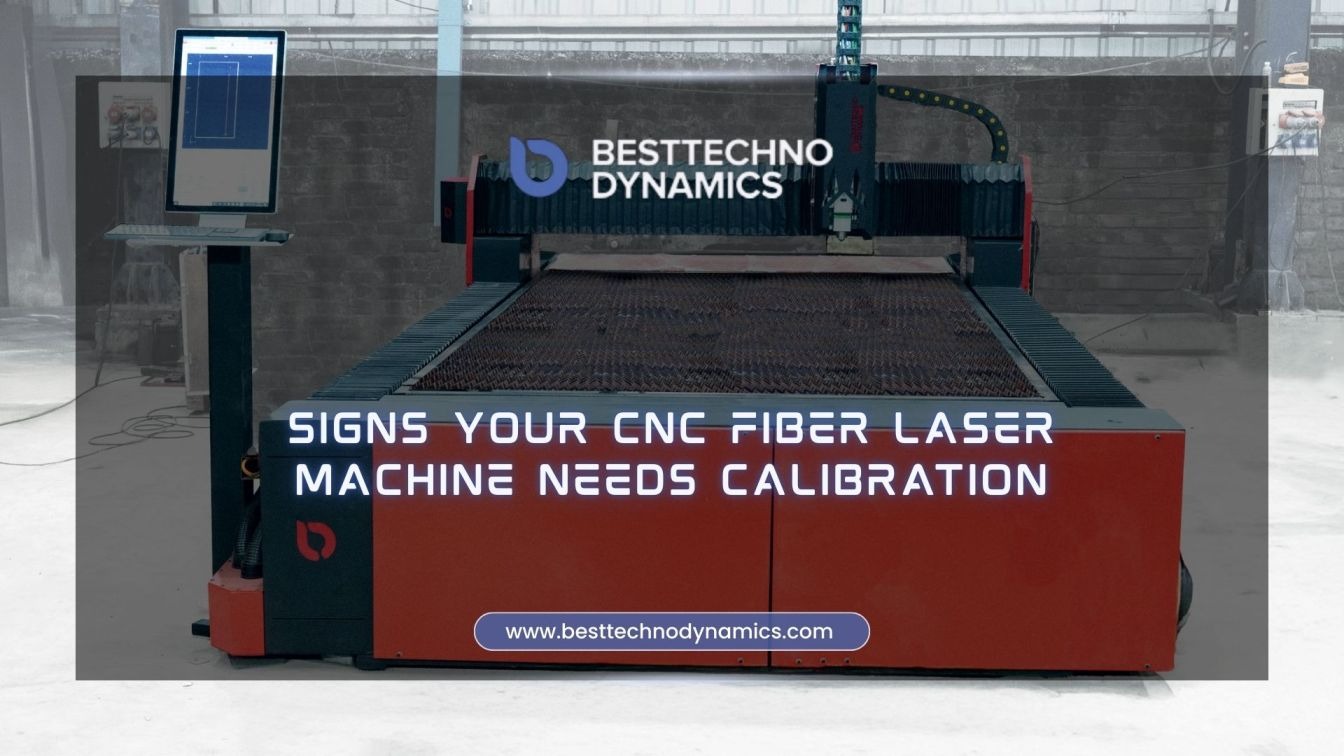
Signs Your CNC Fiber Laser Machine Needs Calibration
When your CNC fiber laser machine begins to produce uneven cuts, rough edges, or slow performance.
Mar 18, 2026
Read More →

CNC oxyfuel cutting is an operation that involves heating and cutting of thick steel with high accuracy using oxygen and fuel gas. The CNC system is used to control the movement of the torch automatically. Most CNC oxy fuel cutting machine manufacturers have constructed the machines to provide precise, clean, and economical cutting to the heavy industries. However, CNC oxyfuel cutting is usually preferred by industries that require cutting thick carbon steel plates, as it is reliable, powerful, and economical.
CNC oxyfuel cutting is a thermal cutting process. It uses:
First, the fuel gas flame heats the surface of the steel to a high temperature. Then high-pressure oxygen is released. The oxygen reacts with the heated metal, creating a chemical reaction that causes the metal to burn and be removed in a controlled manner.
The CNC system controls:
As a result, the machine can automatically cut complex shapes with high accuracy.
Companies such as Best Techno Dynamics assist industries in selecting the appropriate CNC oxyfuel solutions based on material thickness and production requirements, ensuring improved performance and longer machine life.
Applications of oxyfuel cutting include:
However, it cannot be used for stainless steel or aluminum.
The reason is simple:
Oxyfuel cutting is slower compared to plasma cutting. However, for plates thicker than 25 mm, it becomes more cost-effective. Therefore, industries involved in heavy fabrication prefer this technique.
Furthermore, many industries working with a reputable CNC machine manufacturer in Vadodara choose oxyfuel cutting systems for structural steel projects and heavy equipment production.
Here is the simple working process of CNC oxyfuel cutting:
CNC oxyfuel cutting operates in three major phases:
Each stage is important. If any step is not performed correctly, the quality of the cut can decrease.
The CNC controller ensures that all steps are executed accurately according to the programmed design.
Step 1: Design Preparation
It begins with a digital design.
A drawing is drawn by the operator with the help of CAD software.
Machine code is generated out of the design.
This code is read by the CNC controller.
Therefore, the torch is aware of where to move. This automation eliminates manual errors and enhances repeat accuracy.
Step 2: Material Setup
The steel plate is then put on the cutting table.
Moreover, gas supply lines are inspected to maintain the right amount of pressure. A steady arrangement provides an improved quality of cutting.
Step 3: Preheating the Metal
The real cutting has now commenced.
At this point, the metal does not melt. It only reaches ignition temperature. The reason behind this step is that the oxidation reaction requires high heat to initiate.
Step 4: Piercing the Plate
After preheating:
Additionally, this process leaves a hole in the plate. This is called piercing. The cut is normally pierced at the point of inception.
Step 5: Continuous Cutting
Once piercing is complete:
The CNC system causes the torch to move along the programmed path.
The movement must be steady. In case the speed is excessive, the cut will not be finished. Excess slag will be produced in case it is too slow. However, proper speed settings are of great significance.
Most CNC cutting machine manufacturers in India are working on making the motion control systems more efficient in producing a smoother cutting edge.
Step 6: Slag Removal
During cutting:
Minor cleaning can be done after cutting. Nevertheless, the current CNC systems minimize the formation of excess slag.
CNC oxyfuel cutting has a few key components that you should be familiar with in order to know how it functions.
| Component | Function |
|---|---|
| CNC Controller | Controls movement and cutting path |
| Cutting Torch | Delivers flame and oxygen |
| Gas Supply System | Provides fuel gas and oxygen |
| Cutting Table | Holds metal plate |
| Height Control System | Maintains correct torch distance |
Each part works together. Therefore, the quality of machines has a direct influence on cutting accuracy.
Furthermore, trustworthy CNC machine dealers in Vadodara normally suggest machines equipped with advanced height control systems to enhance edge quality.
CNC oxyfuel cutting finds extensive application in:
Moreover, it is ideal for:
Industries are also supported by companies such as Best Techno Dynamics, which offer tailor-made CNC cutting solutions depending on production volume and material thickness.
Advantages of CNC oxyfuel cutting
Here are the main benefits:
Plasma cutting is quicker when working with thin sheets, but oxyfuel is more economical for heavier materials. Thus, it is favored by many heavy industries.
Additionally, CNC automation increases:
Best Techno Dynamics ensures proper machine setup and operator training to maximize productivity while maintaining safety.
CNC oxyfuel cutting is an effective and cost-efficient tool of cutting heavy carbon steel in a precise way. The CNC system controls every step in the design programming to final slag removal to achieve accuracy and efficiency. CNC oxy-fuel cutting machine manufacturers have earned the trust of many industries that have come to rely on them to provide dependable machines that enhance productivity.
Moreover, under the professional advice of Best Techno Dynamics, companies will be able to choose the appropriate cutting solution for their requirements and obtain the same, high-quality outcomes in any project.
What metals can CNC oxyfuel cut?
It primarily cuts low-alloy steel plates and mild steel.
Is CNC oxyfuel better than plasma?
Oxyfuel is cheaper in the case of thick steel.
Does CNC oxyfuel require skilled operators?
Yes, basic training is needed, but CNC reduces manual effort.