Industry Spotlight
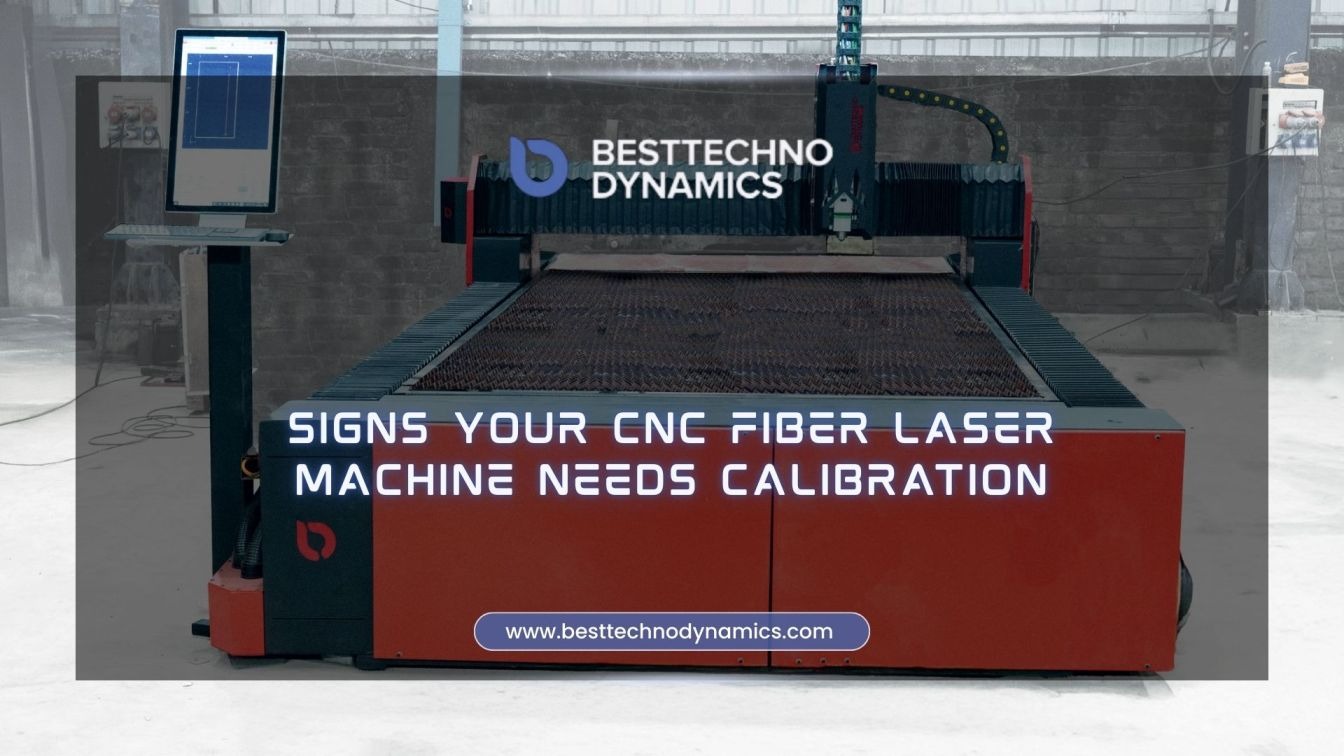
Signs Your CNC Fiber Laser Machine Needs Calibration
When your CNC fiber laser machine begins to produce uneven cuts, rough edges, or slow performance.
Mar 18, 2026
Read More →

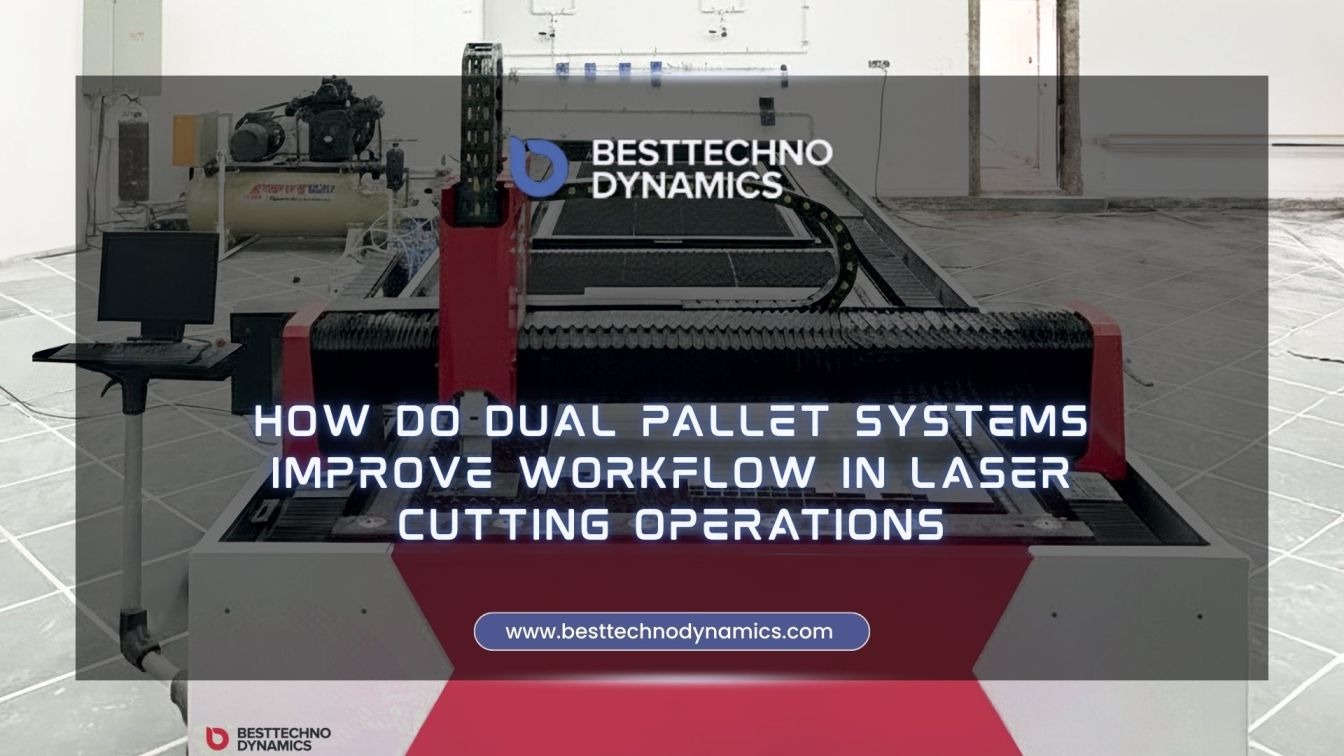
Dual pallet systems improve workflow by allowing loading and unloading while cutting continues. As a result, machine downtime is minimized, production output increases, and operations become more efficient. This system enhances speed, safety, and overall productivity from the first shift to the last shift in modern workshops where a CNC fiber laser cutting machine is used.
A dual pallet system is a smart material handling solution used in laser cutting machines. It operates two pallets alternately. While one pallet remains inside the machine for cutting, the other stays outside for loading raw sheets or unloading finished parts.
After the cutting process is completed, the pallets automatically exchange positions. As a result, laser cutting continues without waiting for manual handling.
Advanced workshops adopt this system because it eliminates unnecessary job interruptions. Additionally, it keeps machines running continuously throughout the day, which is essential for meeting strict production deadlines.
Workflow efficiency has a direct impact on production cost, delivery time, and machine utilization. Even a few minutes of idle time per job can add up to hours of lost productivity each day.
In laser cutting operations, workflow issues typically arise due to:
However, improving workflow is not only about increasing speed. It involves creating a predictable, smooth, and repeatable process that delivers consistent results. This is where dual pallet systems become highly effective.
The largest hidden loss in laser cutting operations is idle time. Conventional single-pallet machines must pause cutting every time material is loaded or unloaded. However, dual pallet systems eliminate this waiting time.
The major workflow enhancements include:
As a result, the laser head spends less time waiting and more time cutting. Many users report a significant increase in daily output after switching to dual pallet machines.
Moreover, dual pallet systems are often recommended by manufacturers such as Best Techno Dynamics for workshops seeking predictable, high-speed production without increasing labor requirements.
Tasks become better organized, and operator efficiency increases. Dual pallet systems clearly separate cutting operations from material handling tasks. As a result, operators can focus on preparation without unnecessary pressure.
Practical advantages for operators include:
Additionally, operators can prepare the next job while the current one is running. This well-structured workflow reduces mistakes and ensures smoother job transitions.
Experienced operators prefer machines equipped with dual pallet systems because the workflow becomes more controlled and less chaotic.
Laser cutting is most important in consistency, particularly with precision parts. Interruptions in the workflow usually result in hasty configurations or omissions. Nevertheless, two pallet systems permit sufficient time to align and check materials properly.
The benefits of quality-based are:
Furthermore, the parts are cleaner and more precise. In the long term, this uniformity enhances customer confidence and lowers the rejection levels.
That is why most laser cutting machine manufacturers in Vadodara develop dual pallet systems to be used by industries with the need to have repeatable quality.
Laser cutting in large volumes needs rhythm. Any disruption interrupts the process and slows down deliveries. Dual pallet systems are constructed in order to sustain this rhythm within the production cycle.
They assist high workflows by:
Moreover, it is easier to schedule due to the increased consistency of time per sheet. Managers are able to organize deliveries more confidently.
Dual pallet systems in workshops are known to improve in a few weeks. The following are not hypothetical benefits. They appear on the shop floor daily.
The most frequent improvements reported are
Moreover, in combination with automation capabilities, dual pallet systems form a semi-continuous production line. This is particularly important to expanding businesses that would like to keep up with the competition.
These practical advantages are emphasized by companies such as Best Techno Dynamics when they advise customers on the choice of machine, through practical experience in the industry.
Expertise and trust perspective Dual pallet systems are not merely add-ons. They are tactical workflow applications. Seasoned manufacturers have observed the impact of minor delays on profitability in the long run.
They recommend dual pallet systems because:
When buyers consider alternatives provided by a CNC fiber laser cutting machine manufacturer, dual pallet systems are frequently set as a future-proof feature, and not as a luxury.
Dual pallet systems enhance the workflow by ensuring that the laser cutting machines are not idle most of the time. They improve productivity, safety, and consistency in output during day-to-day operations. In the case of businesses that deal with CNC laser cutting machine manufacturers in India, a dual pallet system is an intelligent move towards efficient, scalable, and future-proof production.
Furthermore, this system has been proven to have a host of workflow benefits and long-term value, which is why it is still recommended by trusted industry advisors such as Best Techno Dynamics.
What is the main purpose of a dual pallet system?
To enable loading and unloading without halting the laser cutting process.
Does a dual pallet system increase machine cost?
Yes, but it provides long-term productivity and operational savings.
Is a dual pallet system suitable for small workshops?
Yes, particularly for shops that handle repeat or batch work.