
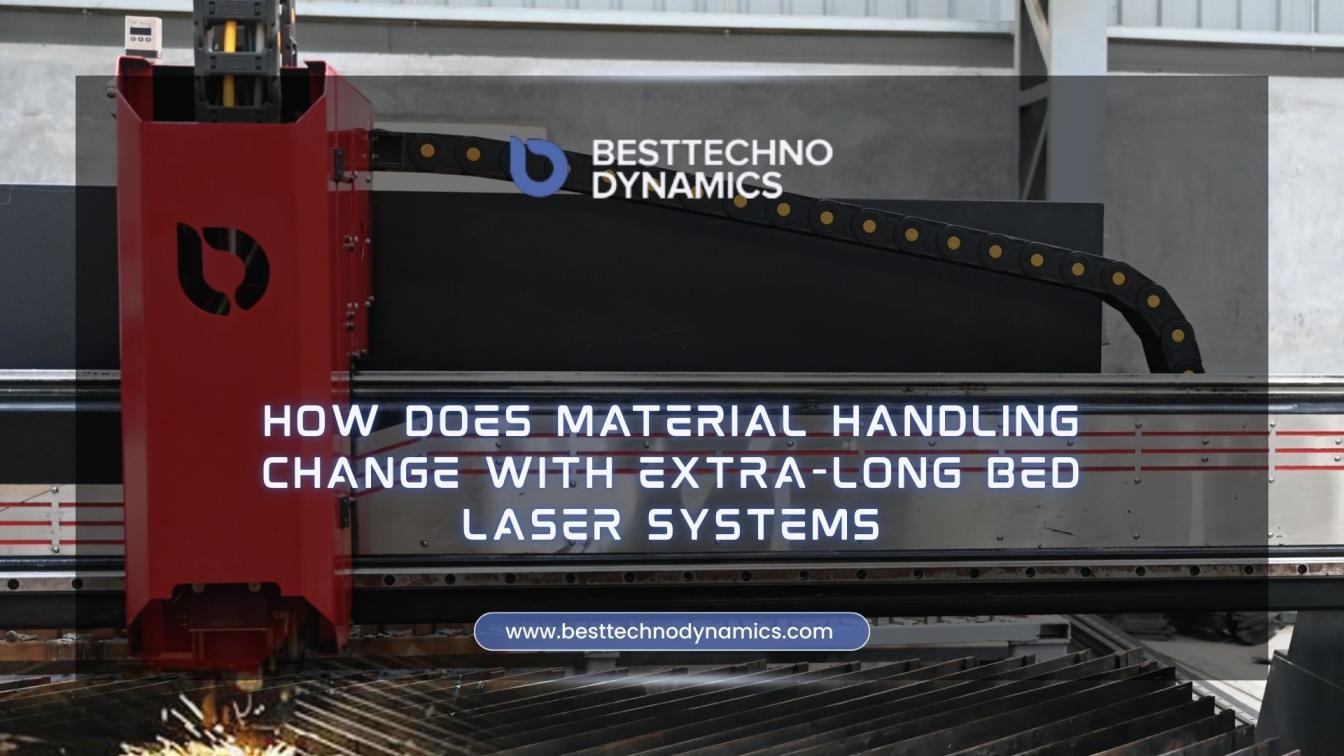
How Does Material Handling Change with Extra-Long Bed Laser Systems?
Table of Contents
Key takeaways Understanding extra-long bed laser systems Changes in loading and unloading process Material movement and support handling Workflow and shop floor layout impact Safety and operator handling adjustments Productivity and cost efficiency improvements Conclusion Frequently Asked QuestionsKey takeaways
- In extra-long laser bed cutting systems, material handling plays a vital role in achieving precise cutting.
- Mechanical support with smooth loading reduces errors, material damage, and operator strain.
- A well-organized shop floor layout improves workflow efficiency, safety, and overall productivity.
- Efficient material handling enhances machine performance, lowers operating costs, and improves return on investment.
The extra-long bed laser system is a machine that is used to cut long metal sheets in one setup. Laser cutting operations involve material handling in a very important way. The handling of materials also varies when the industries change the standard machine to extra-long bed systems. They are created to cut longer and heavier metal sheets, and this creates new challenges and opportunities on the shop floor.
An extra-long bed fiber laser cutting machine requires more planning, movement, and safer ways of handling. Therefore, the knowledge of such changes assists manufacturers to minimize mistakes, conserve time, and enhance the overall output.
Understanding extra-long bed laser systems
Extra-long bed laser systems are constructed to handle large metal sheets in one system. These systems are able to manage longer plates without cutting or repositioning between machines, as is the case with standard machines.
The long bed length has eliminated any form of manual lifting in the material handling process. Rather, formalized approaches to handling are required. Additionally, high-volume production with consistency and speed being the most important factors is often associated with such systems. Consequently, the flow of materials has to be scheduled prior to the stage of cutting.
Changes in loading and unloading process
Extra-long bed laser systems are designed to handle large metal sheets within a single system. These machines can process longer plates without the need for cutting or repositioning between machines, unlike standard laser systems.
The extended bed length minimizes manual lifting during material handling and requires structured handling methods instead. These systems are commonly used in high-volume production where consistency and speed are critical. As a result, material flow must be planned in advance before the cutting process begins.
In the case of longer metal sheets, the loading and unloading process changes significantly. Manual handling becomes unsafe and inefficient, which is why mechanical support systems are widely used.
In CNC fiber laser cutting machines, loading systems are designed to move large sheets smoothly onto the bed. Similarly, unloading systems help remove finished parts without bending or causing surface damage.
Key changes in the loading and unloading process include:
- Use of roller beds or transfer tables
- Reduced manual lifting to prevent operator injuries
- More accurate positioning before the cutting process begins
- Lower time consumption and fewer placement errors
Moreover, smoother loading and unloading operations reduce machine idle time and significantly improve overall production efficiency.
Material movement and support handling
When working with long metal sheets, proper support is required at every stage. Any bending or shifting of the material can negatively affect cutting accuracy. Extra-long bed laser systems are specifically designed to ensure balanced and controlled material movement.
A CNC fiber laser cutting machine manufacturer typically integrates advanced support systems that keep the sheet flat across the entire bed. This reduces vibration and ensures the material remains stable throughout the cutting process.
Significant material handling enhancements include:
- Full-length sheet support to prevent sagging
- Regulated and controlled movement during material feeding
- Consistent and stable positioning throughout the cutting process
Moreover, proper material support results in cleaner cuts and minimizes material waste, improving overall cutting efficiency.
Workflow and shop floor layout impact
Laser systems with extra-long beds require more floor space, which directly impacts material handling and shop floor layout. Long metal sheets must have clearly defined and well-planned entry and exit paths to ensure smooth movement.
In facilities working with CNC laser cutting machines in India, layout planning often starts with material flow. Raw sheets are loaded from one end, processed, and exited without crossing paths, reducing congestion and handling delays.
Key workflow changes include:
- Linear material transportation paths
- Separate zones for raw materials and finished products
- Reduced internal material transport distance
Additionally, a well-planned shop floor layout improves workplace safety and keeps operations organized and efficient.
Safety and operator handling adjustments
Longer and heavier metal sheets pose greater handling risks if not managed properly. Extra-long bed laser systems introduce new safety measures and redefine operator responsibilities to reduce these risks.
Operators are primarily involved in monitoring machine operations rather than manual lifting. Proper training is essential so that staff understand machine movement, safety zones, and how to maintain safe working distances.
Key safety improvements include:
- Reduced physical strain on operators
- Lower risk of sheet slipping during handling
- Improved visibility during loading and unloading operations
Despite increased automation, human supervision remains essential to ensure safe operation and quick response to unexpected situations.
Productivity and cost efficiency improvements
Improved material handling has a direct and positive impact on productivity. Extra-long bed laser systems reduce the need for multiple setups, saving both time and labor during operations.
These machines operate for longer durations with fewer interruptions, leading to higher output without the need for additional manpower. Reduced material damage also helps lower the overall cost of production.
Key productivity benefits include:
- Faster job completion
- Lower material handling errors
- Improved cutting accuracy
- Better return on machine investment
Effective material management plays a crucial role in long-term business growth and operational success.
Conclusion
Extra-long bed laser systems have a great impact on material handling. Starting with loading and support, to workflow and safety, each of the steps must be carefully planned. Properly managed, these systems enhance precision, lessen the labor force, and augment production.
Furthermore, an effective fiber laser cutting machine system will enable manufacturers to work smarter rather than harder. Through concentration on appropriate handling procedures, extra-long bed lasers can be fully utilized by industries to remain competitive in present-day manufacturing.
Frequently Asked Questions
-
What is an extra-long bed laser system?
It is a laser cutting machine designed to cut longer metal sheets efficiently in a single setup.
-
How does material handling change with extra-long beds?
Longer sheets require proper mechanical support, controlled movement, and safer loading and unloading methods.
-
Why is shop floor layout important for these machines?
Clear material flow paths reduce delays, prevent accidents, and ensure a smooth and efficient cutting workflow.
-
How does handling affect productivity?
Efficient handling minimizes errors, saves time, improves cutting accuracy, and increases overall productivity.