How Much Power Do I Need in a Fiber Laser Cutting Machine?
Table of Contents
- Key takeaways
- Understanding the basics fiber laser power
- Power levels: 6kW vs 12kW
- Matching power to material thickness
- Why does the PEB industry need power?
- Cutting speed and production output
- Choosing the right machine supplier
- MAMMOTH: built for heavy fabrication
- Bottom line
- Frequently asked questions
Key takeaways
- Laser power should match your material thickness, not your budget.
- 6kW and 12kW machines both work fine for PEB fabrication — it depends on plate size.
- A wider cutting bed cuts down handling time and pushes up daily output.
- The right CNC fiber laser machine manufacturer India buyers can rely on to save you money down the line, not just at purchase.
If you're cutting mild steel, stainless steel, or aluminium under 12mm, a 6kW fibre laser will get you clean, smooth cuts without any trouble. But once you're regularly working with plates 16mm and thicker, or you need faster throughput on structural steel, a 12kW machine pulls ahead on speed without giving up edge quality. Which one you need comes down to your material, how much you're producing, and the size of the parts you're cutting day to day. This isn't really about chasing the biggest number on a specific sheet. It's about sizing the machine to what you actually cut. Plenty of fabricators end up paying for power they never use, and just as many go the other way and get stuck with slow cycles and rough edges because they underpowered their setup. Here's how to actually get this decision right.
Understanding the basics fiber laser power
Power is measured in kilowatts, and it decides both how fast your machine cuts and how thick a plate it can handle. More wattage doesn't only speed up thin-sheet cutting – it's also what lets you move into thicker plates that a lower-power machine just can't cut cleanly.
What power actually changes for you:
- Cutting speed at a given thickness
- The maximum plate thickness you can process
- Edge quality and how much dross you get
- Size of the heat-affected zone
- Power user for each cut
However, a bigger number isn't automatically the better buy. It only pays off when your work genuinely needs it. Buy more power than you use, and you're just adding to your upfront cost and your electricity bill for no real gain.
Power levels: 6 kW vs 12 kW
This is where most buyers get stuck. There's a persistent idea floating around that PEB work needs 12kW, full stop. It doesn't. Both 6 kW and 12 kW machines handle PEB fabrication well – which one fits comes down to your typical plate thickness and how much you're cutting per day.
| Feature | 6kW Machine | 12kW Machine |
|---|---|---|
| Ideal plate thickness | Up to 12–14mm | Up to 25mm and above |
| Cutting speed on thin sheets | Fast | Faster |
| Cutting speed on thick plates | Moderate | High |
| Best suited for | Small to mid-size fabrication units | Heavy PEB and structural steel units |
| Energy consumption | Lower | Higher, but efficient per output |
| Investment cost | Lower upfront | Higher upfront, better ROI for heavy loads |
Furthemore, if most of what you cut is base plates, gusset plates, and standard members under 14mm, 6kW handles it fine and keeps your running costs down. If you're regularly cutting thick primary frames, long beams, or heavy brackets, 12kW saves real time and cuts down on post-processing and CNC machine manufacturers in Gujarat will be helpful in this matter.
Matching power to material thickness
Thickness is the biggest single factor here. An underpowered machine on a thin 3mm sheet is no problem. Try that same machine on a 20 mm plate, though, and you're looking at slow cuts, rough edges, and dross that needs grinding off afterwards.
A rough guide:
- Under 10mm: 6kW handles it without strain.
- 10–16mm: 6kW still works, but 12kW is noticeably quicker.
- 16–25mm: 12kW is the practical pick.
- Above 25mm: you'll generally need 12 kW or more.
Get this right at purchase, and you avoid bottlenecks later. A lot of shops end up upgrading within a year or two simply because they bought for today's job and not next year's.
Why does the PEB industry need power?
PEB fabrication means cutting large volumes of structural steel – primary frames, secondary members, base plates, and connection plates – often across a mix of thicknesses depending on the project. That's exactly why a dependable PEB laser cutting machine supplier India reliability matters so much to the fabricators.
What PEB work generally demands:
- Dimensional accuracy that holds across large batches
- Consistent quality whether the section is thin or thick
- Minimal waste on steel that isn't cheap
- A machine that can run continuously without dropping performance
Both 6kW and 12kW machines can serve PEB manufacturers well here. Smaller PEB units working with lighter gauge steel do just fine on 6kW. Larger plants cutting heavy structural frames get more out of 12 kW's speed on thick material.
Cutting speed and production output
Power isn't the only lever on output – bed size matters just as much, especially for long structural parts. A large cutting area, something like 3100mm x 12500mm, lets you process long sheets in one setup instead of repositioning material over and over.
That translates to less:
- Loading and unloading time
- Handling error
- Idle machine time
- Delay on the overall project
Therefore, pair enough power with a spacious bed and your production efficiency goes up noticeably, particularly on long structural components that would otherwise need several setups on a smaller table.
Choosing the right machine supplier
Power specifics are only part of the picture. Build quality, after-sales support, and manufacturing reliability matter just as much as the number on the specific sheet. That's why working with an established CNC fiber laser machine manufacturer India businesses already trust makes a real difference over time.
Before you commit to a supplier, check:
- Their track record in your specific industry
- Whether they offer both mid-power and high-power models
- Local service and spare parts availability
- Warranty terms and training support
- References from customers doing similar work
A good supplier helps you figure out what you actually need instead of pushing the highest-powered option on the floor. If you're in western India, a CNC machine manufacturer in Gujarat also means faster service response and easier plant visits during setup.
MAMMOTH: built for heavy fabrication
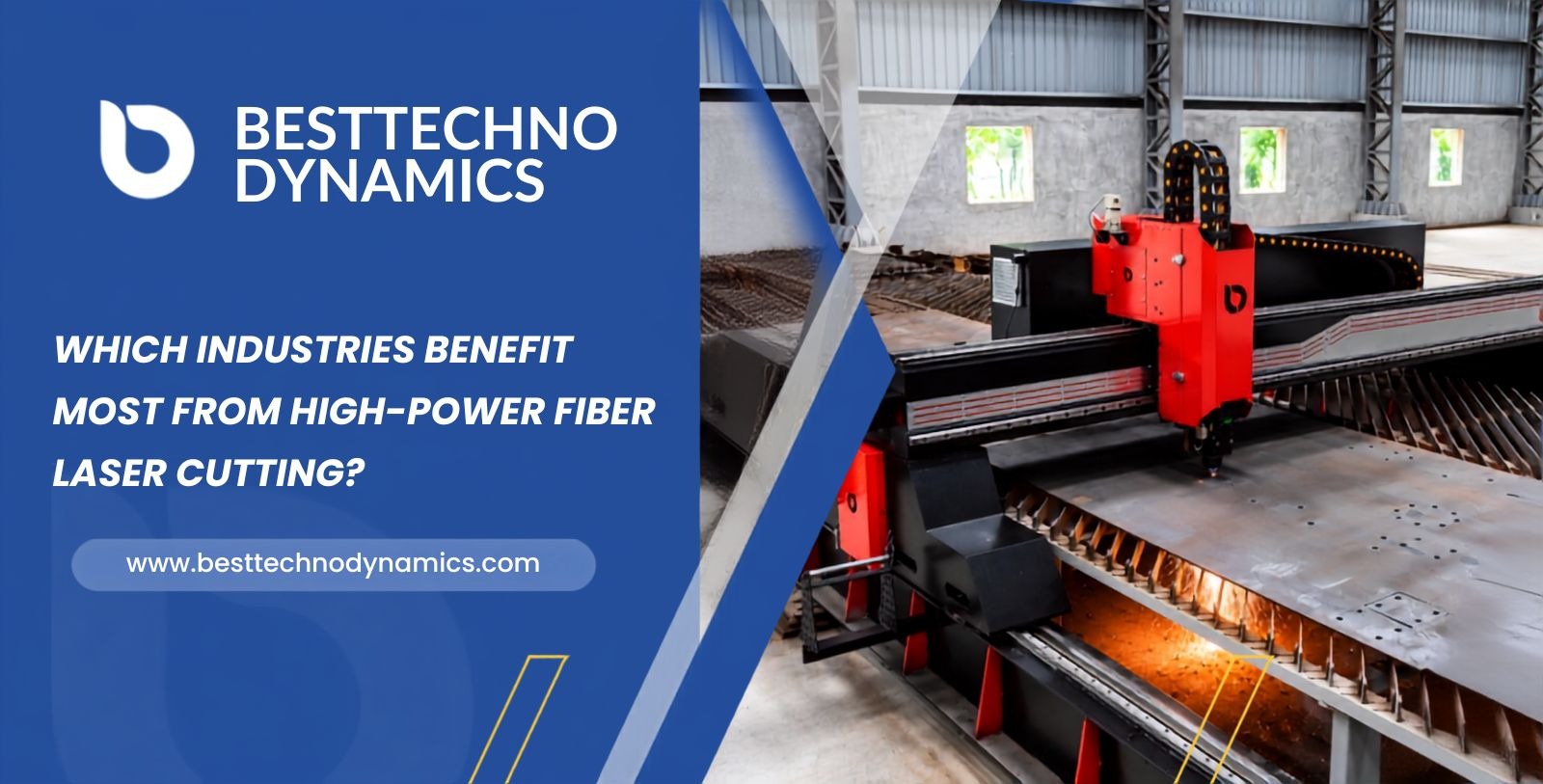
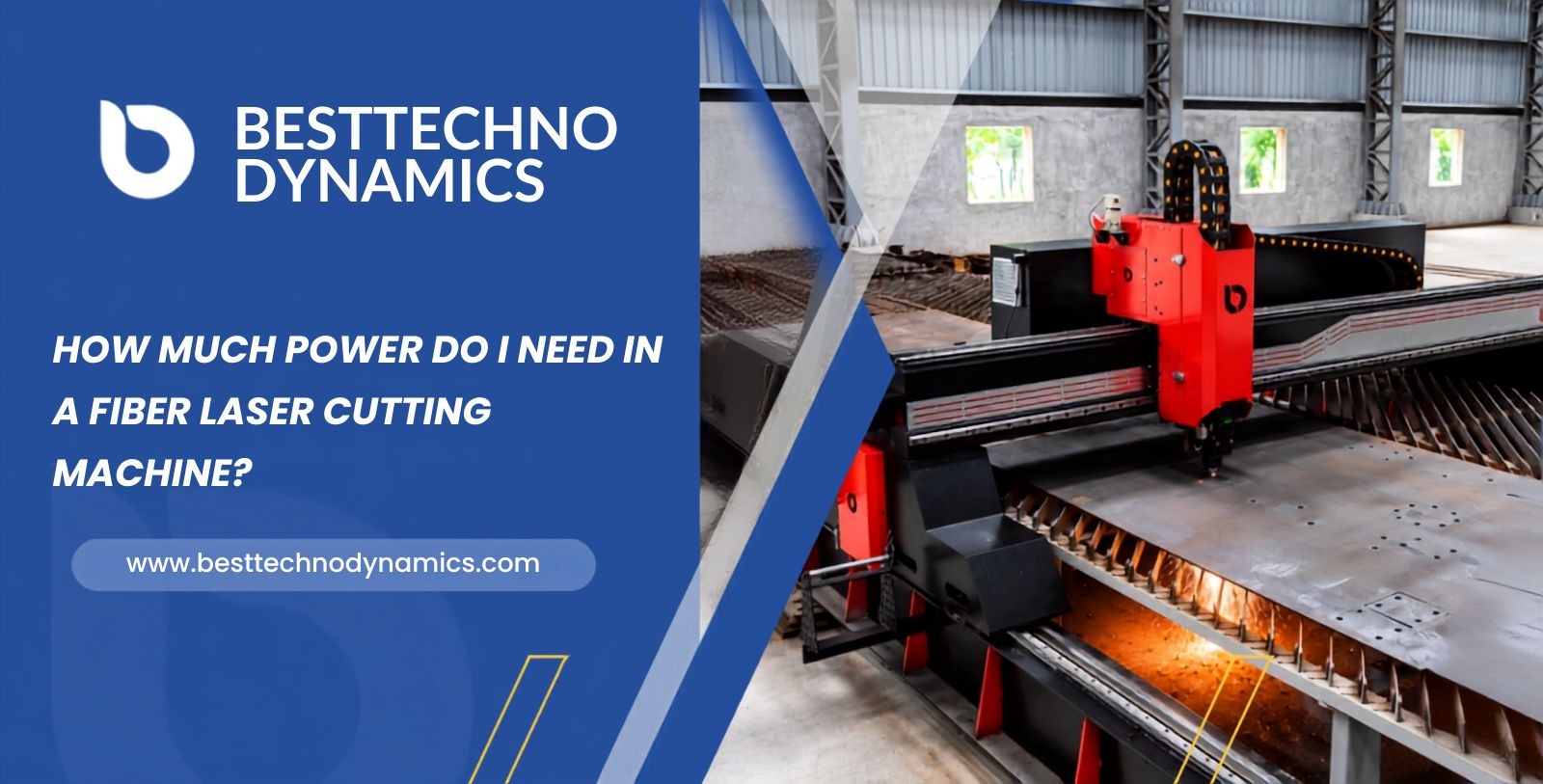
Besttechno Dynamics builds the MAMMOTH for fabricators who need serious cutting capacity – a heavy-duty CNC fibre laser machine designed around PEB and structural steel work. It runs a 12kW fibre laser source with an extra-large 3100mm x 12500mm bed, built for long plates and thick structural sections.
MAMMOTH is set up to manufacture primary structural frames, secondary members, base plates, gusset plates, connection plates, and reinforcement brackets. The oversized bed cuts down repositioning time, and the high-power source keeps edges clean even on thick material.
That said, not every shop needs 12kW. Besttechno Dynamics also builds 6kW machines for units working lighter gauge material, so you get something sized to your actual workload instead of paying for capacity you'll never touch. Talk to their team before you decide – it's the fastest way to land on the right specific the first time.
Bottom line
The right laser power comes down to your actual material thickness and production needs – not the biggest number on a specific sheet. A 6kW machine is good for lighter fabrication work, and a 12kW machine such as the MAMMOTH pays for itself in heavy fabrication projects on structural steel and PEB projects. Either the machine will match your workload, or it won't, but either way, that's what will save you money and prevent production from being slowed down.
When you're prepared to find the right fit, contact the team for a consultation call about power and bed size for your shop.
Frequently asked questions
1. What laser power is best for cutting mild steel?
If the issue is up to 14mm, 6kW will suffice. A 12kW machine will cut faster and provide cleaner edges above 16mm, with less cleanup following.
2. Is 12kW always necessary for PEB fabrication?
No, both the 6 kW and 12 kW are fine for PEB. Industry isn't the issue; it's your normal plate thickness and volume per day.
3. Does higher laser power mean higher electricity costs?
Yes, but you get more efficiency when you get it back. The amount of energy the thicker plate can be cut with in lower-power machines may compensate for the additional expense over time.
4. How does cutting bed size affect productivity?
A larger bed will allow you to make long plates in one setup rather than repositioning. That is all that can really help to make a difference on the throughput of structural works every day.
5. Can one machine handle both thin and thick sheets?
Yes, it is safe in the rated range. It is noticeably faster to cut very thick plates on a high-power machine than on a lower-power machine.
6. What should I check before choosing a supplier?
Their knowledge and experience of the industry, after-sales support, ready-on-hand spares and warranty conditions. That's all covered in a PEB laser cutting machine supplier India manufacturers can rely on.
7. Is a 6kW machine a good starting investment?
Yes, if you are mostly in the business of cutting light- to medium-gauge steel. Lower initial price, lower operating costs, and still great performance for the price.
8. Why does local supplier support matter for machine buyers?
Faster servicing, easier training, and rapid spare part availability. If things go wrong, a CNC machine manufacturer in Gujarat can help you to cut down the downtime.