What Is the Maintenance Schedule for a Fiber Laser Cutting Machine?
Key takeaways
- Regular checks of lenses and nozzles help in avoiding typical defects in cutting operations while ensuring uniform results.
- Failure to pay attention to the cooling systems can lead to breakdown of laser sources in manufacturing plants.
- Monthly and yearly planned maintenance can ensure a longer life of equipment, exceeding ten years.
- An expert CNC machine manufacturer in the state of Gujarat makes trained technicians available for its customer base.
Why do maintenance schedules actually matter?
A fiber laser machine looks indestructible from the outside. Thick steel frame, sealed cutting head, industrial-grade everything. The parts actually doing the work are small and unforgiving: the focusing lens, the protective glass, the nozzle tip.
Dust settles on optical devices only after a few hours, not days. Even a thin layer of dirt on a protective lens leads to scattering of the laser beam. This scattering comes in the form of burrs, deposits, or even incomplete cuts on your finished product. Fabricators discover this error only after having rendered numerous sheets useless and blaming it on the machine.
There is also an economic aspect, and it is quite significant. A 2024 study conducted by a significant Indian organization representing the sheet metal industry indicates that unplanned machine failure costs medium-sized fabrication companies an average of 40,000 to 60,000 rupees a day in terms of lost production and reworking. Most of that traces back to something preventable: a clogged nozzle, contaminated coolant, a misaligned beam path nobody caught early enough.
Every serious CNC fiber laser machine manufacturer India works with builds this guidance directly into the operating manual, because a machine sitting idle for repairs isn't earning anyone money.
Daily maintenance checklist
These take fifteen to twenty minutes and should happen before the first cutting job of the day.
Clean the Protective Lens and Nozzle: Wipe the protective window with lens-safe cleaning paper, never a shop rag. Even microscopic scratches on the lens surface reduce beam quality over time. Check the nozzle for spatter buildup and clear it if you find any.
Check Gas Pressure and Purity: Fiber lasers rely on assist gases (nitrogen for stainless steel, oxygen for mild steel) at specific pressures. Low pressure or moisture-contaminated gas leads straight to poor edge quality and more dross than you want to deal with.
Inspect Cutting Head Alignment: A quick visual and functional check confirms the nozzle sits centered and the head moves smoothly along its rails. Misalignment usually shows up as an uneven kerf width across a test cut, which is an easy thing to catch if you're actually looking.
Wipe Down Guide Rails and Rack: Metal dust and cutting debris build up on the linear guides fast, faster than most operators expect. A dry cloth wipe at the start of the shift keeps particles from grinding into the rail surface over weeks of use.
Weekly maintenance tasks
Inspect and Clean Air Filters: The cutting bed's exhaust and filtration system pulls in fumes and fine particulates constantly. A clogged filter reduces suction efficiency, and that means more smoke and residue settling back onto your workpiece and optics than you'd like.
Check Focus Lens Condition More Thoroughly: Beyond the daily wipe, a weekly inspection under better lighting catches pitting or coating damage that daily cleaning misses. Replace the lens if it shows visible degradation. Running a damaged lens risks permanent damage to the laser head, and that's a far more expensive fix than a lens swap.
Verify Belt Tension and Drive Components: Loose belts or worn gear racks turn into positioning errors that compound over a production run. A five-minute tension check weekly catches this before it turns into a calibration headache.
Test Emergency Stop and Safety Interlocks: Not glamorous, but essential. Weekly testing confirms your safety systems actually work when needed, not just when the machine was brand new and everything was still tight.
Monthly deep maintenance
Clean the Full Optical Path: This goes beyond the lens. Mirrors, beam combiners, and the entire path from laser source to cutting head need a thorough cleaning pass. Contamination anywhere along this path drags down cutting power and consistency.
Inspect Cooling System Performance: Fiber laser sources generate real heat, and the chiller unit keeping them stable needs monthly attention. Check coolant levels, look for leaks, and check that the coolant hasn't degraded. Old or contaminated coolant is one of the top causes of premature laser source failure, and it's an easy one to overlook because nothing looks obviously wrong until it does.
Check Electrical Connections and Cables: Loose terminals and worn cable insulation cause intermittent faults that are maddening to track down later, usually at the worst possible time. A monthly visual inspection of the electrical cabinet and cable runs catches most of these before they become a 2 a.m. problem.
Lubricate Moving Mechanical Parts: Rails, bearings, and drive screws need the right lubrication on a monthly cycle, using whatever grease or oil type your manufacturer specifies. Over-lubrication attracts more dust. Under-lubrication accelerates wear. Both are common, and both are avoidable.
Annual professional servicing
Once a year, bring in a trained technician for a full system audit. This should cover:
- Laser source output power verification against factory specifications
- Precision calibration of the cutting head and motion system
- Full inspection of the beam delivery fiber for wear or damage
- Software and firmware updates
- Structural check of the machine frame and gantry for wear
However, this is where working with an experienced PEB laser cutting machine supplier India makes a real difference. Someone who understands both the machine and the demands of structural steel cutting will catch issues a generic technician might walk right past.
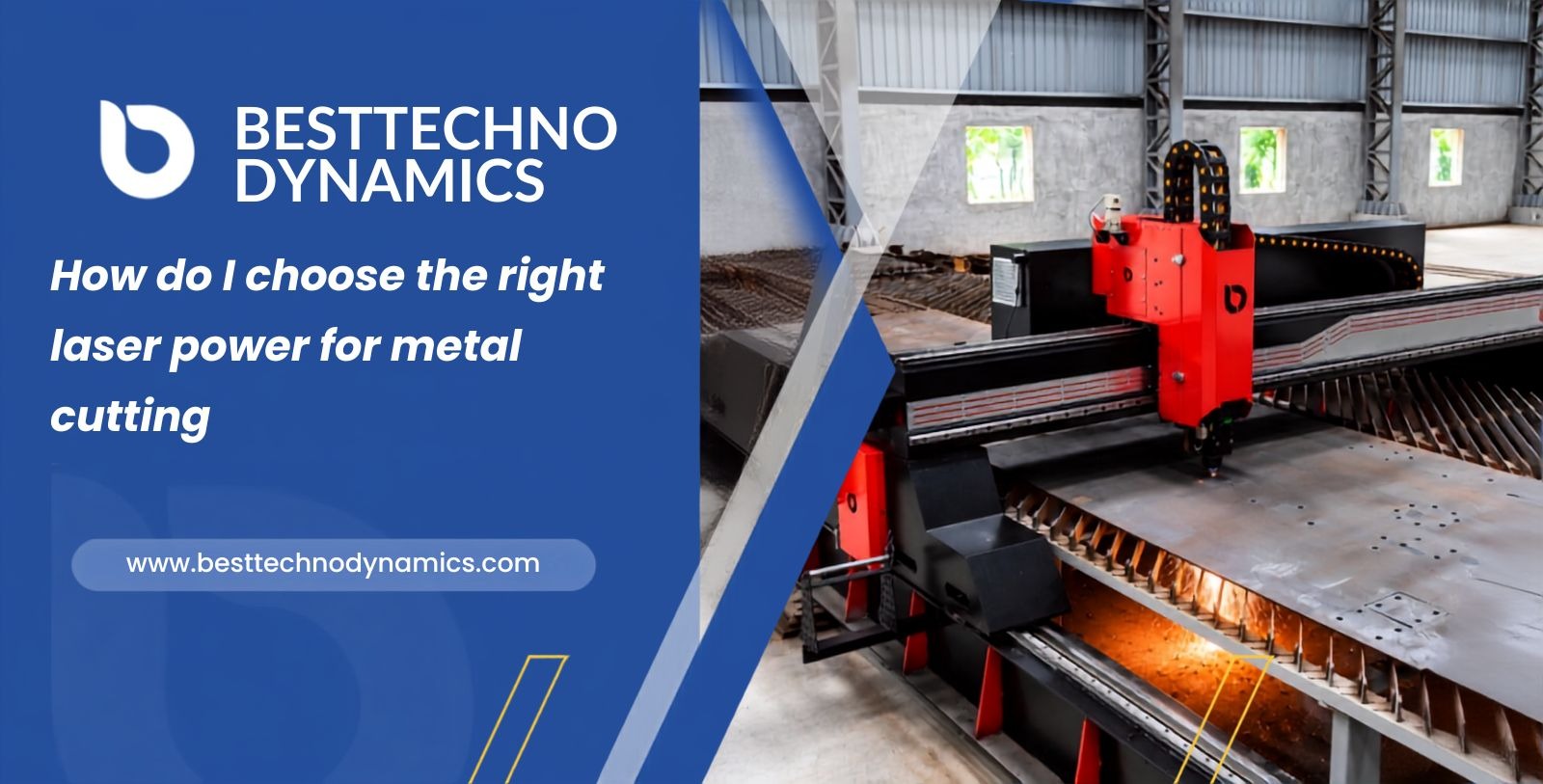
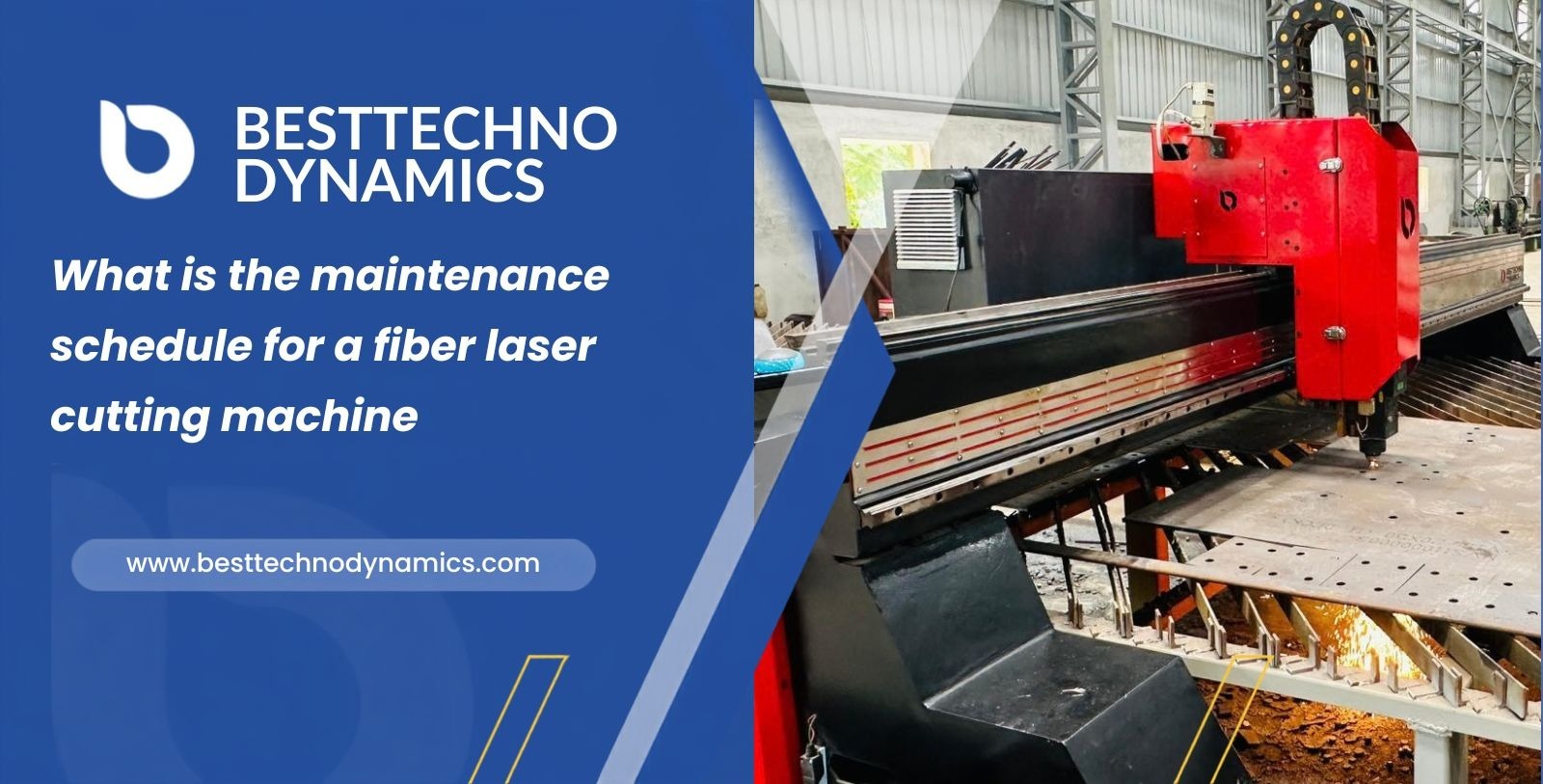
Maintenance for heavy-duty machines like MAMMOTH
Larger, more powerful machines carry their own maintenance considerations, and Besttechno Dynamics designed the MAMMOTH series with that in mind from the start.
MAMMOTH runs on a 12 kW fiber laser source across a 3100 mm × 12500 mm cutting bed, built for PEB fabrication, structural steel processing, and heavy engineering work. Worth saying clearly: the 12 kW variant isn't the only option here. The 6 kW configuration handles a large share of PEB and structural cutting work just as well, and choosing between the two really comes down to your typical plate thickness and production volume, not an assumption that more power is automatically the better call.
A few things deserve extra attention on a machine this size:
- Rail length matters: With a 12500 mm bed, the guide rails cover far more distance than a standard machine, so debris builds up faster simply because there's more surface exposed to cutting fumes and metal dust.
- Cooling load is higher: A 12 kW source generates more heat than smaller units, so chiller performance checks matter more here too. Coolant degradation on a high-power machine shows up as power inconsistency sooner than it would on a lower-powered one.
- Structural checks matter more at this scale: The gantry spanning a bed this large takes on more mechanical stress during high-speed operation. Skipping the annual structural inspection isn't really an option on equipment built for continuous heavy plate cutting.
Therefore, fabricators running MAMMOTH for primary structural frames, base plates, gusset plates, or connection components usually see faster project turnaround, mainly because the oversized bed cuts down on repositioning during long structural steel runs. That advantage only holds up if the maintenance schedule keeps pace with the heavier use these machines typically see.
Common maintenance mistakes fabricators make
- Skipping daily checks when production is busy: The most common mistake by far, and an understandable one. Nobody wants to slow down a rush order. But a five-minute lens check now beats a scrapped sheet later.
- Using the wrong cleaning materials: Shop rags, household glass cleaner, compressed air blown too close to the lens. All of it can cause damage that costs a lot more to fix than it would have cost to avoid.
- Ignoring gas quality: Cheap or moisture-contaminated assist gas is a quiet cause of poor cut quality that a lot of operators end up blaming on the machine instead.
- Delaying coolant changes: Old coolant loses its thermal properties gradually, so the performance drop is easy to miss until the laser source itself starts failing.
- Not training every operator on the schedule: Maintenance only works if every shift follows it, not just whoever got trained first.
What should a good manufacturer provide?
Not every manufacturer treats maintenance the same way, and it's worth checking this before you buy. A reliable CNC machine manufacturer in Gujarat that businesses can depend on long-term should give you:
- A written, machine-specific maintenance manual, not a generic PDF
- Trained service technicians available for annual audits
- Genuine spare parts availability, especially for lenses, nozzles, and cables
- Remote diagnostic support for troubleshooting between service visits
- Clear terms on how warranty coverage ties to maintenance compliance
Besttechno Dynamics builds this into the ownership experience from day one. A machine that's hard to maintain properly ends up costing more over its life than the purchase price ever suggested.
Expert recommendations
A few things consistently make the biggest difference across the PEB fabrication units and structural steel shops we've worked with:
- Keep a physical maintenance log near the machine: Digital tracking is fine, but a simple checklist an operator signs daily builds a kind of accountability software reminders rarely manage.
- Train at least two people per shift on the full routine: The machine doesn't care who's on leave that day.
- Budget for lens and nozzle replacement as a recurring cost: Not a surprise expense. These are consumables. Treating them that way in your operating budget stops the temptation to stretch their life past what's safe.
Conclusion
A fiber laser cutting machine rewards consistency. The daily five-minute lens check, the weekly filter inspection, the monthly cooling system review. None of it feels urgent on its own, but skip it often enough, and it adds up to real production losses and a shorter machine life.
Whether you're running a compact unit for smaller jobs or a heavy-duty machine like MAMMOTH on large-format PEB and structural steel work, the principle holds: the machine performs as well as the maintenance behind it. Choosing a CNC fiber laser machine manufacturer India that fabricators can actually rely on, for both the equipment and the support that comes after, makes that consistency a lot easier to keep up.
Ready to talk maintenance schedules or figure out which machine, 6 kW or 12 kW, fits your production needs? Get in touch with Besttechno Dynamics for a consultation built around your fabrication requirements.
Frequently asked questions
- How often should a fiber laser cutting machine be cleaned?
The optical path must be cleaned thoroughly monthly, filters should be cleaned weekly, and the lens and nozzle daily. If any of these are omitted, there is an increased likelihood of cutting defects. - What happens if I skip regular maintenance?
The cutting speeds will generally be slower, dross will be more noticeable, the edges will be rougher, and eventually, the laser source will not last as long. A series of small issues accumulates quickly on an unmaintained computer. - How long does a fiber laser source last with proper maintenance?
Under normal use, the fiber laser source can operate for 80,000 to 100,000 hours with a well-maintained fiber laser source, but this can be influenced by the cooling system's maintenance and usage intensity. - Do I need a professional technician for annual servicing?
Yes. Even the best in-house teams are unlikely to have the specialized measurement tools or training needed for annual calibration and power verification. - What's the biggest cause of machine downtime in fabrication units?
The two most common cooling system problems and sources of contaminated assist gas are cooling system failures and inconsistent maintenance schedules, which both are mostly preventable. - Is maintenance different for a 12 kW machine compared to a 6 kW machine?
The basic procedure is the same but with the higher power machines such as the 12 kW MAMMOTH it is necessary to pay more attention to cooling performance and rail cleanliness, primarily because of the larger bed and higher heat output. - How do I choose a reliable PEB laser cutting machine supplier in India?
Seek out manufacturers that can supply written maintenance records, skilled service personnel, and genuine parts, in addition to a fair trade in the machine itself. - Can poor maintenance void my machine warranty?
Often, yes. Many manufacturers will make warranty coverage contingent on maintenance compliance and record keeping will ensure that you are protected from a contractual standpoint and will be operationally protected as well. - What tools do I need for daily maintenance checks?
It is covered by lens-safe cleaning paper, a soft dry cloth to clean the rails, a gas pressure gauge, and a basic visual inspection. There are no special requirements necessary at this stage. - Should maintenance schedules differ between mild steel and stainless steel cutting operations?
For stainless steel, checking gas purity is more important due to the fact that the quality of nitrogen directly influences edge oxidation; for mild steel, the checking of oxygen pressure consistency is more important.