Can a Fiber Laser Replace Plasma Cutting in Heavy Fabrication?
Table of Contents
Key Takeaways
- A CNC fiber laser machine cuts steel faster and cleaner than plasma, with far less finishing work needed afterward.
- For PEB and structural steel, fiber laser handles both thin sheets and thick plates without changing your process.
- Power isn't one-size-fits-all — a 6kW machine suits many mid-size shops just as well as a 12kW unit suits high-volume PEB plants.
- Picking the right CNC fiber laser machine manufacturer India buyers can rely on matters more than chasing the highest kW number.
As per the topic the answer is yes. In most heavy fabrication work today, fiber lasers can replace plasma cutting, and for structural steel, PEB components, and thick plate work, they usually do the job better. Fiber laser cuts faster, leaves cleaner edges, and needs less rework than plasma. Plasma still has its place for very thick material or rough cutting where edge quality doesn't matter much. But if your shop is producing base plates, gusset plates, or structural frames day after day, fiber lasers change how much time and material you lose per job.
If you've run a plasma table for years, this switch probably sounds like a big leap. It isn't as dramatic as it seems, and once you see the difference in scrap and rework, the decision tends to make itself.
Why is heavy fabrication rethinking plasma?
Plasma cutting has been the default in fabrication shops for decades, and it's not going anywhere overnight. It's affordable, it's familiar, and for very thick steel it still gets the job done. But plasma has real limits that show up the moment you're running high volumes or tight tolerances.
However, the heat-affected zone from plasma is wider than most shops would like. That means more grinding and more time spent cleaning up edges before parts move to welding or assembly. On long structural members, plasma can also drift slightly off-line, which adds up when you're producing dozens of similar pieces for a PEB project.
None of this makes plasma a bad choice. It just means shops handling repetitive structural work are starting to ask whether there's a faster way to hit the same tolerances without the extra labor.
What makes fiber lasers different?
A CNC fiber laser machine manufacturer India uses a focused laser beam instead of an ionized gas jet. The cut is narrower, the edge is smoother, and the heat-affected zone is much smaller. For a shop cutting primary structural frames, gusset plates, or connection brackets, that difference shows up directly in how much time you spend at the finishing station.
Fiber lasers also hold tighter tolerances over long cuts. On a 10-meter structural member, that consistency matters — a part that's slightly off at one end can throw off an entire assembly down the line.
A few practical differences worth knowing:
- Cleaner cuts mean less grinding before welding.
- Faster cutting speed on both thin and thick material
- Lower running cost per hour compared to plasma consumables
- Better accuracy on long, large-format sheets
Fiber laser vs plasma: side-by-side comparison
| Factor | Fiber Laser | Plasma Cutting |
|---|---|---|
| Cut quality | Clean, minimal dross | Wider kerf, more dross |
| Speed on thin-medium steel | Faster | Moderate |
| Heat-affected zone | Small | Larger |
| Finishing work needed | Low | Higher |
| Running cost | Lower over time | Higher (consumables) |
| Best suited for | PEB, structural steel, sheet metal | Very thick plate, rough cuts |
Neither machine is "better" in every situation. But for structural steel and PEB fabrication specifically, fiber laser tends to win on the metrics that matter for production speed and part quality.
Where does a fiber laser win in PEB work?
Pre-engineered building components are exactly the kind of job fiber laser was built for. PEB projects involve cutting long, repetitive structural pieces — primary frames, secondary members, base plates, and gusset plates — where consistency across dozens or hundreds of parts is the whole game.
This is where a PEB laser cutting machine supplier India fabricators trust becomes important. A machine with a large-format cutting bed lets a shop process long steel plates in a single setup, instead of repositioning material multiple times. That alone cuts down loading and unloading time significantly on big orders.
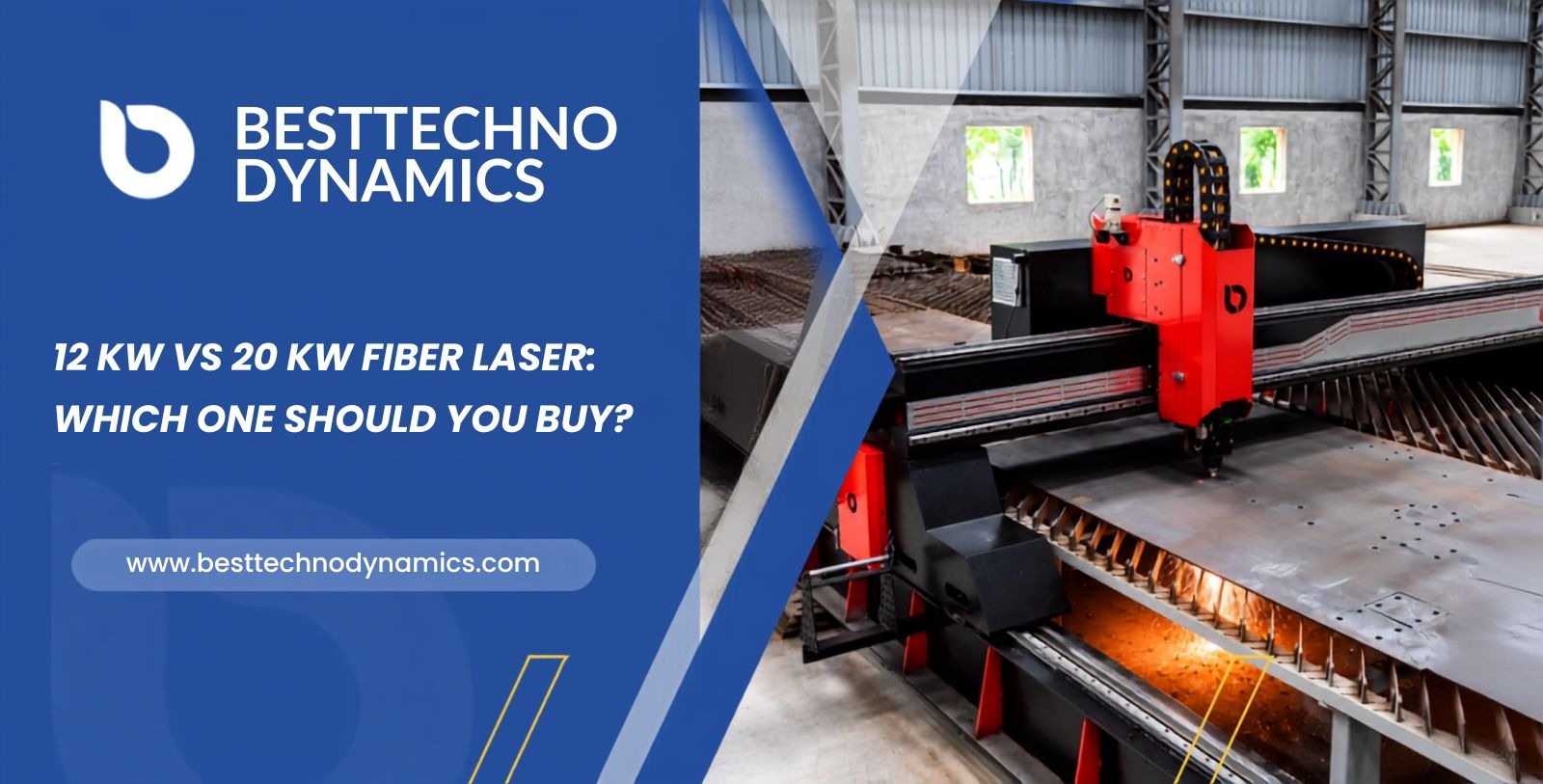
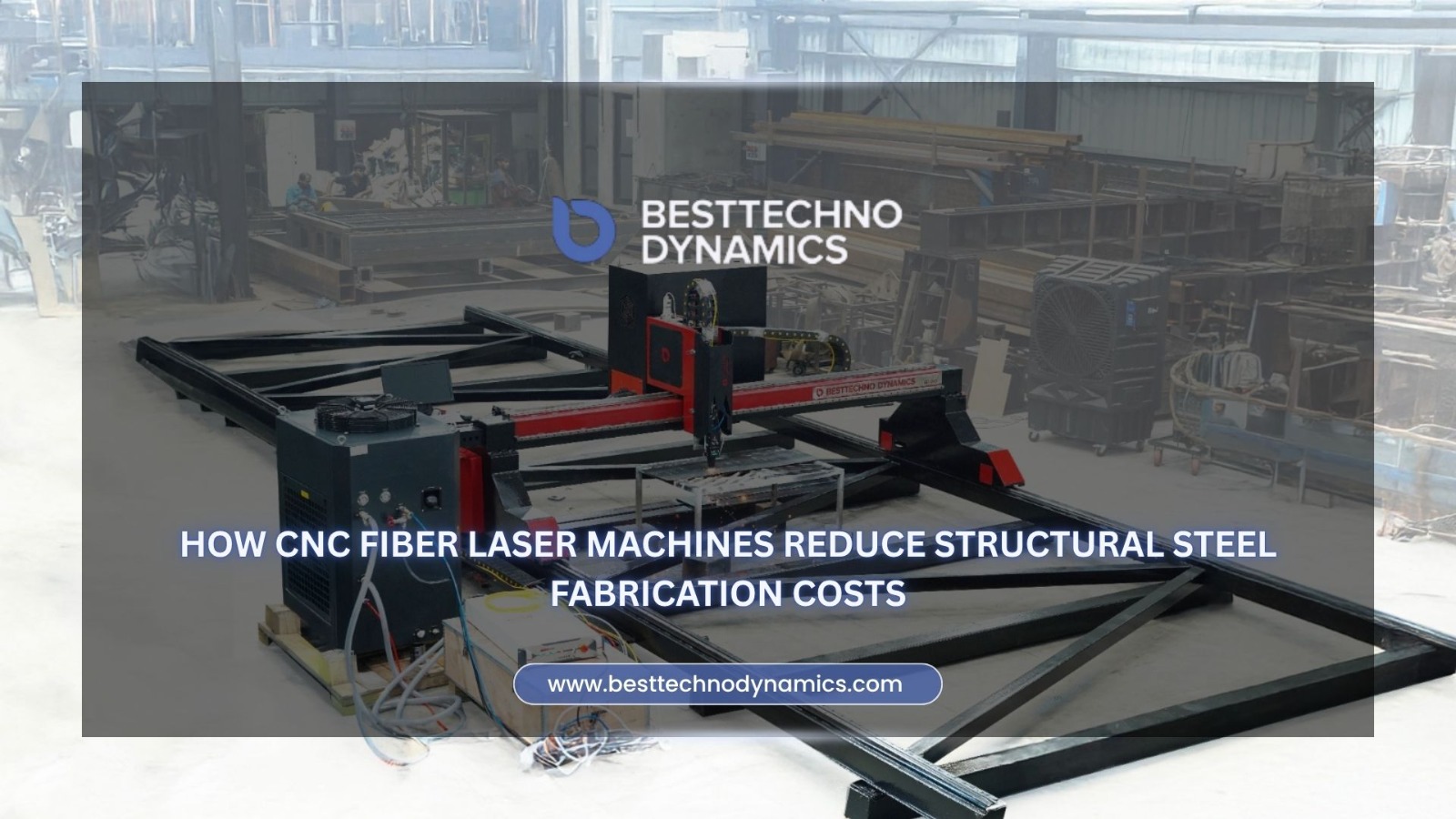
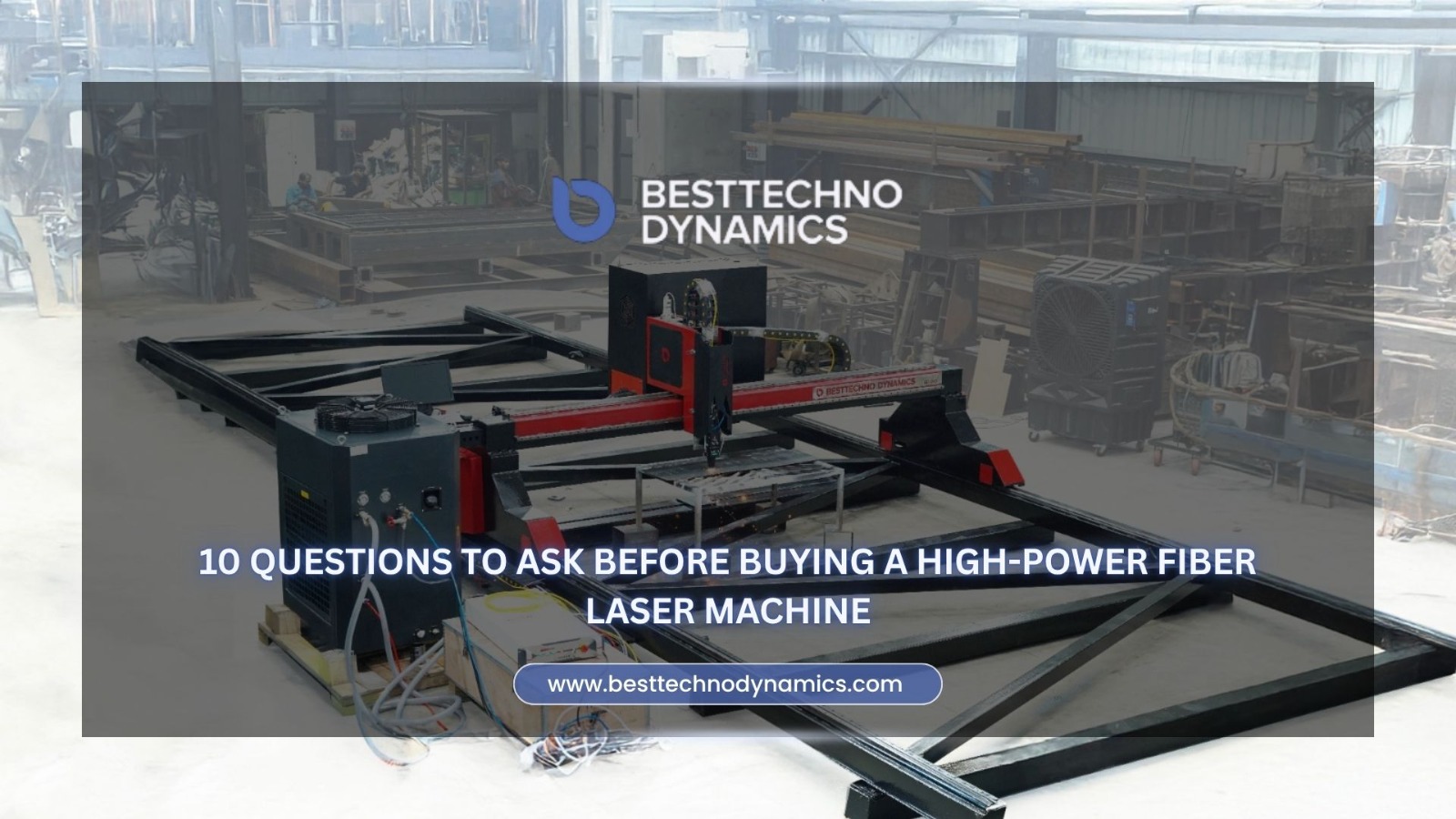
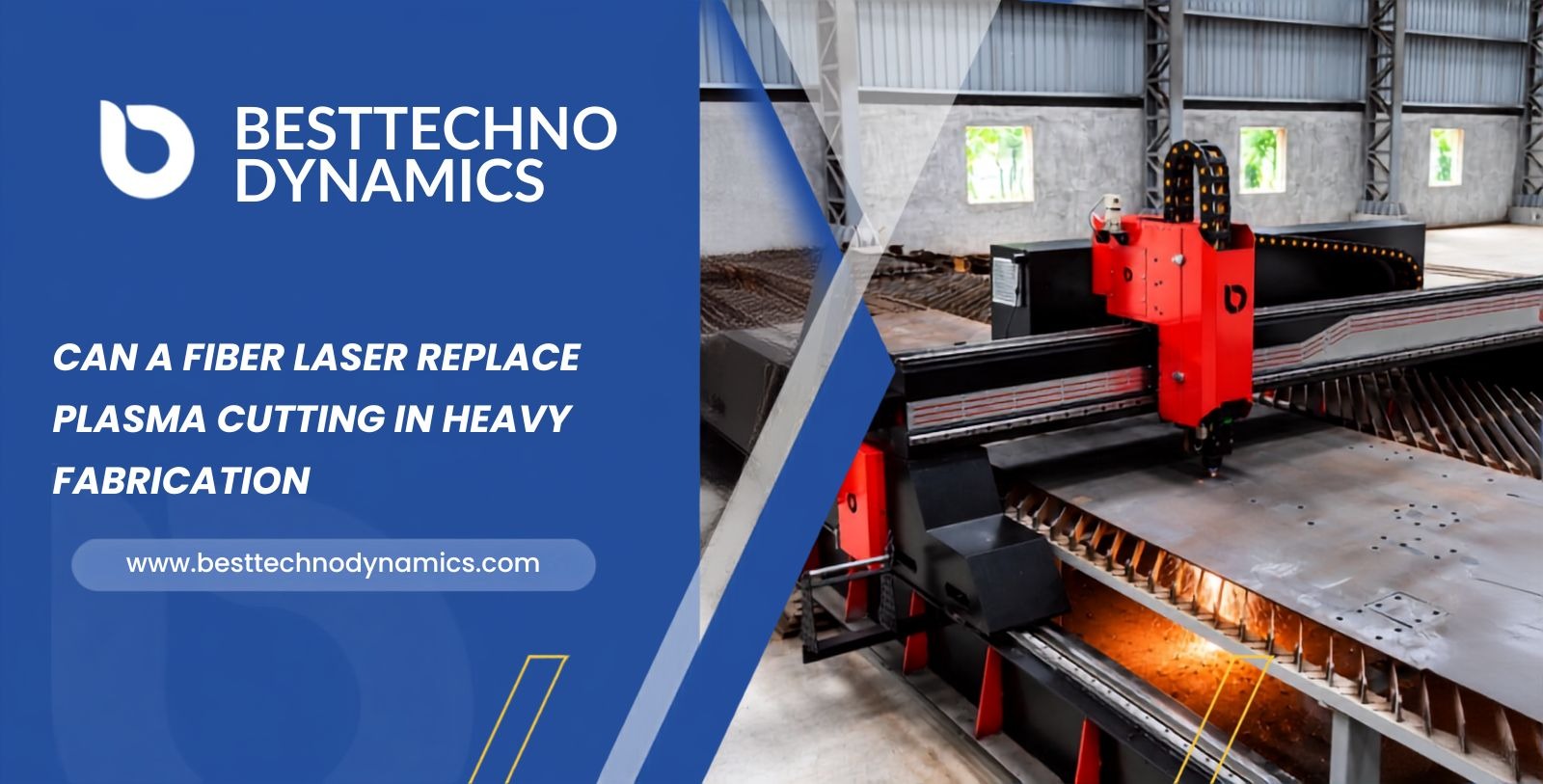
Therefore, Besttechno Dynamics builds its MAMMOTH series with exactly this kind of work in mind — long cutting beds designed for structural steel and PEB components, not just standard sheet metal.
Choosing the right power for your shop
One thing worth clearing up: you don't need the highest kW number on the market to run a PEB operation well. Power should match your material thickness and daily volume, not the other way around.
A 6kW fiber laser handles most mid-thickness structural steel and sheet metal work comfortably, and it's a solid fit for shops that aren't running extreme daily volumes. A 12kW machine, like Besttechno Dynamics' MAMMOTH, makes more sense when you're cutting thick plates at high volume and need the extra speed to keep up with production schedules.
Quick way to think about it:
- 6kW: Mid-size fabrication shops, mixed thickness work, moderate daily output
- 12kW: High-volume PEB plants, thick-plate cutting, tight production deadlines
Both are good choices. The right one depends on what you're actually cutting, not what sounds impressive on a specific sheet.
What to check before you buy?
Buying a fiber laser is a long-term investment, so a few things are worth checking before you sign anything.
Cutting bed size matters more than people expect. If you're working with long structural members — the kind common in PEB and structural steel — a larger bed like MAMMOTH's 3100 mm x 12500 mm setup saves you from repositioning material mid-job.
After-sales support matters just as much as the machine itself. If you're comparing CNC machine dealers in Gujarat or elsewhere, ask directly about service response time, spare parts availability, and whether operator training is included. A powerful machine sitting idle because of a slow service call isn't saving you anything.
Additionally worth asking about:
- Warranty coverage and what it actually includes
- Local technician availability, not just phone support
- Machine uptime record from existing customers
- Ease of operator training for your current staff
Final Thoughts
Today, structural steel and PEB fabrication, at least, is being taken care of by fiber laser cutting, which is not obsolete, but it's doing the heavy lifting today, with faster cuts, cleaner edges, and less time spent on fixing things before they get to the assembly table. It depends on the type of cuts you make and the quantity, not which number is more.
Moreover, when you're working on the next production line, Besttechno Dynamics can guide you to find out which machine with which size, power, and setup configuration is the perfect fit for your production targets. Don't pick a machine that is too large or too small for your needs.
Frequently asked questions
1. Can fiber lasers really replace plasma for structural steel?
Yes indeed, a fiber laser will provide cleaner cuts and reduce finishing time for most structural steel projects. Even for very thick plates that fiber lasers are not cost-effective, plasma is still a suitable technology.
2. What thickness can a 12kW fiber laser cut?
A 12kW machine, such as MAMMOTH, is sufficiently powerful to provide comfortable control for the thicker structural plates that are used in PEB manufacture as well as the thinner sheets that are used in general fabrication.
3. Is 6 kW enough for a mid-size fabrication shop?
Yes, 6 kW is a good choice for most mid-thickness cutting requirements. It is a viable option for stores that don't need to produce a ton of items each day.
4. How does fiber laser reduce production costs?
Because of the wide range of benefits that fiber laser cutting offers, it reduces material waste and requires less post-cutting finishing work, thereby helping to cut down on labor expenses and project timelines.
5. What makes MAMMOTH suitable for PEB manufacturing?
Its cutting bed is large enough to process long structural plates in one setup, and its power options process thick and thin PEB components with ease.
6. Do I need different machines for thin sheets and thick plates?
No, a well-specified fiber laser machine can cut thin sheet metal and thick structural plates, eliminating the need for a different cutting setup.
7. How important is after-sales support when buying a fiber laser?
Very important. Service response and availability of spare parts have a direct relationship to machine uptime, thereby directly influencing your production timetable and delivery deadlines.
8. Why choose an Indian manufacturer over an imported machine?
This ensures that services can be responded to quickly, spare parts availability is easy, and Indian factory conditions and power supply variations are known to the support teams.