How Does a Fiber Laser Cutting Machine Work in Structural Steel Fabrication?
Key Takeaways
- Fiber laser cutting makes accurate and neat cuts on structural steel plates, irrespective of their thickness.
- There is a growing need among PEB manufacturers to use the most efficient and accurate technology needed to cut steel components.
- Besttechno Dynamics provides CNC fiber laser machines to the Indian manufacturing sector.
- Whatever the power required, select between 6Kw and 12Kw lasers based on plate thickness.
The working principle of the fiber laser cutting machine is to transfer a highly concentrated light beam through the fiber optical cable to the metal surface to be melted, burned, or vaporized along a path tracked by CNC software. In structural steel fabrication, it is used to replace slower cutting techniques with clean, repeatable cuts on plates, beams, and structural pieces. When fabricating a Pre-Engineered Building (PEB) project, cutting speed and dimensional accuracy are often the determining factors in whether or not a schedule falls apart.
In this blog, we will be talking about how it works, its significance in structural steel fabrication, and what to consider when choosing an appropriate CNC Fiber Laser Cutting machine manufacturer for your shop floor.
What is a fiber laser cutting machine and how does it work?
A fiber laser cutting machine generates a laser beam through the use of a special fiber optic cable. A laser beam with enormous energy is formed when electric current travels through the fiber optic cable. The beam proceeds to the cutter head, where lenses focus the beam to a very tiny point of super high energy. The beam streamlines, cuts, and melts the metal materials efficiently and precisely.
The core cutting process explained
The metal is heated quickly due to the focused laser, which causes it to melt. Once melted, a stream of nitrogen or oxygen blows away the molten metal, creating a clean cut. The cutting head is controlled with CNC programs based on CAD designs, which enables cutting with high accuracy and minimum error. That is why a fiber laser cutting machine can cut mild steel, stainless steel, and aluminum with great accuracy. In comparison with plasma cutting or oxy fuel cutting, fiber laser cutting produces less heat, thus causing less distortion and leaving just minor finishing work or requiring no finishing at all.
Why do fiber lasers outperform older cutting methods?
In certain cases, plasma and flame cutting are still viable, especially if using the cheapest possible technique or the material is a very thick plate. However, fiber lasers have some benefits for structural fabricators:
- Less waste on each cut (narrower width of cut or kerf)
- Smoother edges that tend to be missed in secondary grinding.
- Higher cycle time for thin to medium thickness plates
- Reduced operating costs - because fiber lasers require less power than CO2 or plasma systems.
The compromise is the initial price. While fiber laser machines are more expensive than plasma tables, the reduced amount of material waste and labor typically makes them cost-effective in a 2- to 3-year period for the high-volume shop.
Why does structural steel fabrication need fiber laser precision?
There are not many opportunities in the world of structural steel to get it wrong. Just a few millimeters off in one dimension can cause an entire assembly to be thrown off, cause a project to be delayed, or cause rework on site. For fabricators that produce primary structural frames, gusset plates, or connection brackets, the equipment has to be able to maintain tight tolerances throughout the entire production run, and not just on one test piece.
Therefore, PEB manufacturing adds another wrinkle. Structural components often run several meters long, and cutting them in multiple setups introduces alignment error at every join. That's why an oversized cutting bed matters more here than it would on a standard job shop floor.
Common Structural Components Cut With Fiber Lasers
Fiber laser machines are commonly used to produce:
- Primary structural frames for industrial buildings
- Secondary structural members and purlins
- Base plates and column footings
- Gusset plates and connection plates
- Brackets and reinforcement components
Each part demands a different balance of speed and precision, which is part of why machine selection matters as much as operator skill.
Meet MAMMOTH: A heavy-duty CNC fiber laser for PEB fabrication
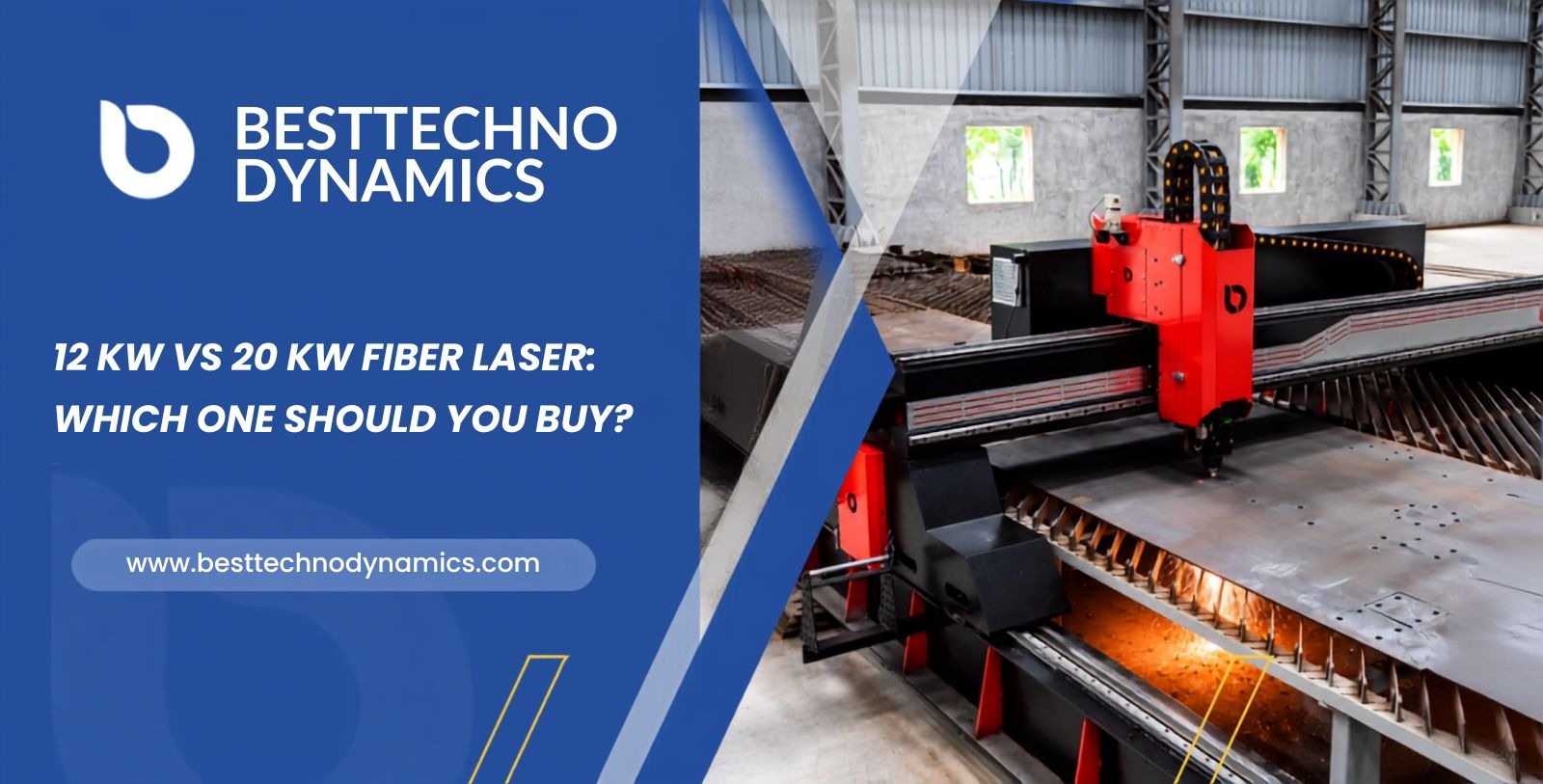
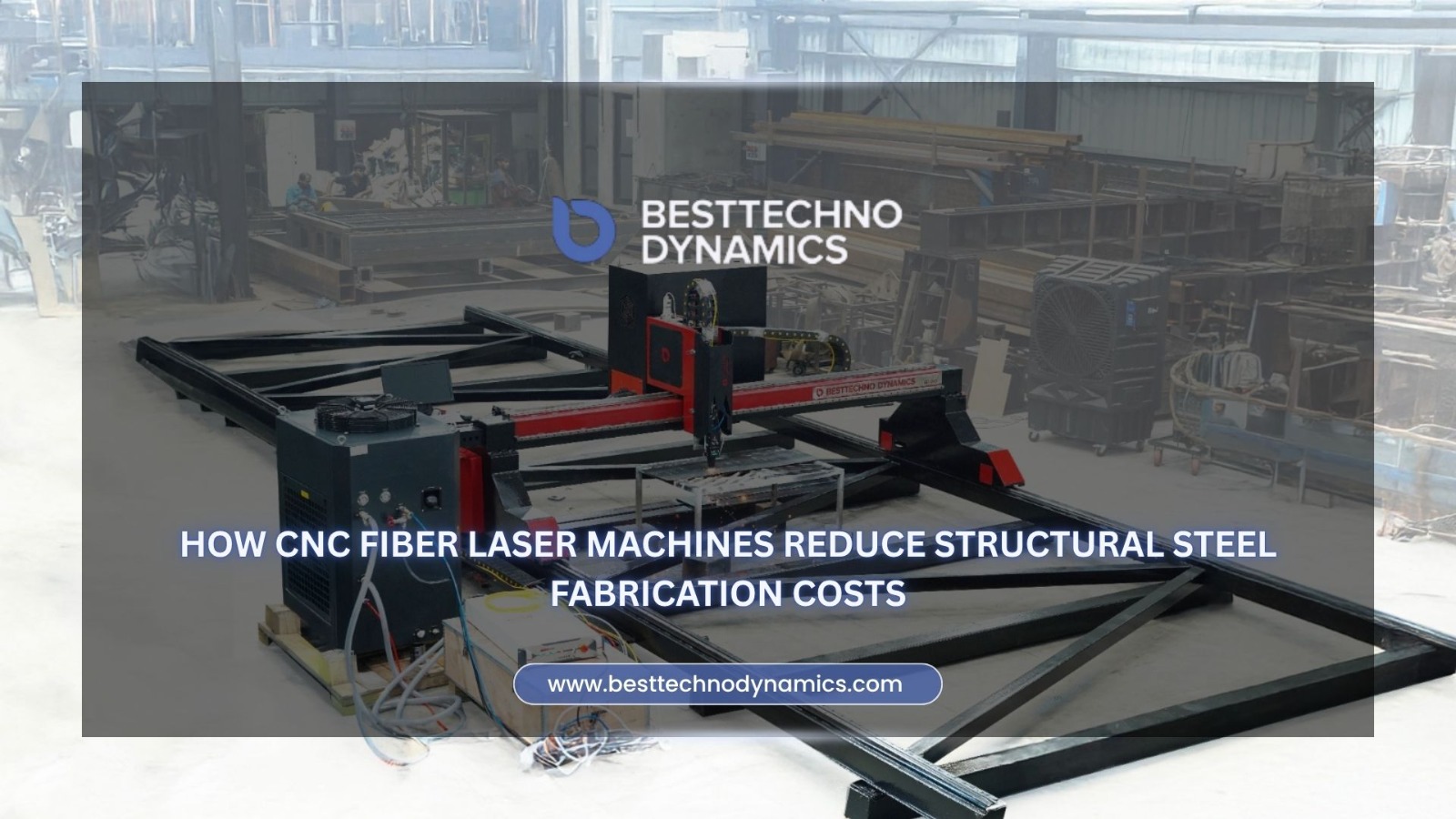
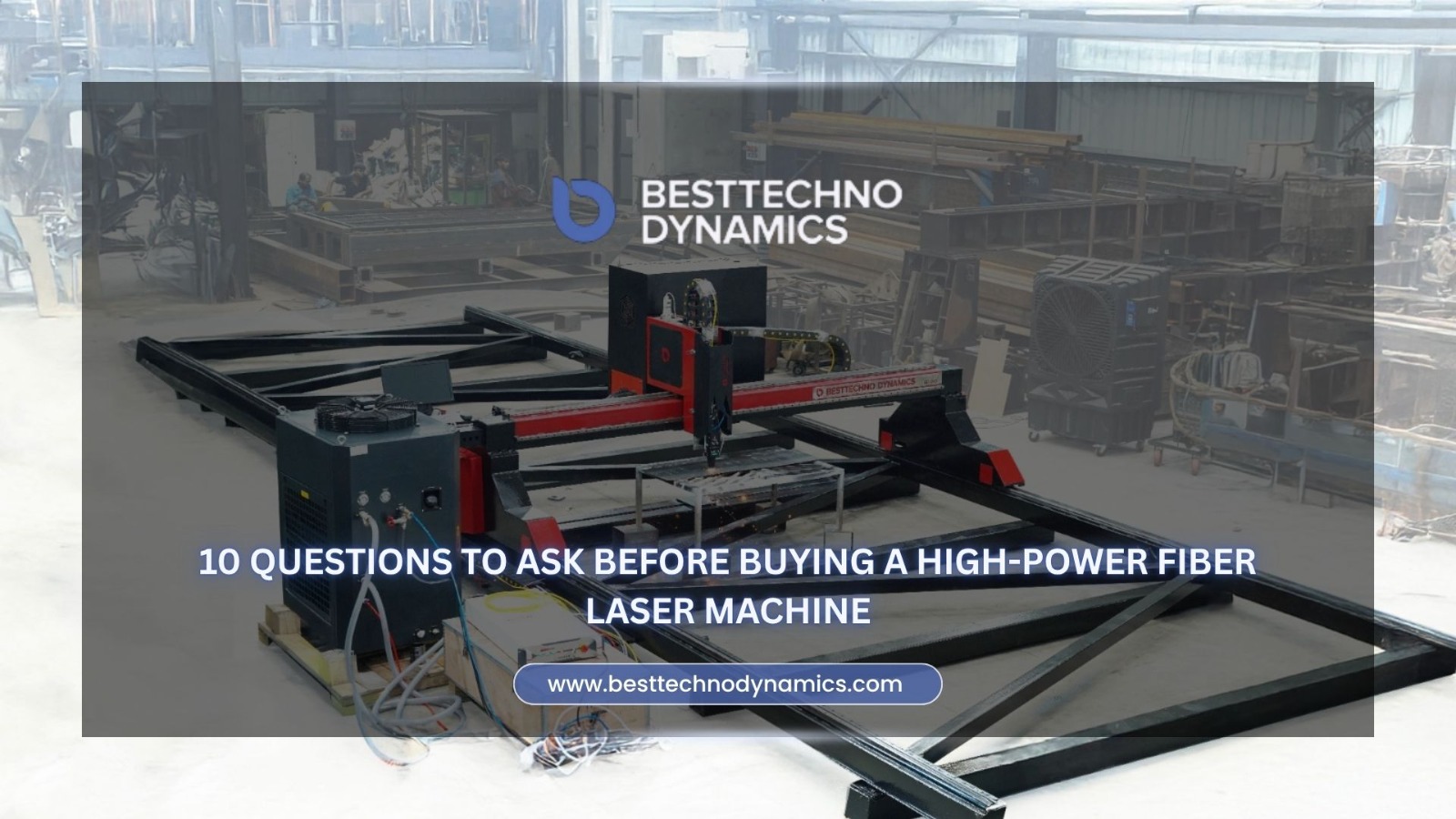
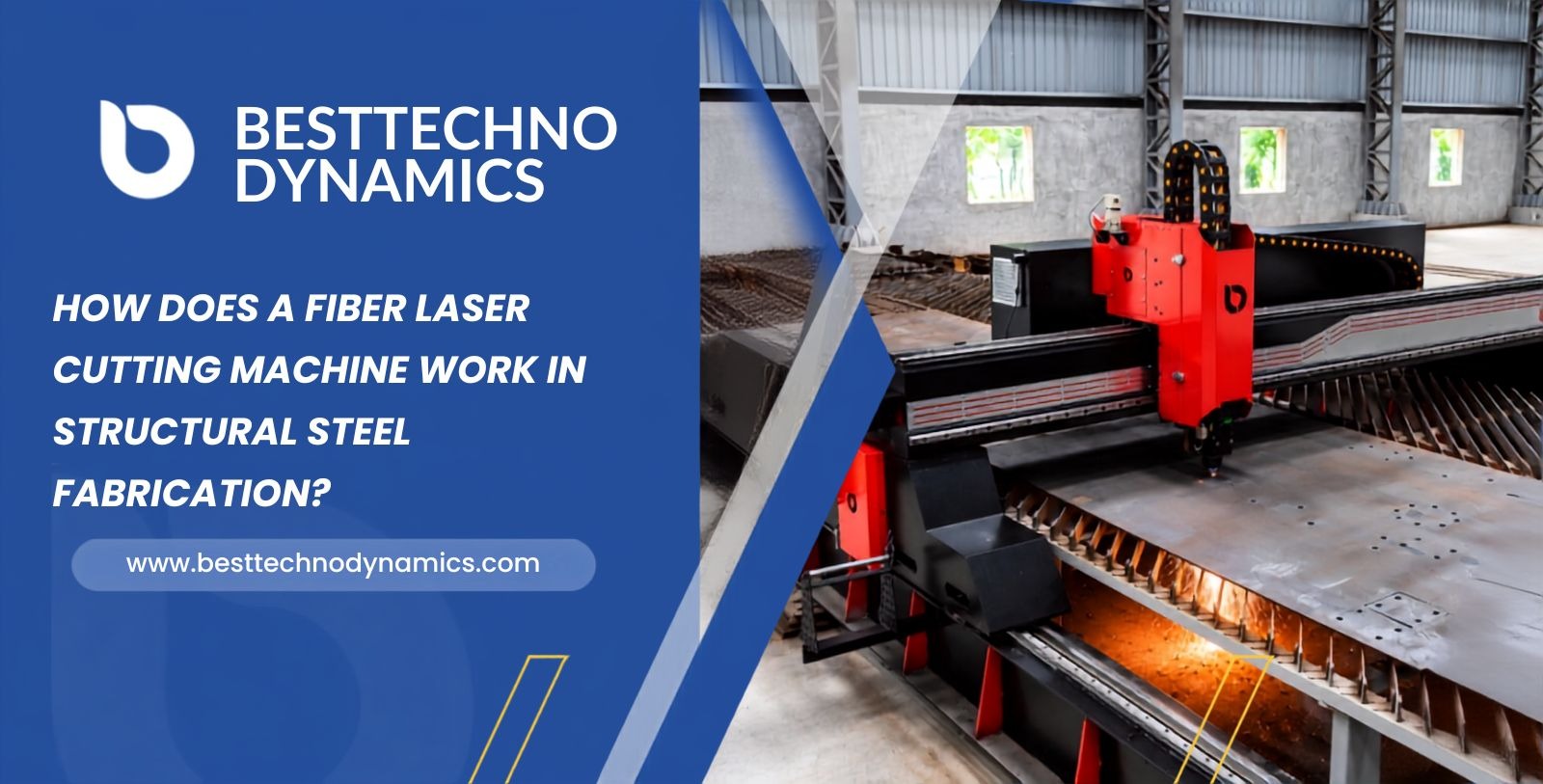
Besttechno Dynamics built MAMMOTH for fabricators processing large volumes of thick steel plate and long structural components. It runs on a 12 kW fiber laser source with a cutting bed measuring 3100 mm by 12500 mm, among the largest working areas available in this class of machine.
Extra-Large Cutting Bed Advantage
The oversized bed changes more than sheet capacity. It changes how a shop runs day to day. Long steel plates that once needed repositioning, multiple setups, and manual realignment can now go through in a single pass, which cuts loading and unloading time and removes the small alignment errors that build up between setups.
For PEB manufacturers, this matters because structural members frequently run past the size of a standard cutting table. MAMMOTH's bed was built around exactly that problem.
Choosing the right power for your PEB operation
There's a common assumption that 12 kW only makes sense for the heaviest fabrication work. That's not quite right. Both 6 kW and 12 kW fiber laser sources are legitimate options for PEB companies, and the right pick comes down to your typical plate thickness and daily production targets, not power alone.
A 6 kW source handles thinner to mid-range plate efficiently and suits moderate throughput. A 12 kW source, like the one in MAMMOTH, pays off once you're cutting thick plates at high volume, since the extra power means faster cycle times and less strain during continuous operation. Neither is the "correct" choice in the abstract. It comes down to matching the machine to what you actually produce.
MAMMOTH's benefits go beyond raw speed:
- Increased Productivity: Faster cuts mean shorter project turnaround.
- Exceptional Accuracy: Consistent, repeatable cuts across large batches.
- Reduced Operating Costs: Lower manpower needs and less material waste.
- Energy Efficiency: Noticeably lower power draw than older cutting technologies.
Industries that rely on CNC fiber laser cutting
Structural steel fabrication is a major use case, but fiber laser machines cover a wider range of manufacturing sectors:
- Pre-Engineered Buildings (PEB): Cutting structural steel components for industrial buildings and infrastructure.
- Structural Steel Fabrication: Precision work on beams, plates, channels, and welded assemblies.
- Automotive & Auto Components: Producing heavy-duty parts and sub-assemblies accurately.
- Heavy Engineering: Large-scale manufacturing where consistency across long runs matters most.
- Industrial Fabrication Units: General metal processing across varied part sizes.
Moreover, shops cutting thick plates at scale, and looking for a PEB laser cutting machine supplier India-based teams can reach quickly for service and support, tend to land on fiber laser technology once volume hits a certain point.
Choosing the right CNC fiber laser cutting machine manufacturer
Picking a CNC Fiber Laser Cutting machine manufacturer isn't just about comparing wattage on a spec sheet. A few practical things matter more once the machine is actually running on your floor.
- Post-sale service: Select a manufacturer that provides quick service, so you can minimize downtime and ensure that your equipment operates continuously.
- Size of the bed: Select a bed size appropriate for your work, which will allow you to do the day’s work without having to worry about setups and alignments.
- Software compatibility: Make sure your machine works with your existing CAD/CAM software so that the machine is easy to use, and you will spend less time training your staff.
- Industry experience: Go with a CNC fiber laser machine manufacturer India that knows your business, so you can expect superior performance, accuracy, and consistency in production.
What to look for in CNC machine dealers in Gujarat?
Gujarat has emerged as one of the busiest manufacturing hubs in India, due to its heavy concentration of units related to steel fabrication, automotive and engineering industries. When you decide to source through CNC machine dealers in Gujarat, you will typically enjoy faster implementation of your equipment and quicker response time than other manufacturers based in distant locations.
When selecting CNC machine dealers in Gujarat, ask questions about the estimated time required for equipment setup, as well as spare parts availability and operator training.
Common mistakes when buying a fiber laser cutting machine
Even experienced fabricators trip over the same few things when buying new cutting equipment.
- Buying based on power alone: A higher kW rating doesn't automatically mean better ROI if your plate thickness doesn't call for it.
- Ignoring bed size relative to actual job lengths: Undersized tables mean repeated setups and slower throughput on long structural parts.
- Overlooking gas consumption costs: Nitrogen and oxygen usage adds up and should factor into the real cost comparison.
- Skipping operator training: Even a well-built machine underperforms in inexperienced hands for the first few months.
- Picking the cheapest option without checking service history: Downtime from poor support often costs more than the price gap between machines ever saved you.
Expert recommendations
Start by mapping your actual production data: average plate thickness, typical part length, monthly cutting volume. That tells you more than any spec sheet number on its own. It's also worth asking for a live demo on material close to what you'll actually cut, rather than relying on a manufacturer's sample pieces, since cutting behavior shifts noticeably between mild steel, stainless steel, and different thicknesses.
For PEB-focused shops, bed length should outrank almost every other spec if your structural members regularly exceed standard table sizes. The time saved from single-pass cutting adds up fast across a full production schedule.
Final thoughts
Fiber laser cutting has become the default for structural steel fabrication for a practical reason: it's faster, more accurate, and holds up better across long production runs than older cutting methods. For PEB manufacturers and heavy fabrication units, the machine you pick and who you buy it from shapes your production efficiency and operating costs for years.
If you're evaluating equipment for your next upgrade, Besttechno Dynamics can help you work out whether 6 kW or 12 kW fits your plate thickness and volume. Get in touch to talk through your fabrication needs and see how MAMMOTH handles the materials you actually cut.
Frequently asked questions
Fiber lasers use a solid-state fiber medium to produce the beam, allowing the laser to cut reflective metals faster and more efficiently than CO2 lasers that use a gas-filled tube.
Normally 40- 50 mm for mild steel, but varies depending on machine and assist gas.
Neither wins outright. If thin plate and high volume, 12kW is better; if moderate thickness and volume, 6kW is better.
Nitrogen supplies clean, oxide-free edges on stainless steel and aluminium. Mild steel is cut faster in the presence of oxygen due to an exothermic reaction.
These tolerances can be very close (within a few tenths of a millimeter) and are necessary for the structural parts that require fit-up when they are put together.
Structural members are frequently quite long, in the order of several meters. A large bed allows for cutting in one pass without repositioning, eliminating setup time and alignment error.
It can range significantly in terms of power, bed size, and automation capabilities. The true answer is to obtain a detailed quote in line with your specific needs.
Cleaning the lens regularly, checking the gas pressure, calibrating the CNC controller, and checking the condition of the fiber optic cable at intervals for wear.
Yes, but these metals typically will require power adjustments as well as nitrogen assist gas to achieve a clean edge.
Quality of after-sales support, availability of parts, installation time, and experience in your PEB or structural fabrication industry.