12 Aug, 2026
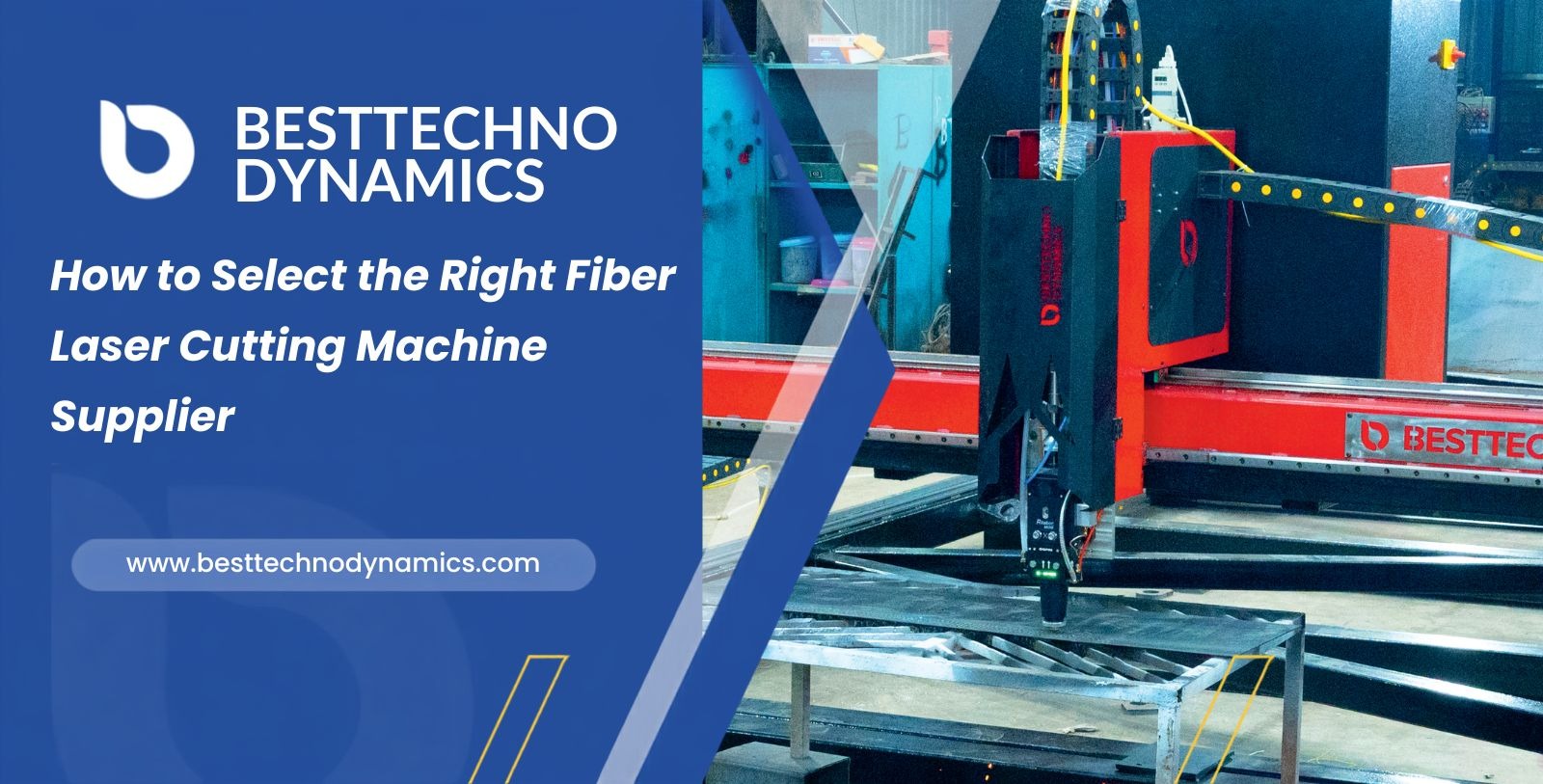
How to Select the Right Fiber Laser Cutting Machine Supplier
Key takeaways
- Follow the process to reach the evaluation. Comparing specifications point by point without any specific method is the way people pay more than they should.
- A 6 kW vs 12 kW decision can only be made based on the thickness of the plate and the length of the piece, and not by which number sounds more impressive.
- After-sales support and availability of spare parts become more important than the price paid for the machine.
- MAMMOTH comes in both 6 kW and 12 kW versions and is designed for PEB work, steel construction, and heavy fabrication.
Step-by-step process to select the right supplier
- Step 1: Define Your Actual Production Requirement
Before you call anyone, write down your plate thickness range, typical part length, monthly volume, and where you expect to be in two or three years. This one step is what stops people from buying more machines than they need. - Step 2: Shortlist 3-4 Verified Manufacturers
Don't shortlist off ads alone. Ask directly whether a company builds in-house or is reselling an imported machine under its own name. In-house manufacturers generally give you faster spare parts and more room to customize. - Step 3: Request a Live Demo on Your Own Material
A demo video tells you almost nothing. Ask them to cut a sample close to what you actually run- same thickness, similar grade. That's when you see the real edge quality and speed, not the marketing cut. - Step 4: Compare Total Cost of Ownership, Not Just Price
Look past the invoice. Power draw, consumables, how often it'll need maintenance, what the warranty actually covers- a cheaper machine that runs expensive often loses within two years. - Step 5: Verify Installation Timeline and Service Response
Ask plainly: how long does installation usually take, where's the nearest service center, and what's the average breakdown response time? Get the answers in writing. - Step 6: Check References in Your Own Industry
Talk to two or three of their existing customers in your segment- PEB, structural steel, automotive, whatever applies. What they tell you about day-to-day reliability is worth more than any pitch. - Step 7: Finalize with Clear Warranty and Training Terms
Pin down exactly what's covered under warranty- laser source, motion system, electricals- and for how long. Additionally, confirm whether training is included. It affects how quickly your team gets consistent results, more than people expect.
Understanding laser power: 6 kW vs 12 kW
There's a fairly common assumption in PEB and structural steel that more power always wins. It doesn't, not automatically.
A 6 kW laser handles most structural plate work fine- gusset plates, brackets, mid-thickness components. Lower upfront cost, less power draw, and it pays for itself faster if you're not running thick plate in high volume.
A 12 kW laser earns its keep when you're consistently cutting thick plate, running high volume, or need faster cycles on large structural members. It cuts thick material noticeably faster, which adds up when you're processing hundreds of parts a month.
However, which one is right depends on your actual thickness range and volume, not which spec sounds more impressive on paper. A CNC fiber laser machine manufacturer India worth working with will ask about your production numbers before recommending wattage instead of just pointing you at the biggest machine on the floor.
Cutting bed size and why it decides production capacity
Power gets most of the attention in these conversations, but bed size is what quietly decides how efficient your floor actually is.
A larger bed, something like 3100 mm × 12500 mm, lets you process long structural members and large plates in one setup instead of several. In practice, that means fewer loading and unloading cycles, less handling time, fewer setup errors from repositioning big sheets, and shorter turnaround on the whole job.
Moreover, if you're regularly working with long beams, channels, or big base plates, a bigger bed isn't a nice-to-have. It changes your throughput directly, and CNC laser machine dealers in Gujarat will be helpful.
Spotlight: MAMMOTH- built for PEB and structural steel
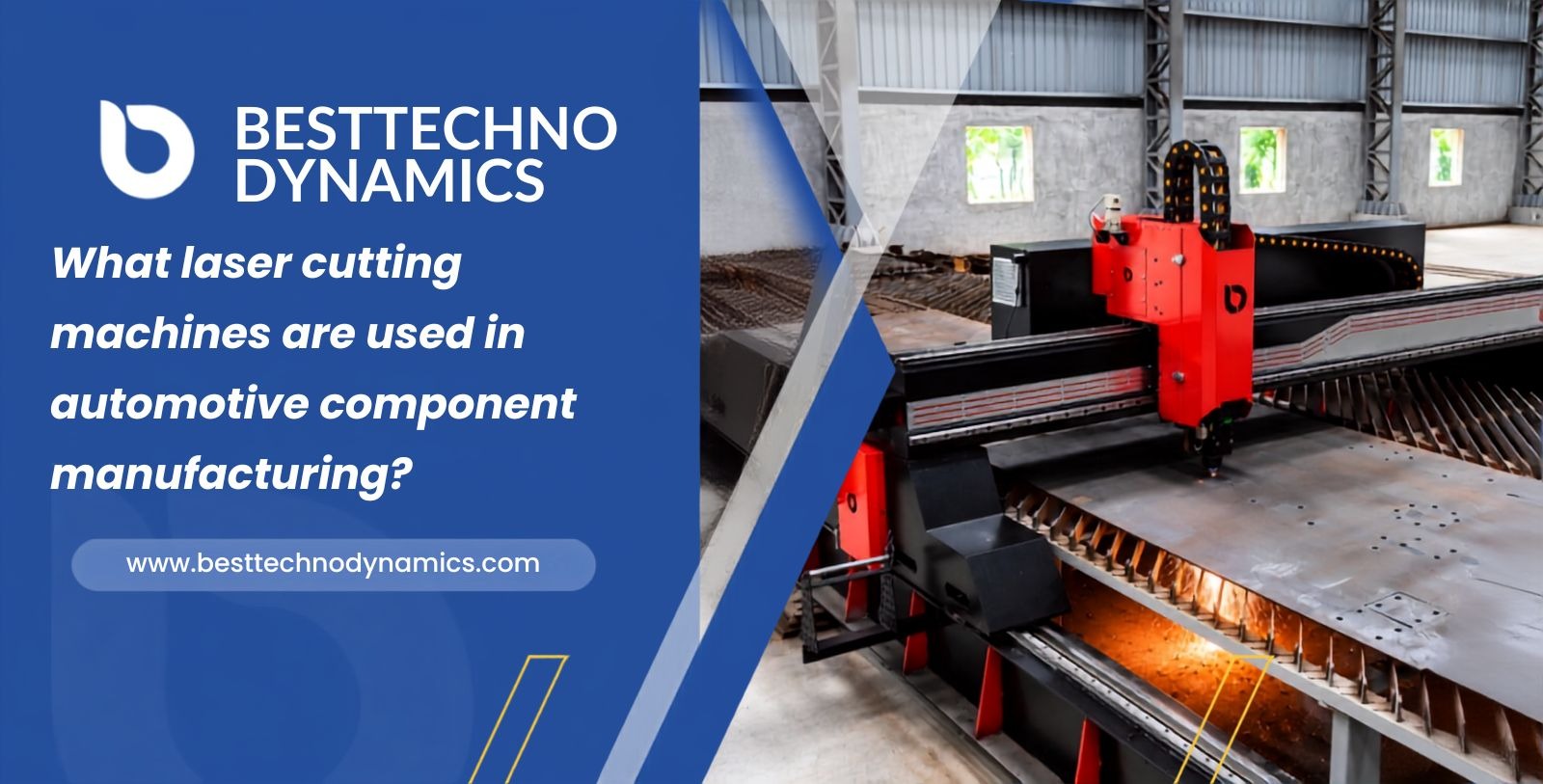
MAMMOTH, a CNC fiber laser cutting machine from Besttechno Dynamics, was built with a specific job in mind: PEB fabrication, structural steel work, automotive components, and heavy engineering, where plates are thick and runs are long.
Key specifications:
- Laser source: available in 6 kW and 12 kW
- Cutting bed: 3100 mm × 12500 mm
- Built for thick-plate, long-format, high-volume cutting
Where it fits:
PEB work needs speed, accuracy, and repeatability on thick steel and long structural pieces. MAMMOTH cuts heavy plates and long sheets in a single pass, and what you get out of that is dimensional accuracy on large parts, clean edges with minimal dross, faster completion, less wasted material, and consistent output batch after batch.
It handles primary structural frames, secondary structural members, base plates, gusset plates, connection plates, and reinforcement brackets — the parts that make up most PEB jobs.
On the power question specifically: 12 kW is the right call for thick-plate, high-volume PEB work. But plenty of fabricators with lighter plates or lower monthly volume find the 6 kW version does the job just as well at a lower running cost. Besttechno Dynamics doesn't push one over the other by default, which is worth noting when you're evaluating a PEB laser cutting machine supplier India- a supplier willing to talk you down to the cheaper option tends to be telling you the truth about the rest of the machine too.
Industries that depend on the right fiber laser partner
- Pre-Engineered Buildings (PEB): Structural steel for industrial buildings and infrastructure needs precise, repeatable plate cutting, batch after batch.
- Structural Steel Fabrication: Beams, channels, plates, fabricated assemblies- the edge quality has to hold across large runs.
- Automotive & Auto Components: Tight tolerances, repeatable accuracy, no drift between batches.
- Heavy Engineering: Large-scale manufacturing that runs continuously and can't afford quality slipping mid-shift.
- Industrial Fabrication Units: Mixed part sizes and thicknesses, so flexibility matters as much as raw power.
Red flags: signs of an unreliable supplier
A few things worth watching for while you're evaluating:
- Vague answers on response time- A supplier who actually has their act together gives you a number, not "we'll get to it quickly."
- Reluctance to run a demo on your material- If they'd rather show you a video than cut your sample, ask why.
- No verifiable customers in your industry- Any manufacturer that's been around has a few; if they can't name any, that's telling.
- Pressure to sign fast- A supplier confident in their product doesn't need to rush you.
- No clear answer on in-house vs. imported- This one affects how fast you get spare parts later, so it's worth pushing on.
Common mistakes buyers make
- Chasing the highest wattage without checking actual plate thickness. Costs more, doesn't help.
- Prioritizing power over bed size. A powerful machine on a small bed still bottlenecks large-format jobs.
- Skipping visits to existing installations. A machine running on someone else's floor tells you more than any demo.
- Underrating local service. No regional support means long, expensive downtime the first time something breaks.
- Not asking about training. It gets skipped in sales conversations more often than it should, and it directly affects your results.
Why has Gujarat become a CNC manufacturing hub?
Gujarat's industrial infrastructure, port access, and dense cluster of steel and fabrication units have made it a natural home for both machine manufacturing and dealer networks.
More buyers are specifically looking for a CNC machine manufacturer in Gujarat now, mostly because of shorter logistics and faster on-site response compared to sourcing from farther away. The same goes for CNC laser machine dealers in Gujarat- proximity usually means faster spare parts and quicker technician visits when something needs fixing.
If you're located in or near the state, that regional advantage tends to matter more a year or two into ownership than it does at the point of purchase.
Conclusion
Picking the right fiber laser cutting machine supplier isn't really about wattage or the lowest quote you can find. It comes down to knowing your own requirements, checking that the manufacturer actually builds what they sell, testing it on your material, and confirming they'll show up when something breaks.
Whether that ends up being a 6 kW machine for steady mid-thickness work or a 12 kW machine like MAMMOTH for thick-plate PEB production at volume, the decision should follow your actual cutting needs and a supplier with a service record you can verify- not the other way around.
If you're weighing options and want a straight answer rather than a sales pitch, reach out to Besttechno Dynamics with your plate thickness, volume, and project timeline. They can walk you through whether 6 kW or 12 kW MAMMOTH fits what you're actually running.
Frequently asked questions
- 1. What is the difference between a 6 kW and 12 kW fiber laser cutting machine?
- A 6 kW machine handles most mid-thickness structural and sheet work well at a lower cost. A 12 kW machine cuts thick plates faster and suits high-volume, large-format production.
- 2. What's the first step in selecting a CNC fiber laser machine manufacturer in India?
- Write down your actual production requirements first: plate thickness, part length, and monthly volume, before you start comparing suppliers or specs.
- 3. Is a bigger cutting bed always better?
- Not always, but for anyone working with long structural members or large plates, a bigger bed cuts down setup time and improves throughput.
- 4. What industries commonly use machines like MAMMOTH?
- PEB manufacturers, structural steel fabricators, automotive component makers, and heavy engineering companies.
- 5. How important is after-sales support when choosing a supplier?
- It's one of the biggest factors. Downtime from a slow service response usually costs more than whatever you saved on the purchase.
- 6. What should I ask a PEB laser cutting machine supplier in India before buying?
- Installation timelines, what the warranty actually covers, spare parts availability, and their track record specifically in PEB and structural steel.
- 7. Why are more buyers searching for a CNC machine manufacturer in Gujarat?
- Gujarat's industrial infrastructure and logistics mean faster delivery, installation, and service response than sourcing from farther away.
- 8. Do CNC laser machine dealers in Gujarat offer better service response times?
- Generally yes. Being closer means quicker technician visits and faster access to spare parts.
- 9. How much does laser power affect cutting speed on thick plates?
- A lot. It's why high-volume, thick-plate operations tend to prefer 12 kW over lower-power options.
- 10. Can one machine handle both PEB and general fabrication work?
- Yes. MAMMOTH, in either 6 kW or 12 kW, is versatile enough for both heavy PEB components and general structural fabrication.