Industry Spotlight
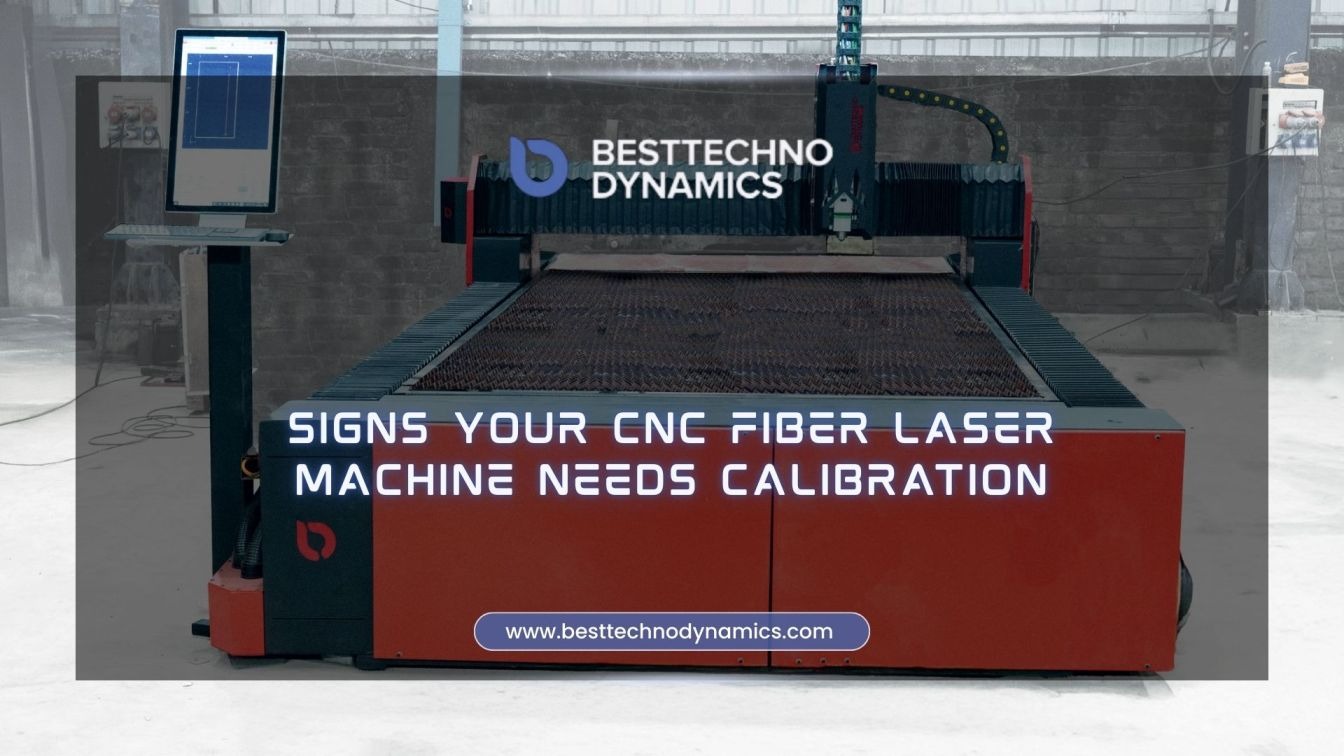
Signs Your CNC Fiber Laser Machine Needs Calibration
When your CNC fiber laser machine begins to produce uneven cuts, rough edges, or slow performance.
Mar 18, 2026
Read More →

When your CNC fiber laser machine begins to produce uneven cuts, rough edges, or slow performance, it probably requires calibration. Frequent calibration ensures that the machine is accurate and efficient. According to many technicians at Best Techno Dynamics, even minor calibration problems can easily impact the quality of production and waste of materials.
Calibration makes a fiber laser cutting machine operate with the appropriate accuracy and reliability. Over time, machine parts shift slightly due to continuous use, temperature variations, and mechanical vibrations. As a result, cutting accuracy may decrease without operators immediately noticing it.
Moreover, maintaining production quality requires regular calibration.
Proper calibration helps in:
Additionally, even if the machine continues to function, output quality gradually declines when calibration is ignored. Experienced engineers at Best Techno Dynamics recommend periodic calibration checks to prevent hidden production losses.
Inaccurate cutting is one of the first warning signs. The machine may require calibration if the parts do not match the design file accurately.
For example:
Although these changes may seem minor at first, they can affect entire production batches. Operators are advised to regularly inspect sample pieces.
Furthermore, many production units working with CNC laser machine dealers in Vadodara report that accuracy issues usually appear before other mechanical problems. Early calibration helps prevent further damage and ensures consistent product quality.
A properly calibrated laser machine produces clean and smooth edges. However, in the case of calibration drift, the laser beam may lose focus.
As a result, you may notice:
Moreover, poor edge quality increases finishing work, as operators may spend extra time grinding or polishing components.
Once edge quality starts to vary, it is usually a clear indication that the laser focus or motion system requires recalibration.
Another indicator is the speed of production. A well-calibrated machine cuts materials smoothly and quickly. However, when calibration drifts occur, the machine may take longer to complete the same task.
Some common signs include:
Additionally, operators may increase machine settings to compensate for slower performance. However, this is only a temporary fix and does not solve the underlying issue.
Manufacturing experts working with laser machine manufacturers in India emphasize that proper calibration helps maintain consistent cutting speed. Monitoring production time can help detect calibration issues early.
Laser machines depend on the precise alignment of the laser beam, cutting head, and motion system. Even a slight shift in these components can affect cutting accuracy.
Alignment problems may appear as:
Additionally, alignment errors tend to worsen over time if left unaddressed.
The experienced service team at Best Techno Dynamics often observes that alignment issues develop after long production cycles or heavy material loads. Regular checks of beam positioning help maintain stable machine performance.
Another indication of calibration problems is burn marks or overheating during cutting. If the laser beam is not properly focused, excessive heat can build up around the cutting area.
Common signs include:
Often, operators may assume that the issue is due to poor material quality. However, in many cases, the laser focus may have shifted slightly.
Proper calibration ensures that the laser beam remains accurately focused on the cutting point, preventing overheating and improving the overall finish quality.
One of the most costly issues caused by improper calibration is material waste. Even a small cutting error can damage multiple components on a single sheet.
Symptoms of calibration-related waste include:
Higher rejection rates not only delay production but also increase operational costs.
Companies working with CNC laser cutting machine manufacturers in Vadodara closely monitor scrap rates. A sudden rise in rejected parts is often a clear sign that calibration needs immediate attention.
| Machine Behavior | Possible Reason |
|---|---|
| Uneven or shifted cuts | Axis calibration problem |
| Rough edges | Laser focus misalignment |
| Slower cutting speed | Beam positioning issue |
| Burn marks | Incorrect focal distance |
| High material waste | Motion calibration error |
It is recommended to keep this checklist near the machine so operators can quickly identify calibration issues and take corrective action in time.
Calibration is a very important aspect of ensuring the performance and accuracy of any laser cutting system. Once such indicators as incorrect cuts, jagged edges, slow work, or wastage of materials are noted, one should check the machine right away. Frequent maintenance by qualified service providers such as Best Techno Dynamics will keep the quality of production constant and the downtime minimal.
Moreover, companies that use a fiber laser cutting machine to produce their products must consider calibration as a regular maintenance process and not a remedy. Correct calibration does not only secure the machine but also provides a consistent and high-quality output in each production cycle.
How often should a CNC fiber laser machine be calibrated?
The calibration of most machines should be done every few months, depending on usage, production volume, and operating conditions.
Can calibration improve cutting quality?
Yes, proper calibration enhances laser focus, alignment, cutting accuracy, and overall machine performance.
What causes calibration problems in laser machines?
Calibration can gradually change due to continuous operation, vibration, temperature variations, and mechanical wear.
Should calibration be done by professionals?
Yes, trained technicians ensure accurate adjustments and prevent damage to sensitive laser components.