
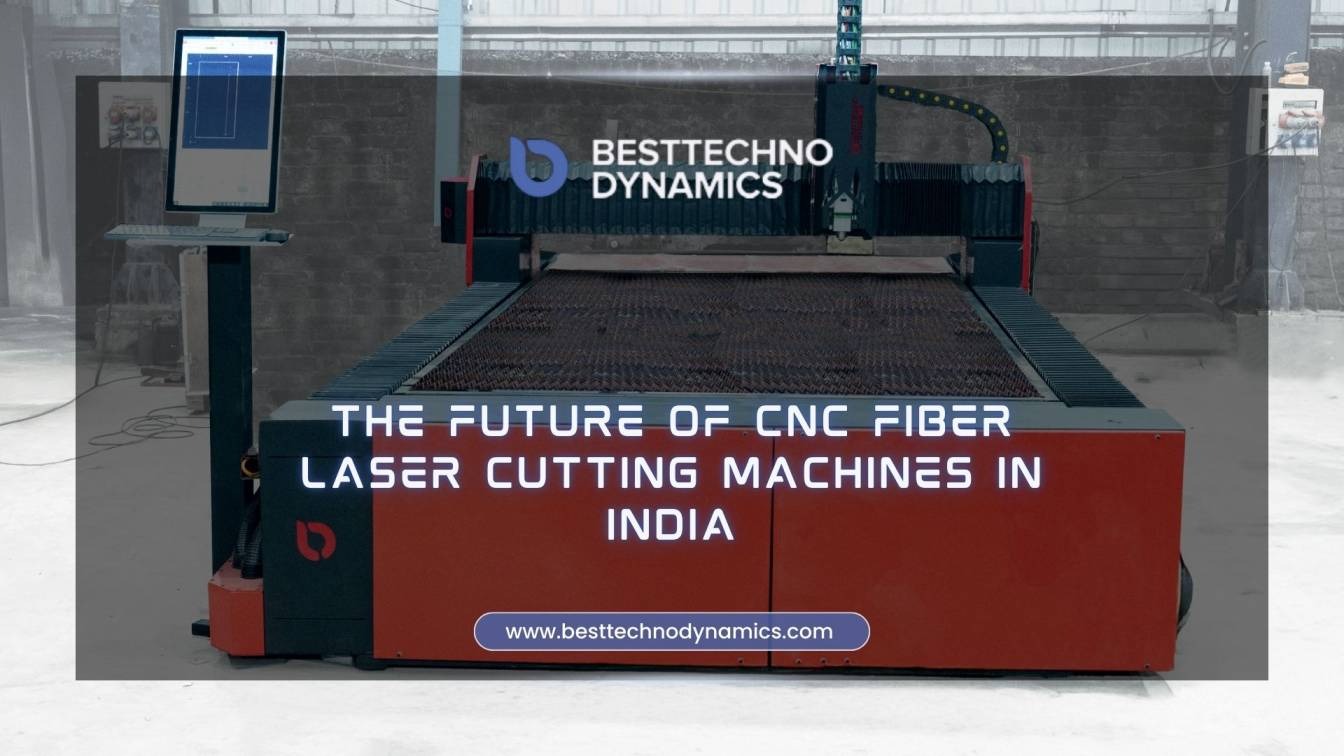
The Future of CNC Fiber Laser Cutting Machines in India
Table of Contents
Why is CNC fiber laser cutting growing in India? How is technology evolving? What does the future look like? Challenges and opportunities Conclusion Frequently asked questionsThe future of CNC fiber laser-cutting machines looks very promising in India as industries are gradually moving toward faster, cleaner, and more precise production. Most companies today rely on advanced cutting solutions to handle metal fabrication with high accuracy. Due to this fact, fiber laser cutting machine manufacturers in India are facing rising demand in various sectors. However, technology has grown so fast in the last few years that it is expected to change the manufacturing scenario much more in the next decade.
Why is CNC fiber laser cutting growing in India?
The manufacturing sector is growing in India as more and more companies are requiring quality, speed, and reliable production. Thus, CNC fiber laser cutting machines take precedence over many other alternative models. Therefore, these laser beam machines cut metal sheets smoothly without much waste, with almost no need for extra finishing.
Some reasons for fast growth include:
- Lower operating cost compared to traditional cutting tools
- Better energy efficiency
- Higher accuracy even in intricate shapes
- Suitable for stainless steel, mild steel, aluminum, copper, and many other materials
Furthermore, several fabrication units upgrade their machinery to stay competitive. They are searching for technology that can handle bulk work without slowing down, and that is where the CNC fiber laser cutting machine plays an important role
How is technology evolving?
Although traditional machines have been in use for years, modern laser systems change how businesses do their operations. Newer machines now boast faster laser sources and advanced motion systems plus smart software that reduces errors.
Here are some major improvements happening:
- Better Cutting Speed: With improved laser power, manufacturers are developing machines that cut metal at much higher speeds and can even cut thicker materials without losing quality.
- Automation and Smart Controls: Automatic loading, unloading, and real-time monitoring make machine operation easier, reduce labor dependency, and improve consistency.
- Less Maintenance: Modern fiber lasers require minimal care due to their simple design, reducing downtime and saving maintenance costs.
- Eco-Friendly Process: These machines produce less noise, generate minimal waste, and consume low energy, making them ideal for sustainable manufacturing.
- Software Integration: Advanced software helps plan cutting routes, minimize errors, and improve production efficiency with data-driven insights.
Additionally, all these developments make the industrial CNC laser cutting machine a powerful tool for the future.
What does the future look like?
Automation, digitalization, and increasing production needs will drive the future of CNC fiber laser cutting machines in India. While the industry is still at a growing stage, the technology is expected to find more and more applications even among small- and medium-scale units.
The following are some of the trends that will characterize the future:
Higher laser power levels allow even faster output.
AI-based monitoring for smarter decision-making.
Compact machines designed for small workshops.
Better affordability as technology becomes widely available.
More exports as Indian industries gain global attention.
Furthermore, the demand for precision fabrication will continuously rise in the automotive, construction, electronics, and heavy engineering sectors. Therefore, companies will increasingly invest in advanced cutting solutions to enhance productivity by reducing manual work.
Challenges and opportunities
While the prospects look great, there are a few challenges the industry may confront. The high initial investment required could be an issue for small businesses. However, most companies today provide flexible purchase options to make the upgrade easier for workshops.
Another challenge is the need for trained operators. However, over the next few years, more qualified personnel will become available due to growing awareness and training programs.
The huge opportunity is presented by the rapid industrial expansion of India. Starting from infrastructure development up to export-oriented manufacturing, every sector requires precision cutting. Therefore, the technology of CNC lasers will continue to grow and open up newer vistas for enterprises of all sizes.
Conclusion
Finally, the future of CNC fiber laser-cutting machines in India seems very bright as industries head towards speedy, clean, and accurate modes of production. Today, market demand is growing rapidly, and the Indian manufacturers of fiber laser-cutting machines are prepared to meet the demands arising in view of such growth.
Therefore, as the technology advances and automation becomes more widespread, the importance of the CNC fiber laser cutting machine will further increase for modern fabrication. Besides, the increased usage of an industrial CNC laser-cutting machine across various industries will enable India to gain strength in its manufacturing sector and compete in the global arena.
Frequently asked questions
-
1. Why are CNC Fiber Laser Cutting Machines popular in India?
They offer rapid cutting speed, high accuracy, low waste, and support the growing needs in industrial manufacturing.
-
2. How do CNC fiber laser cutting machines improve production quality?
They create clean edges, reduce manual finishing, maintain precision, and provide consistent results across materials.
-
3. Which industries benefit most from CNC fiber laser cutting machines?
These machines are used in the automotive, metal fabrication, construction, electronics, and machinery sectors for precision cutting.
-
4. Is the CNC fiber laser cutting machine good for small businesses?
Yes, they reduce operational waste, save time, lower maintenance needs, and make production more efficient overall.
-
5. What future advancements can we expect in fiber laser cutting technology?
More automation, stronger power of laser, better integration of software, smarter controls, and greater energy efficiency.