12 Aug, 2026
7 Ways to Lower Operating Costs in Metal Fabrication with Fiber Laser Technology
Key Takeaways
- Using fiber laser cutting minimizes the amount of wasted material, energy consumption, labor, and costs of manufacturing.
- 6 kW and 12 kW machines can be utilized for various levels of production and different metal thicknesses.
- The reliability of machines and support services has a great influence on the total operating costs of production.
- An experienced CNC fiber laser producer in India enhances the quality of service and ROI.
Metal fabrication runs on thin margins. A few percentage points of wasted material, a slow shift, or a machine sitting idle can eat into profit long before it shows up on paper. For PEB manufacturers, structural steel fabricators, and heavy engineering units, the gap between a profitable quarter and a break-even one usually comes down to how the cutting floor is run.
Fiber laser technology has shifted that math. It cuts faster, wastes less, and needs far less manual babysitting than older methods. But not every fiber laser machine delivers the same savings, and how a fabrication unit actually uses the technology matters just as much as the machine itself. Anyone shopping around as a PEB laser cutting machine supplier India buyer knows the specs on paper rarely tell the whole story once the machine is running full shifts.
This guide walks through seven practical ways fiber laser cutting brings down operating costs, along with the mistakes worth avoiding and what to check before you invest in new equipment.
Why do operating costs keep rising in metal fabrication?
Steel prices fluctuate. Labor costs climb every year. Energy bills for industrial units have gone up steadily across most Indian states, and customers still expect faster turnaround without paying a premium for it.
Traditional cutting methods, plasma and oxy-fuel especially, were never built for this kind of pressure. They burn through more consumables, leave rougher edges that need rework, and run slower on thick plates. Fabricators using older technology absorb these inefficiencies as hidden costs that rarely surface until year-end accounting, when someone finally adds up the grinding hours.
Therefore, fiber laser cutting addresses several of these problems directly. That's a big part of why so many fabrication units in Gujarat, Tamil Nadu, and across India have made the switch over the past few years.
Cut material waste with precision nesting
Material is usually the single biggest cost in any fabrication job. Every offcut and every misaligned cut adds up over a production run.
Fiber laser machines paired with good nesting software arrange parts on a sheet with far tighter tolerances than manual or semi-automated layouts allow. The kerf width is also narrower than plasma or oxy-fuel, so less metal gets vaporized away with each pass.
Furthermore, take a fabricator cutting base plates and gusset plates for a PEB project. Laser nesting software often fits 8 to 12 percent more parts per sheet compared with a plasma cutting layout. Over a month of production, that difference alone can offset a meaningful chunk of the machine's running cost.
Actionable Tip: Review your nesting reports weekly, not just at the end of a project. Small adjustments to part orientation often free up space that got missed the first time around.
Reduce manpower dependency through automation
Labor is expensive, and skilled operators are harder to find every year. Fiber laser machines with automated loading, unloading, and cutting sequences reduce the number of people needed to run a shift.
A single trained operator can typically manage a fiber laser cutting line that would have needed two or three people on older equipment. It's less about replacing skilled workers and more about moving them onto quality checks, finishing, and project coordination, work that actually needs a person paying attention.
Common Mistake to Avoid: A lot of fabrication units buy an automated machine and then keep running it with the old staffing pattern out of habit. The savings only show up once the workflow gets restructured around what the machine can actually do.
Lower energy consumption per cut
Fiber laser sources convert electrical energy into cutting power far more efficiently than CO2 lasers or plasma systems. Less energy gets lost as heat, which means a lower electricity bill for the same output.
However, for a 12 kW fiber laser cutting machine running full shifts on a thick plate, this efficiency gains compounds fast. A unit that used to set aside a large chunk of its monthly overhead for power often sees that number drop by 20 to 30 percent after switching to fiber.
Why This Matters: Energy costs don't get the attention that raw material costs do, but over a machine's operating life they add up to a real figure. Any manufacturer offering fiber laser machines should be able to walk you through realistic power consumption for your actual workload, not just the number printed on the spec sheet.
Minimize downtime with reliable machine design
Downtime is invisible until it happens, and then it's the most expensive problem a fabrication unit can have. A machine sitting idle for repairs isn't just a maintenance cost. It refers to less production, the timing of delivery, and in some situations, the conditions of the contract.
This factor is a good or bad investment. Reliable components, solid structure, and a suitable optical fiber source will significantly reduce the machine's malfunction rate.
Expert Recommendation: It is important to check with a CNC fiber laser machine manufacturer India about their average service time and availability of spare parts before making a purchase. A cheaper machine in the beginning can actually cost more over its lifetime if it has a slower service response time.
Speed up production without sacrificing quality
Speed only lowers cost if the quality holds up. Rework, rejected parts, and slow inspection cycles eat into whatever time you saved during cutting.
Fiber laser machines with high cutting speeds and stable beam quality produce clean edges with minimal dross, so fewer parts get sent back for correction. For PEB laser cutting machine supplier India buyers specifically, this matters because structural components often need to hit tight dimensional tolerances without any secondary machining.
Moreover, one structural steel fabricator processing primary and secondary structural members saw their rejection rate on gusset plates drop from around 4 percent to under 1 percent after switching to a high-power fiber laser, simply because the cut edges no longer needed grinding before welding.
Cut post-processing and secondary operations
Every extra step after cutting adds labor hours and stretches out the production schedule. Deburring, edge grinding, and rework are the most common secondary operations that fiber laser cutting can cut down on significantly.
Clean cut edges straight off the machine mean parts can often go directly to welding or assembly. That shortens the overall production cycle and cuts the number of workstations a part passes through before it's ready to ship.
Actionable Tip: Track how many parts in your current process need grinding or deburring before assembly. If that number is high, it's usually a sign that your cutting method is the bottleneck, not your workforce.
Choose the right power output for your workload
This is where a lot of fabrication units get it wrong. Higher power isn't automatically better for every job. Pick the wrong output level, and you're either paying for capacity you never use, or underpowering the machine for what you actually produce.
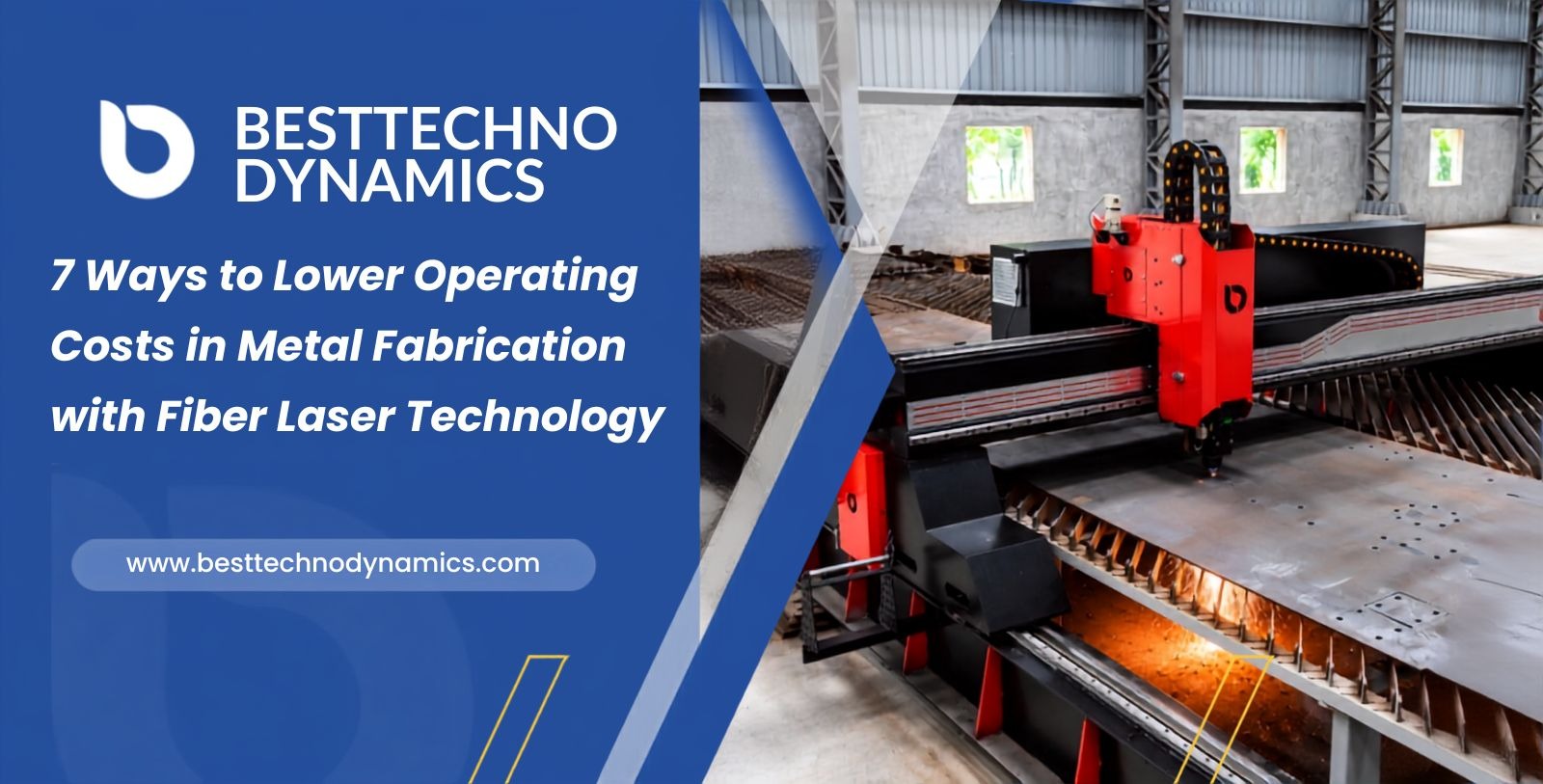
For PEB and structural steel work, both 6 kW and 12 kW fiber laser sources have a place, depending on plate thickness, sheet length, and daily production volume. A 6 kW machine handles thinner to mid-range plate efficiently and suits units with moderate daily output. A 12 kW source, like the one used in Besttechno Dynamics' MAMMOTH CNC Fiber Laser Cutting Machine, is built for heavier plate and high-volume runs where speed on thick material directly affects throughput.
MAMMOTH's 3100 mm × 12500 mm cutting bed is worth mentioning here on its own, because bed size affects cost almost as much as power does. A larger working area means long structural components can be cut in a single setup, which cuts down on loading and unloading time across a shift.
Expert Tips: Don't choose based on power output alone. Talk through your actual plate thickness range, sheet lengths, and monthly production targets with your CNC machine manufacturer in Gujarat before deciding between a 6 kW and 12 kW machine. The right fit lowers cost. The wrong one just moves the expense somewhere else.
Common mistakes fabricators make
Buying on price alone is probably the most common one. The cheapest machine upfront often carries higher maintenance and downtime costs down the line. Ignoring after-sales support is a close second: a machine without reliable local service turns small issues into expensive delays fast.
Skipping operator training is another. Staff who aren't properly trained on nesting software or machine settings leave savings on the table without anyone noticing. And plenty of units invest in new automation but never revisit their workflow, so the equipment ends up running at a fraction of what it's capable of.
Expert recommendations before you invest
Ask your manufacturer for real production data, not just brochure specifications. Request reference sites you can visit or call directly. If you're weighing a PEB laser cutting machine supplier India option, ask for cutting samples on the actual plate thickness you work with most, not a generic demo piece that looks good but doesn't match your real jobs.
It also helps to think past the initial purchase. Spare parts availability, technician response time, and whether the manufacturer actually has experience in your industry segment, PEB, structural steel, or automotive, all matter more once the machine is a year or two into service.
Conclusion
Lowering operating costs in metal fabrication isn't one big change. It's the combined effect of less wasted material, fewer people needed per shift, lower energy bills, less downtime, faster cycles, less rework, and a machine sized correctly for what you actually produce. Fiber laser technology touches all of that at once, which explains why so many fabrication units in India have made the switch in recent years.
Choosing the right partner matters as much as choosing the right machine. Besttechno Dynamics has worked with PEB manufacturers, structural steel fabricators, and heavy engineering units across India to match machine specifications to real production needs, not just sell whoever walks in the highest power number on the spec sheet.
If you're evaluating fiber laser cutting machines for your fabrication unit, reach out to Besttechno Dynamics for a consultation based on your actual plate thickness, sheet length, and production volume. As an established CNC fiber laser machine manufacturer in India, the team can walk you through 6 kW and 12 kW options, including the MAMMOTH series, before you make a final call.
Frequently asked questions
1. How much can fiber laser cutting reduce material waste compared to plasma cutting?
Somewhere between 8 and 12 %, mainly from narrower kerf width and tighter nesting, though the exact number depends on part complexity and sheet layout.
2. Is a 12 kW fiber laser machine only suitable for PEB manufacturing?
Not at all. A 12 kW fiber laser source works just as well for structural steel, automotive components, and heavy engineering wherever thick plate and long sheets come into play.
3. What's the difference between 6 kW and 12 kW fiber laser machines?
A 6 kW machine suits thinner to mid-range plates with moderate daily volume. A 12 kW machine is built for heavier plate and high-throughput production.
4. Does fiber laser cutting really lower energy costs?
Yes. Fiber laser sources convert electricity to cutting power more efficiently than CO2 or plasma systems, and that often shows up as a 20 to 30 percent drop in energy costs for comparable output.
5. How does machine downtime affect overall operating costs?
It stops production outright, delays deliveries, and can trigger contract penalties, which is why reliable machine design and fast local service end up mattering more than people expect going in.
6. Can fiber laser cutting reduce the need for secondary finishing operations?
Usually, yes. Clean cut edges with minimal dross often skip the grinding or deburring step entirely, so parts move straight from cutting to welding or assembly.
7. What should I look for in a CNC fiber laser machine manufacturer in India?
Proven build quality, honest power specifications, strong after-sales support, and a track record in your specific industry segment.
8. Is a larger cutting bed size actually important for cost savings?
It is. A bed like MAMMOTH's 3100 mm × 12500 mm lets long structural components get cut in one setup, which cuts loading and unloading time noticeably over a shift.
9. How long does it typically take to see ROI on a fiber laser machine?
Most fabrication units start seeing measurable savings within 12 to 18 months, though this depends heavily on production volume and how quickly the workflow gets adjusted after installation.
10. Does a CNC machine manufacturer in Gujarat offer better service response for local fabricators?
Generally, yes. A manufacturer with a strong Gujarat presence, Besttechno Dynamics being one example, tends to offer faster technician response and easier access to spare parts for units operating in the region.