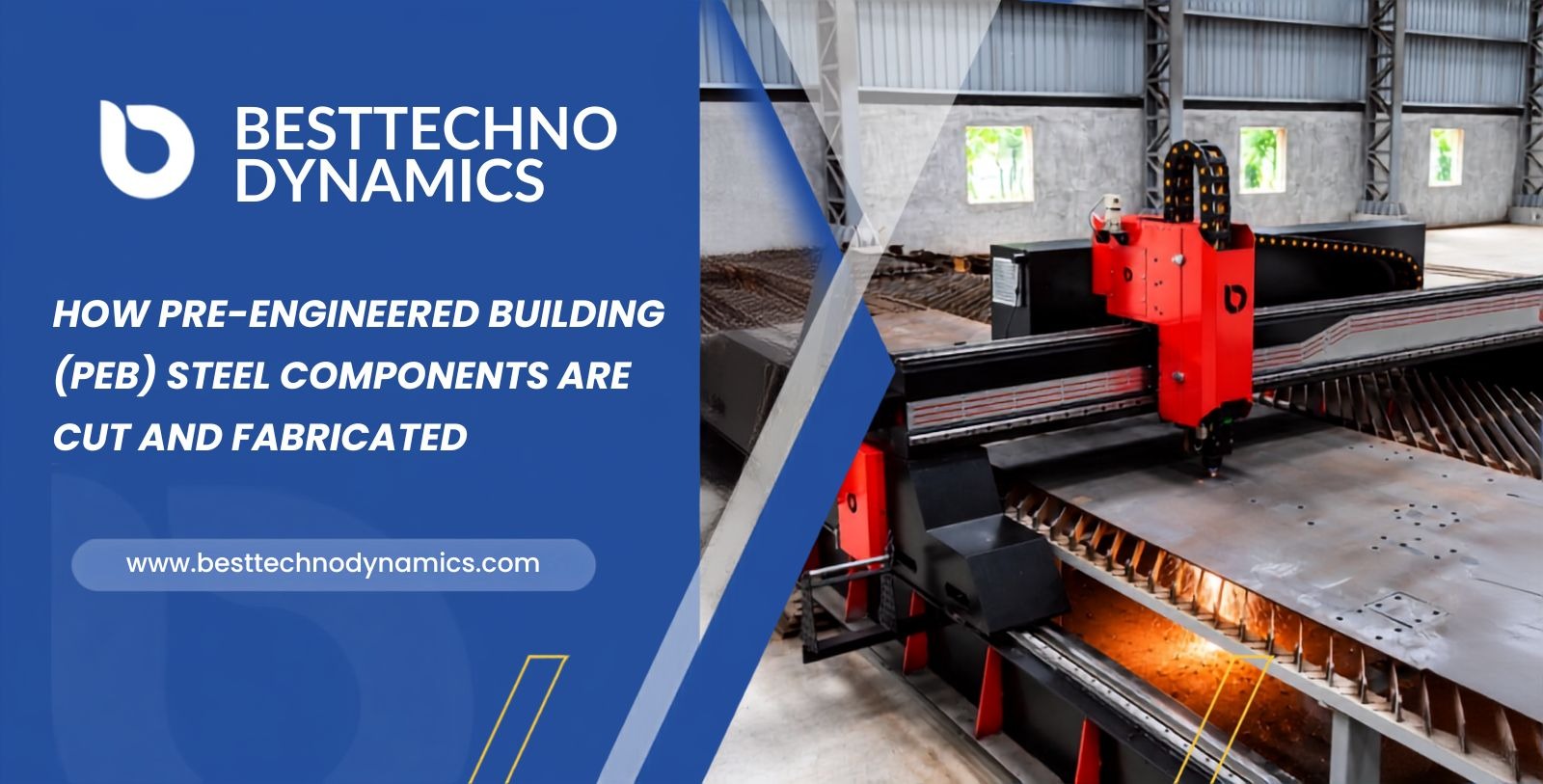
How Pre-Engineered Building (PEB) Steel Components Are Cut and Fabricated
Table of Contents
- Key Takeaways
- What makes PEB steel fabrication different?
- The complete cutting and fabrication process
- Why has laser cutting replaced older methods?
- Choosing the right cutting capacity for your fabrication unit
- Common mistakes fabricators make
- Expert recommendations for PEB manufacturers
- Bottom line
- Frequently asked questions
Key Takeaways
- The quality of PEB fabrication relies on precise cutting in the first phase itself.
- Fiber lasers produce better quality cuts while reducing scrap compared to conventional techniques.
- Use a reliable manufacturer of CNC fiber laser machines to ensure proper operation.
- The power of the machine should be chosen according to the thickness of the material and the requirements of the production process.
A Pre-Engineered Building is only as good as the steel that goes into it. Every primary frame, gusset plate, and connection bracket starts out as a flat sheet or plate, and it has to be cut to an exact shape before anyone can weld, bolt, or assemble it into anything. Get the cutting stage wrong and those errors don't stay contained. They ride through every step that follows.
That's part of why fabrication units have shifted toward CNC fiber laser cutting instead of older thermal methods. It's not a cosmetic change. It affects tolerances, how fast a job moves, and how much steel you're paying for that never becomes part of the finished building. This piece walks through how PEB steel components actually get from raw sheet to finished part, why laser cutting has become the default for structural steel work, and what's worth thinking about before you commit to equipment or a supplier.
What makes PEB steel fabrication different?
Pre-Engineered Buildings don't come from standard, off-the-shelf steel sections the way a lot of conventional construction does. Every primary structural frame, secondary member, base plate, and gusset plate is designed for one specific building, then cut and fabricated to match that design.
That creates a few demands you won't run into with generic sheet metal work:
- Plate thickness swings widely within a single project. You might need thin secondary members right alongside thick base plates and heavy gusset connections.
- Sheet lengths get long. Primary structural frames for industrial sheds routinely run past standard sheet sizes, which means the cutting bed itself becomes a real constraint, not just a spec on a brochure.
- Tolerances are unforgiving. Bolt holes and connection points have to line up across components that might be fabricated weeks apart, sometimes in different batches entirely.
- And the volume is real. PEB manufacturers are running against project deadlines, not turning out one-off pieces.
Moreover, put those together, and you need equipment that handles thick material, long runs, and repeat accuracy all at once. That's a harder combination to find than the spec sheets make it sound.
The complete cutting and fabrication process
Step 1: Design Transfer and Nesting
Before any cutting starts, structural drawings get converted into cutting paths. Nesting software lays the parts out on the sheet to keep scrap down, and this matters more than people outside the industry usually assume. A well-nested sheet is often the difference between a batch that makes money and one that doesn't.
Step 2: Material Loading
Now plates and sheets are positioned on the cutting bed. This is where bed size becomes crucial in PEB operations. Fabricators using a short bed will be required to cut long sections of material into smaller parts that will need to be welded back together later. Each weld point weakens the final structure and lengthens the production process.
Step 3: Laser Cutting
In this step of the process, a fiber laser is used to create the cut. The laser beam passes through the steel and cuts along the prescribed cutting line. The laser should provide enough power to pass through thick plates of steel without slowing down or leaving any heavy dross beneath the cut.
Step 4: Edge Finishing and Inspection
Good laser cutting leaves edges clean enough that most jobs can skip secondary grinding altogether. Parts still get checked for dimensional accuracy, especially around bolt holes, since PEB assembly depends on those lining up correctly once everything's on site.
Step 5: Marking and Sorting
Each cut piece gets marked and sorted by project, frame section, or assembly order. Smaller operations tend to rush this step, and it's a common reason assembly gets delayed further down the line.
Step 6: Fabrication and Assembly
From here, cut components go into welding, drilling, or bolting, depending on the design. Base plates get welded to columns. Gusset plates connect frame members. Brackets go on at reinforcement points.
Why has laser cutting replaced older methods?
Plasma and oxy-fuel cutting were the standard for structural steel for decades, and they still hold their own on certain very thick sections. But fiber laser cutting has taken over most PEB fabrication work, and there are practical reasons for that, not just a trend.
The edges come out cleaner, which means less grinding before welding and real labor hours saved across a production run. The heat-affected zone is smaller than with plasma, so parts hold their intended shape more reliably. Cycle times are faster too. A modern fiber laser source cuts noticeably quicker than plasma on a mid-thickness plate, and that adds up fast across hundreds of components on one project. However, the kerf is tighter, with better nesting accuracy, so less steel gets lost to the cutting process itself.
None of that means laser cutting fixes everything on its own. Machine quality, laser source power, and cutting bed size still decide whether a fabricator actually sees these advantages show up in daily production, or just on paper.
Choosing the right cutting capacity for your fabrication unit
This is where a lot of fabrication units get stuck, especially while comparing a PEB laser cutting machine supplier India option against each other. There's a pull toward assuming more power is always the right call. It isn't, not automatically.
When 6 kW Makes Sense
A 6 kW fiber laser handles thin to mid-thickness plate efficiently, and it suits units processing a mix of secondary members, brackets, and lighter gauge components without constantly cutting the heaviest sections. It's also a lower entry cost for units scaling up gradually rather than jumping straight to top capacity.
When 12 kW Makes Sense
Heavier PEB work changes the math. Thick base plates, large gusset plates, and primary structural frame components benefit from the extra power because it holds cutting speed even on thick material. Units running high daily volumes on structural steel plates usually find the ROI justifies the higher upfront cost.
Honestly, for most fabrication units, both capacities are legitimate choices. It comes down to what your actual project mix looks like, not which number sounds better in a sales conversation.
A machine built for this exact job
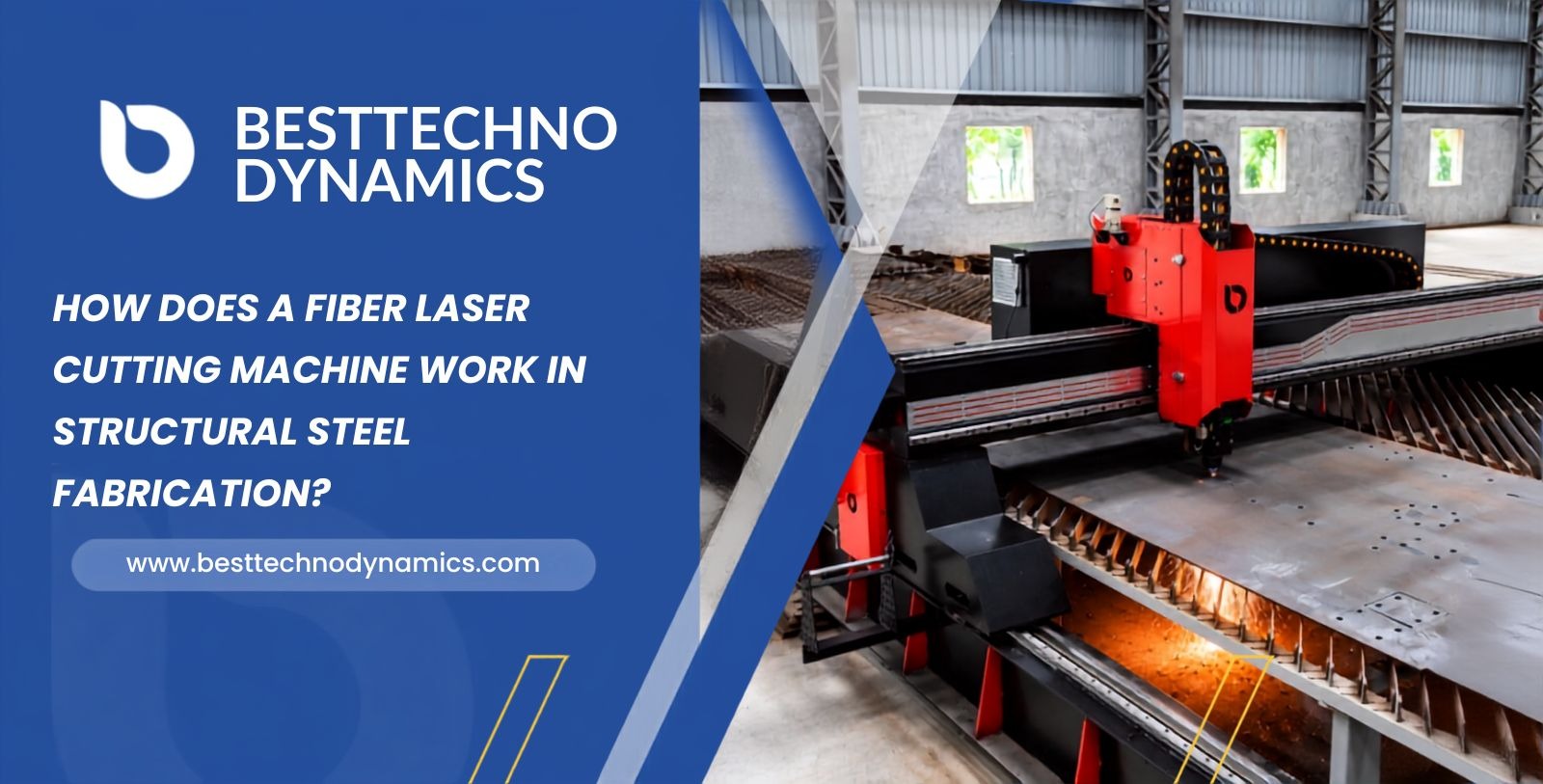
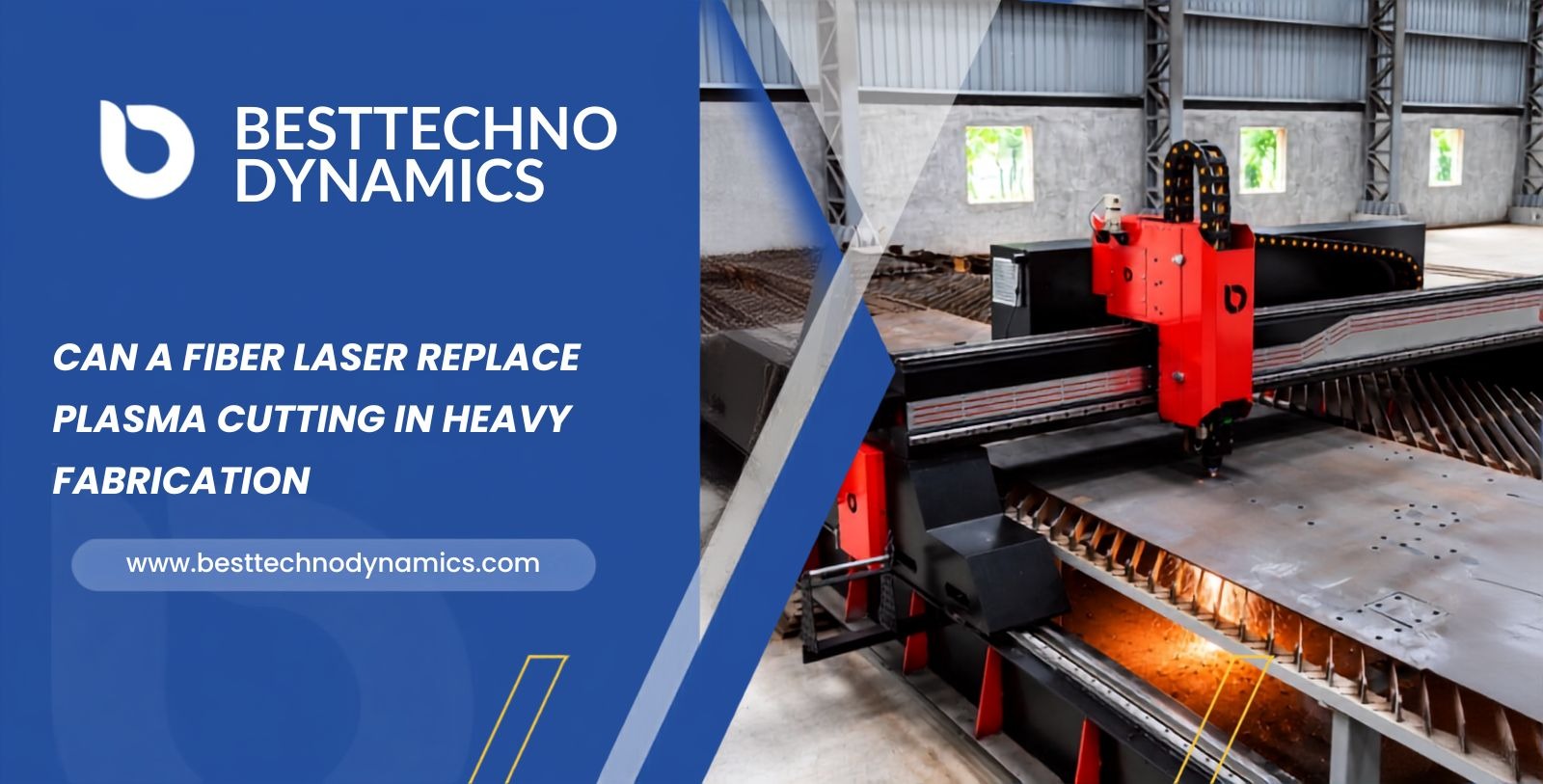
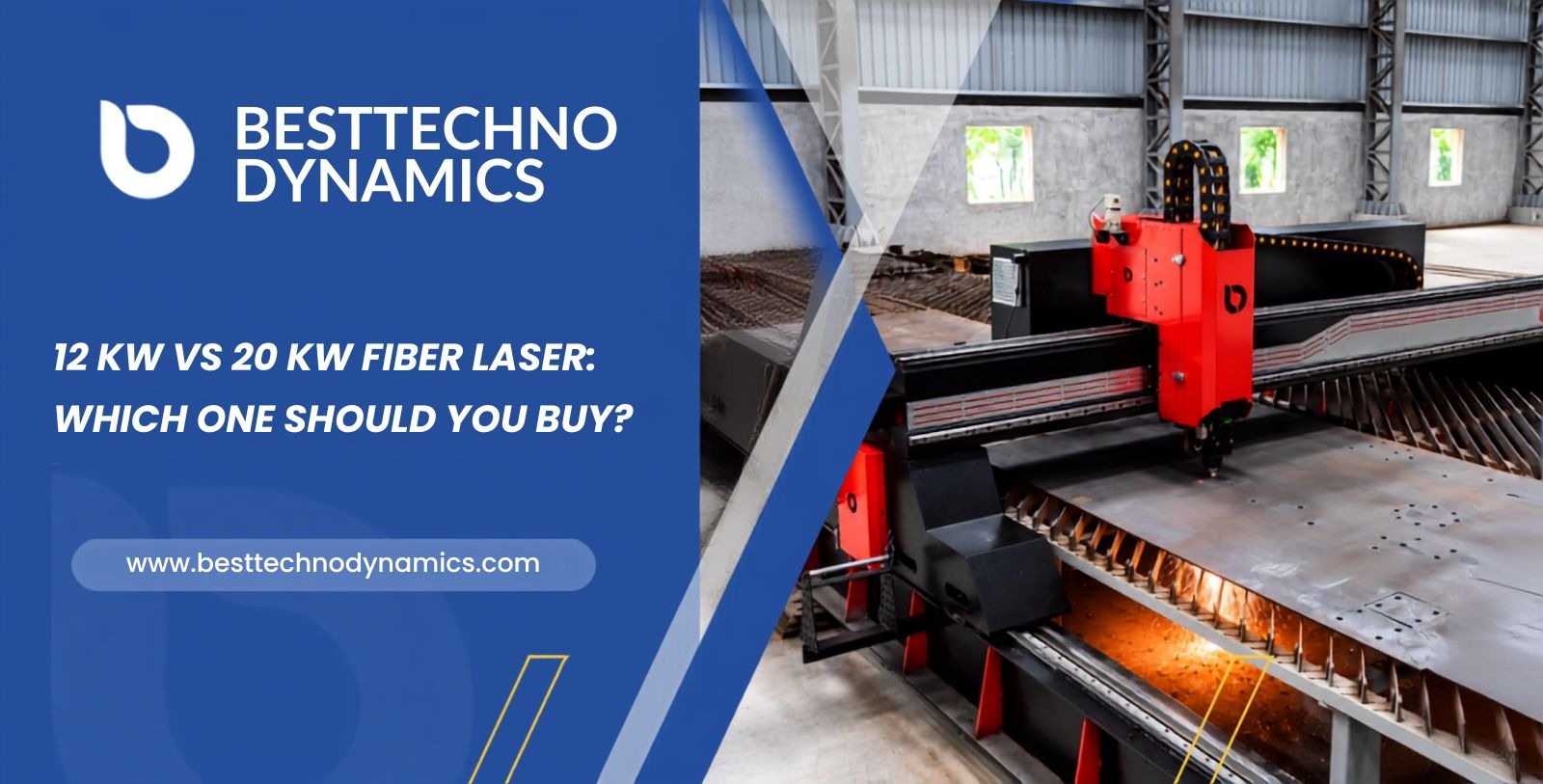
One worth knowing about is the MAMMOTH CNC Fiber Laser Cutting Machine, built specifically around PEB and heavy structural steel processing. It runs a 12 kW fiber laser source with a cutting bed of 3100 mm by 12500 mm, large enough to process long primary structural frames and heavy plates in a single setup instead of splitting the job across multiple cuts.
Furthermore, that bed size matters more than it looks like on paper. Structural frame members for industrial sheds routinely run past the working area of standard machines, which forces fabricators into cutting sections and welding them back together. Cutting it in one pass removes that extra weld point entirely, which helps both structural integrity and turnaround time.
MAMMOTH is built to handle base plates, gusset plates, connection plates, and reinforcement brackets right alongside primary and secondary structural members, and it's meant for continuous industrial operation rather than occasional job-shop use. If you're comparing CNC laser cutting machine manufacturers in Gujarat options, this kind of purpose-built capacity is worth setting against general-purpose machines that weren't designed with PEB dimensions in mind to begin with.
Common mistakes fabricators make
- Buying on wattage alone is probably the most common one. A higher kW number doesn't help if the cutting bed can't handle your longest structural members, or if your typical plate thickness never needed that much power in the first place.
- Ignoring nesting software is another. Even a strong laser cutting machine wastes material if the nesting behind it is weak. Material efficiency is as much a software problem as a hardware one, and it's easy to overlook.
- Underestimating maintenance trips people up too. Fiber laser sources need less upkeep than older cutting technologies, but "less" isn't "none." Skipping scheduled servicing shortens the machine's life and raises the odds of downtime right when you can least afford it.
- After-sales support gets overlooked more than it should. Structural steel fabrication runs on tight timelines, and a breakdown with a slow support response can end up costing more than the machine itself, through missed deadlines alone.
- Not enough capacity to match actual order volume. Overbuying ties up capital you didn't need to spend. Underbuying creates a bottleneck you'll be fighting for years. Both come from skipping an honest look at production needs before signing anything.
Expert recommendations for PEB manufacturers
If you're weighing cutting equipment or a supplier relationship for PEB steel fabrication, a handful of checks narrow things down fast.
- Ask for cutting samples on your actual plate thicknesses, not generic demo material. Edge quality on 6mm mild steel tells you almost nothing about how a machine handles a 25mm structural plate.
- Match bed size to your longest regularly produced component, not your average one. It's the occasional oversized order that exposes a limited cutting bed, not the routine jobs.
- Talk to current customers about after-sales response times, not just the spec sheet. A well-supported 6 kW machine can outperform a poorly supported 12 kW one once you're actually running production.
Working with an established CNC fiber laser machine manufacturer India fabricators already rely on takes a lot of this risk off the table upfront, since track record and support infrastructure are hard to judge from a brochure alone.
Bottom line
The cutting stage sets the tone for everything that follows in PEB fabrication. Clean edges, accurate dimensions, and the ability to cut long structural members in one setup all trace straight back to the equipment doing the cutting. Fiber laser technology has earned its spot as the standard here, and the real decision left for most fabrication units is matching cutting capacity and bed size to their actual project mix, not reaching for the highest number on a spec sheet.
Besttechno Dynamics works with PEB manufacturers and structural steel fabricators to figure out the right cutting capacity for their production needs, whether that's a 6 kW machine for a growing unit or a 12 kW MAMMOTH for high-volume structural steel work. If you're weighing a cutting equipment upgrade, get in touch to talk through your plate thickness range, typical component lengths, and daily output targets, and work out the right fit together.
Frequently asked questions
1. What's the main difference between plasma cutting and fiber laser cutting for PEB steel?
Fiber laser cutting gives cleaner edges and tighter tolerances with a smaller heat-affected zone. Plasma only pulls ahead on very thick plate, beyond what most PEB work needs.
2. What laser power do you need for cutting PEB structural steel plates?
Most PEB work is well covered by 6 kW to 12 kW fiber laser sources. Which one fits depends on plate thickness and daily volume, not a fixed rule.
3. How does cutting bed size affect PEB component fabrication?
A larger bed lets long structural frame members get cut in one piece, avoiding extra weld joints and cutting down both fabrication time and weak points in the structure.
4. Can one machine handle both thin secondary members and thick base plates?
Yes. A properly specified fiber laser machine covers a wide thickness range, though very high-volume thick plate work still benefits from a higher-power source for speed.
5. How much material waste does laser cutting save compared to older methods?
Laser cutting generally cuts kerf width and improves nesting accuracy, which can meaningfully lower scrap compared to plasma or oxy-fuel on the same job.
6. What maintenance does a fiber laser cutting machine need?
Regular lens and nozzle checks, laser source servicing on the manufacturer's schedule, and routine calibration keep cutting accuracy steady and prevent unplanned downtime.
7. Is fiber laser cutting suitable for automotive component manufacturing too?
Yes. The same precision and edge quality that help PEB fabrication carry over well to automotive components, especially heavy-duty parts and structural assemblies.
8. How do I choose between a 6 kW and 12 kW machine?
Base it on your typical plate thickness and daily cutting volume. 6 kW handles thinner to mid-range work efficiently, while 12 kW keeps its speed on thick structural plates at higher volumes.
9. What should I look for in a PEB laser cutting machine supplier?
Cutting samples on your actual material thickness, a cutting bed sized to your longest components, and a real after-sales support record from existing customers.
10. How long does it take to cut a typical PEB structural frame component?
It depends on plate thickness, component length, and laser power, but a properly matched machine and bed size can cut long structural frames in a single pass instead of several sections.