12 Aug, 2026

What's the cutting speed difference between low- and high-power fiber lasers?
Key takeaways
- Lasers with higher wattage are capable of cutting thicker steel faster compared to thinner materials.
- Both 6kW and 12kW machines perform efficiently based on thickness and volume of production.
- Choosing the right power for lasers can also positively affect the delivery of PEB projects.
- Professional manufacturers of CNC fiber laser machines from India can help choose the suitable power.
Anyone who has compared fiber laser cutting machines has probably run into this: a 6kW machine and a 12kW machine can look nearly identical on paper. Same brand, similar bed size, sometimes even a similar price. Yet their real-world cutting speed can differ by a wide margin, depending on what's actually being cut. It trips up a lot of buyers, especially in structural steel, PEB fabrication, and heavy engineering, where the machine has to match the production line, not just the specific sheet.
The short version is that laser power doesn't scale cutting speed in a straight line. Doubling the power doesn't double the speed. It depends on plate thickness, material type, and what you're actually producing. This article walks through how low- and high-power fiber lasers compare on cutting speed, where each one makes sense, and how to avoid overspending or underbuying when sourcing from a CNC fiber laser machine manufacturer in India.
Why cutting speed isn't just about wattage?
It's easy to assume a higher kW rating means faster cutting, full stop. In practice, laser power interacts with plate thickness in a specific way. On thin sheets, say 2mm to 6mm mild steel, a 6kW laser and a 12kW laser often cut at nearly the same speed. Power isn't the bottleneck there. It's how fast the machine's motion system and assist gas can move through the material without ruining the edge.
Moreover, thicker material changes the picture. At 20mm, 25mm, or 30mm, a low-power laser starts to struggle to hold a clean cut without slowing way down, while a high-power source pushes through with far less resistance. That's why PEB manufacturers and structural steel fabricators, who work with thick plates and gusset plates and base plates as a matter of routine, tend to be the ones who actually feel the benefit of higher wattage.
Low power vs high power fiber lasers: The core difference
Low power fiber lasers generally sit in the 1kW to 4kW range. High power machines start around 6kW and climb to 12kW, 20kW, or more in industrial setups. The difference isn't only cutting speed. It shows up in edge quality, dross formation, and how the machine holds up over long production runs.
Speed on Thin Materials
Under 6mm, low power lasers hold their own. A 3kW machine cutting 3mm mild steel can move nearly as fast as a 12kW machine on the same sheet, because thin metal doesn't need much energy density to melt through cleanly. Paying for extra wattage you'll only use on thin sheet work is, in most cases, money left on the table.
Speed on Medium to Thick Materials
Between 10mm and 20mm, the gap starts to open up. A 6kW laser still handles this range reasonably well, but a 12kW machine cuts noticeably faster and leaves a smoother edge, which means less post-processing. A lot of structural steel and PEB components live in this exact thickness band.
Speed on Heavy Plates
Past 20mm, low power lasers slow down a lot, or can't cut cleanly at all. High power lasers, 12kW and up, are built for this range specifically: heavy structural plates, connection plates, reinforcement components, the kind of parts that show up constantly in PEB and heavy engineering work.
Cutting speed by plate thickness: A practical breakdown
Here's a rough sense of how the speed gap plays out across common plate thicknesses. Actual numbers shift with material grade, assist gas, and how well the machine is calibrated.
| Plate Thickness | Low Power (3–4kW) | Mid Power (6kW) | High Power (12kW) |
|---|---|---|---|
| 2–6mm | Fast | Fast | Fast |
| 8–12mm | Moderate | Fast | Faster |
| 15–20mm | Slow | Moderate | Fast |
| 25mm+ | Very slow/limited | Slow | Moderate to fast |
The table is a useful reminder that the best machine isn't whichever one has the biggest number on the specific sheet. It's the one that matches the thickness range you actually cut most.
Why are 6kW and 12kW both valid choices?
There's a common assumption that only PEB companies cutting extremely heavy plate need a 12kW machine, and everyone else should just default to 6kW. That's not quite right. Both power levels earn their keep, depending on what you're actually producing.
A 6kW machine fits fabricators working across a broad mix of thin to medium plates who want solid all-round speed and lower running costs. A 12kW machine makes more sense once thick plate cutting becomes a regular part of the workload, not an occasional job, particularly for PEB manufacturers producing primary structural frames, base plates, and heavy brackets, where cutting speed on 20mm-plus material decides how many jobs get finished in a week.
The right call comes down to an honest look at your order book, not the highest wattage on offer.
How does cutting speed affect PEB project timelines?
For PEB fabricators, cutting speed isn't a specific on paper. It decides how many structural components move through the shop floor each day. Slower cutting on thick plate means longer lead times, more overtime, and thinner margins on fixed-price contracts.
This is where working with a ,CNC fiber laser machine manufacturer India that actually understands structural steel applications pays off. A machine matched to your typical plate thickness doesn't just save a few seconds per cut. It compounds across the whole project and can shave real days off delivery on large PEB structures.
Furthermore, a well-matched high-power laser also cuts down on secondary processing. Cleaner cuts on thick plate mean less grinding and finishing before the next fabrication step, which adds up to real labor savings over the life of a project.
MAMMOTH: A 12kW machine built for heavy fabrication
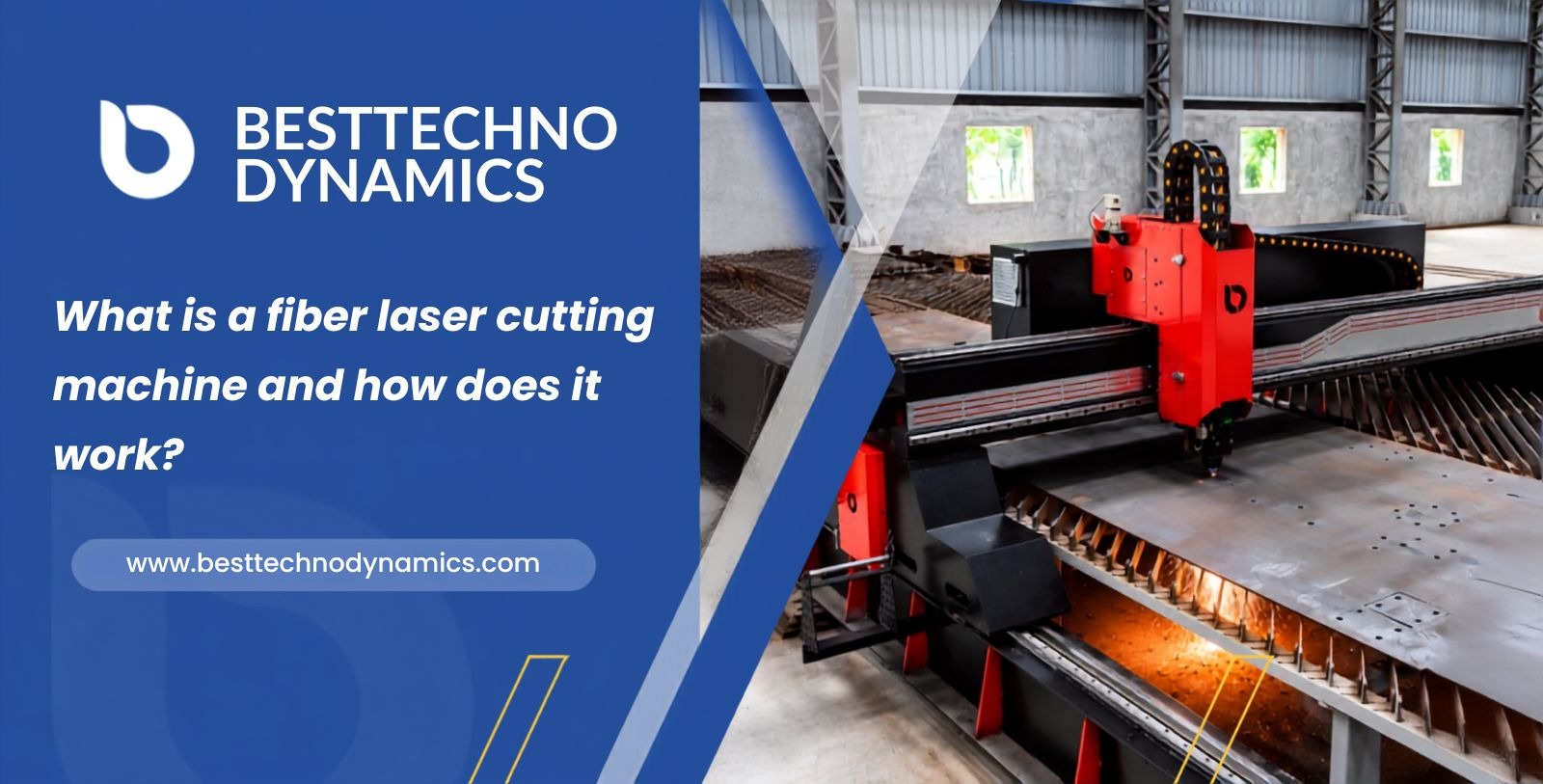
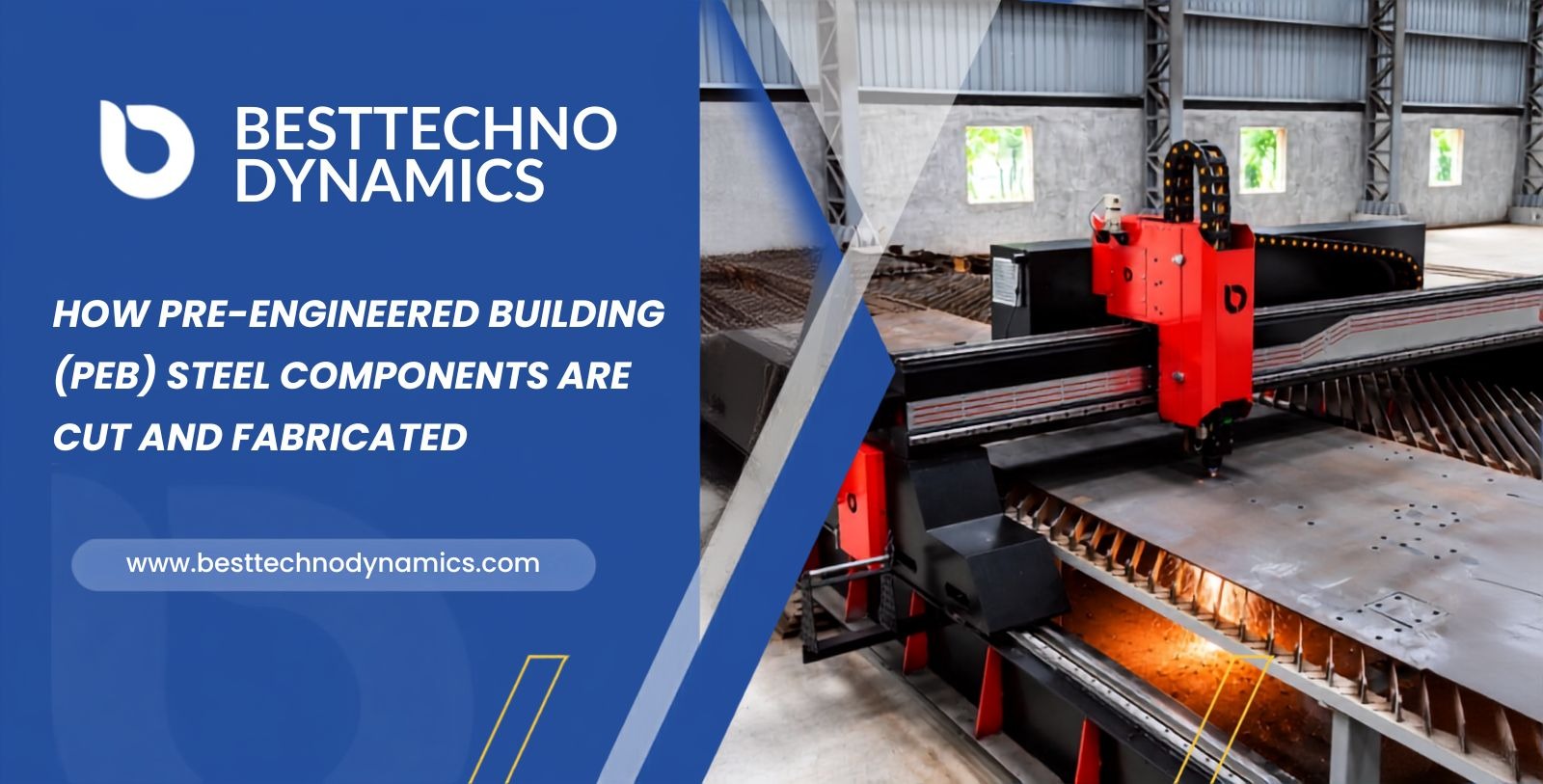
For fabricators working with thick structural steel regularly, Besttechno Dynamics built MAMMOTH: a 12kW CNC fiber laser cutting machine with a 3100 mm × 12500 mm cutting bed, made for PEB and heavy industrial cutting.
MAMMOTH is built around what structural steel processing actually demands: long sheets, thick plates, and consistent accuracy across large workpieces. The oversized bed means long structural components can be cut in a single setup, which cuts down on loading and unloading time between jobs.
However, the machine handles primary structural frames, secondary structural members, base plates, gusset plates, connection plates, and reinforcement brackets- the components that make up most PEB and structural steel work. With a 12kW source, it cuts fast on both thin and thick sheets, keeps dross formation low, and holds steady through long, continuous runs.
Worth repeating- 12 kW isn't just for PEB companies. Any structural steel or heavy engineering operation cutting a real volume of thick plate can benefit from this power range. However, 6kW machines remain a smart, cost-efficient choice for shops with lighter plate requirements. Besttechno Dynamics offers both, because production needs genuinely differ from one fabricator to the next.
Key Benefits of the MAMMOTH Platform
- Faster turnaround on large-format structural steel components
- Less material wasted through precise, repeatable cuts
- Lower operating costs from reduced manpower and rework
- Consistent output across long production batches
- Strong return on investment through reliability and low maintenance
Common mistakes buyers make when comparing power output
Even experienced fabrication teams get this wrong sometimes. A few mistakes come up again and again.
- Assuming higher wattage is always better: Buying a 12kW machine for a shop that mostly cuts 4mm sheet metal means paying for capacity that rarely gets used, plus higher energy bills for no real gain.
- Ignoring bed size in favor of power alone: A powerful laser on a small bed doesn't help much if your components are long structural members. Cutting area and wattage need to be weighed together, not separately.
- Overlooking assist gas and nozzle setup: Cutting speed isn't decided by laser power alone. Assist gas pressure, nozzle condition, and focus calibration all affect how fast a machine can actually cut without sacrificing edge quality.
- Not accounting for future project mix: A shop growing into heavier structural work should think about where their material thickness is headed over the next two or three years, not just what's on the floor today.
Expert recommendations for choosing the right power level
A few practical guidelines based on typical PEB and structural steel workflows:
- If most of your work stays under 12mm plate thickness, a 6kW machine probably offers the better balance of speed and running cost
- If you're regularly cutting 15mm to 30mm structural plate, a 12kW machine like MAMMOTH will cut noticeably faster and reduce downstream finishing work
- Ask for a cutting speed comparison on your actual material grades and thicknesses, not generic manufacturer specifics
- Check bed size against your longest and widest components, especially for PEB primary structural frames
- Ask about local after-sales support and spare parts availability. Machine uptime affects speed just as much as raw wattage does
Working with a trusted CNC laser machine dealer
Where you buy matters almost as much as what you buy. Working with an established CNC laser machine dealers in Gujarat gets fabricators local installation support, faster service response, and advice based on real regional production needs instead of a generic international-specific sheet.
Besttechno Dynamics works as both a CNC fiber laser machine manufacturer in India and a PEB laser cutting machine supplier India, so the machine selection process accounts for the specific demands of Indian structural steel and PEB fabrication: varying material grades, high-volume production cycles, and the day-to-day realities of running heavy machinery on an industrial shop floor.
Choosing a supplier who understands both the technical side and the operational side of PEB manufacturing tends to land you a better-matched machine instead of a one-size-fits-all sale.
Conclusion
The cutting speed gap between low and high power fiber lasers comes down to one thing: power matters most once material gets thick. On thin sheets, a lower wattage machine performs almost as well as a high power one. On heavy structural plates, high power lasers pull ahead clearly, cutting faster and cleaner with less rework after the fact.
Neither 6kW nor 12kW wins outright. It depends on what you cut, day after day. PEB fabricators and structural steel manufacturers working across a wide thickness range will get more out of a machine like MAMMOTH, with the power and bed size to keep heavy production moving. Lighter shops may find a 6kW machine does everything they need.
If you're weighing which laser power output fits your production line, Besttechno Dynamics can run a cutting speed comparison based on your actual material specifications. Get in touch to talk through whether a 6kW or 12kW CNC fiber laser machine, including the MAMMOTH platform, is the right fit for your fabrication work.
Frequently asked questions
1. What's the main difference between low power and high power fiber lasers?
Low power fiber lasers (1–4kW) cut thin sheets well but slow down a lot on thick plates. High power lasers (6kW–12kW+) hold fast, clean cuts across both thin and thick material, which suits heavy structural work better.
2. Does higher laser wattage always mean faster cutting?
Not always. On thin sheets under 6mm, low- and high-power lasers cut at similar speeds. The advantage of higher wattage shows up mainly once plates pass 12–15mm.
3. Is a 12kW fiber laser only useful for PEB manufacturers?
No. PEB companies benefit a lot from 12kW machines like MAMMOTH, but any structural steel or heavy engineering shop cutting a real volume of thick plate can see similar gains in speed and efficiency.
4. What plate thickness justifies upgrading to a 12kW machine?
If you're regularly cutting plates between 15mm and 30mm, a 12kW machine typically cuts faster and leaves cleaner edges than a 6kW machine would.
5. Can a 6kW fiber laser still be a good investment?
Yes. For fabricators mostly working with thin to medium plates under 12mm, a 6kW machine offers strong cutting speed with lower energy and running costs than higher wattage options.
6. How does cutting speed affect PEB project timelines?
Faster cutting on thick structural plates cuts down overall fabrication time, reduces labor hours spent on finishing, and helps hit tighter deadlines, especially on large PEB structures.
7. What is the MAMMOTH CNC fiber laser cutting machine?
MAMMOTH is a 12kW CNC fiber laser cutting machine from Besttechno Dynamics with a 3100 mm × 12500 mm cutting bed, built specifically for PEB and heavy structural steel processing.
8. Does bed size matter as much as laser power for cutting speed?
Yes. A powerful laser on a small bed still limits what you can process in one setup. A larger bed, like MAMMOTH's, cuts down loading time and improves efficiency on long structural components.
9. What factors besides wattage affect fiber laser cutting speed?
Assist gas pressure, nozzle condition, focus calibration, and material grade all play into actual cutting speed, alongside the machine's laser power.
10. How do I choose between a 6kW and 12kW CNC fiber laser machine manufacturer in India?
Look at your typical plate thickness range, production volume, and where you expect to grow. A reliable CNC fiber laser machine manufacturer in India can run a cutting speed comparison on your actual materials to help you decide.