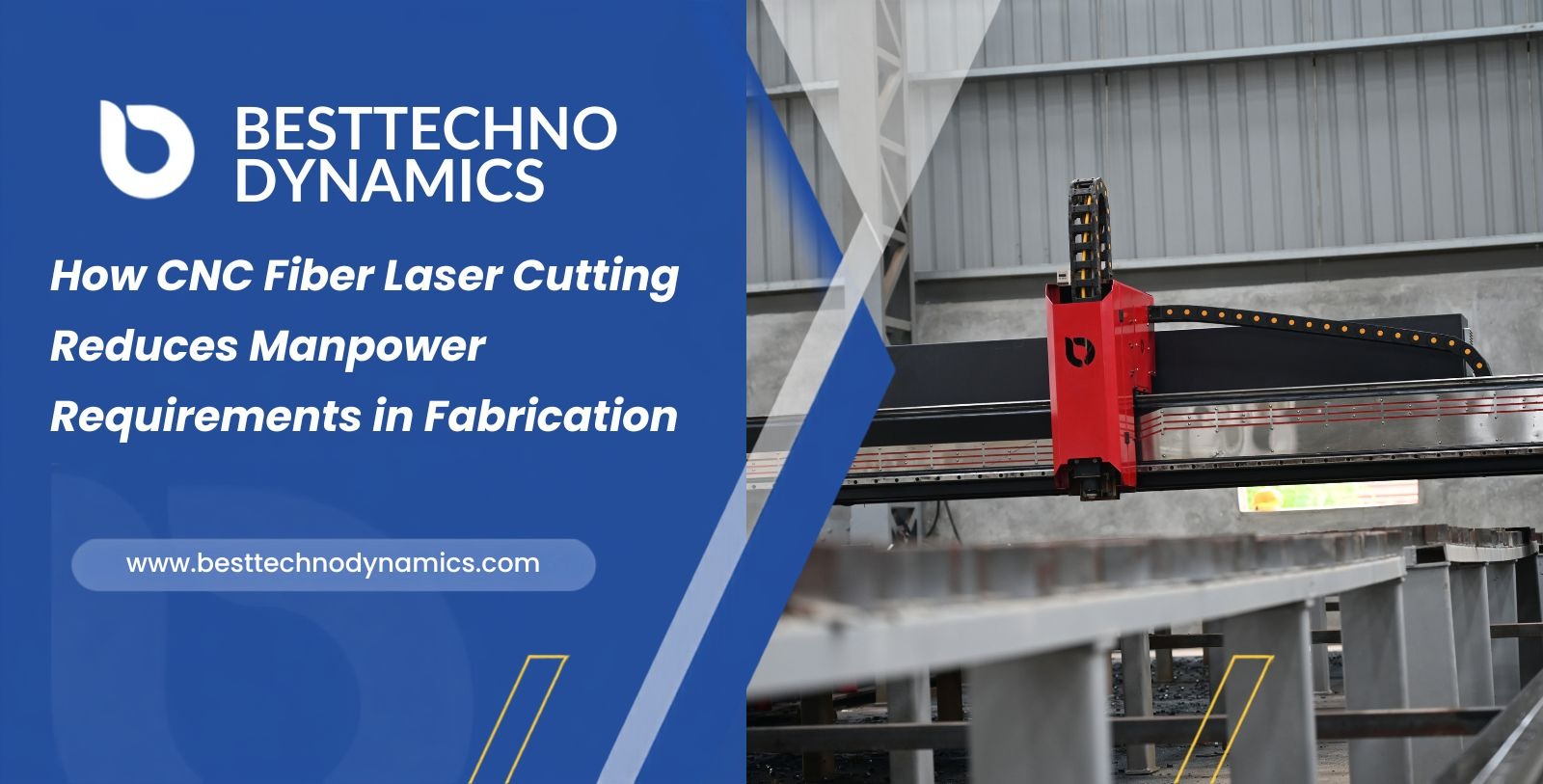
How CNC Fiber Laser Cutting Reduces Manpower Requirements in Fabrication
Table of Contents
- Key takeaways
- What does manpower look like in traditional fabrication?
- How does CNC fiber laser cutting reduce manpower?
- Does it also improve productivity, accuracy, and safety?
- What is the MAMMOTH CNC fiber laser cutting machine?
- How do you choose the right machine and supplier?
- Conclusion
- Frequently asked questions
CNC fiber laser cutter minimizes human labor as it encompasses jobs traditionally requiring a small team- marking, cutting, adjustments, grinding, and re-checking. One skilled operator feeds the program and observes the cutting process. The outcome is reduced human resource involvement, stable output, and less necessity for corrections. Here follows an explanation of the sources of savings and a guide to selecting an appropriate device for your shop.
Key takeaways
- Automated cutting removes layout marking, manual torch work, and most edge cleanup.
- One program can cut the outline, holes, and slots in a single pass, so fewer people touch each part.
- Large-format machines take whole sheets and long plates without repositioning.
- The 6 kW and 12 kW MAMMOTH suit different thickness and volume needs. Neither is simply the better one.
What does manpower look like in traditional fabrication?
Picture a plate moving through a conventional shop. Someone reads the drawing and marks the layout with a scriber. Someone else cuts it with a hand torch, a shear, or a basic plasma table. Then the edges get ground, the dross gets knocked off, holes are drilled as a separate job, and the part is measured.
Every step needs a person, and every handover is a chance for a mistake. One job can hold up a marker, a cutter, a grinder, and an inspector at the same time.
Therefore, skill is the other problem. Quality changes with whoever is on shift, and when your best cutter is absent, the whole line slows down.
How does CNC fiber laser cutting reduce manpower?
A CNC fiber laser collapses most of that chain into one programmed operation. The labour saving comes from six places.
How does automated cutting replace marking and manual cutting?
The part geometry comes from a CAD file, usually DXF or DWG. Nesting software arranges the parts on the sheet, and the machine follows the toolpath. Nobody scribes lines or steers a torch by hand.
The marking crew and the manual cutting crew are mostly replaced by programming and supervision.
Which manual operations disappear?
A single program can cut the outer profile, bolt holes, slots and notches in one pass. Parts that used to need a separate drilling or punching step often come off the machine finished.
Therefore, fewer operations mean fewer workstations and fewer part movements. Nobody stands around waiting for the previous station to finish.
How does it reduce setup and loading intervention?
Nesting many parts on one sheet means fewer sheet changes. A large bed takes a full sheet or a long plate in one setup, so material gets repositioned less often.
If the machine has an exchange table or pallet changer, the operator can stage the next sheet while the current one is still cutting. Idle time shrinks and nobody has to be added.
Why does consistent production matter for manpower?
A saved program makes the same part on run one and run five hundred. Cutting parameters for each material and thickness live in the controller, so the result depends far less on who is standing at the machine.
Staffing gets simpler. You need fewer veteran cutters, and new operators become useful sooner.
How does it cut rework and post-processing?
Compared with flame cutting, a fiber laser leaves a narrow kerf and a small heat-affected zone. With the right assist gas (oxygen for mild steel, nitrogen for stainless steel and aluminium), edges often need little finishing. The exact result depends on material and thickness.
Less grinding, straightening and hole correction means fewer people on secondary work. Fewer rejects also means less time recutting parts.
Does it make supervision easier?
The operator's job changes from doing the cut to watching it. The controller shows job progress, flags faults and lets them adjust parameters at the panel.
One skilled person can supervise cutting while also preparing material and programs. That is a very different day from running a torch.
Does it also improve productivity, accuracy, and safety?
Yes, and each of these gains feeds back into the manpower savings.
Does it raise productivity?
On thin and medium sheets, fiber lasers are generally faster than CO2 lasers, and they use considerably less electricity for the same cutting work. That lowers the running cost per part. Add less handling and each operator-hour turns out more finished parts.
Does it improve accuracy?
A focused beam and CNC motion give repeatable dimensions. Bolt holes line up and parts fit with less trimming at assembly. In structural work, that saves the fitting and correcting that usually eats labour further down the line.
Is it safer for operators?
With automated cutting, people spend less time near hot torches and sparks, and less time on heavy grinding or handling hot offcuts. The machine still needs guarding, fume extraction and trained operators. It is safer in workflow terms, not risk-free.
What does it cost to run?
Fiber laser sources have no mirrors to align, and they generally need less routine maintenance than older CO2 systems. Nesting software raises material yield by packing parts tightly and, where the geometry allows, sharing cut lines.
Moreover, the catch is infrastructure. You need stable power, a chiller for the laser source and cutting head, and a supply of assist gas or compressed air. Plan for these before installation, not after.
What is the MAMMOTH CNC fiber laser cutting machine?
Best Techno Dynamics is a CNC fiber laser machine manufacturer India buyers can visit in person, at its Vadodara base. The MAMMOTH is its large-format CNC fiber laser cutting machine, available in 6 kW and 12 kW configurations.
The big bed matters for manpower. Full-size sheets and long parts can be cut in one setup, which means less repositioning, less crane and handling effort, and fewer joins to weld or correct later.
How do the 6 kW and 12 kW configurations differ?
They are built for different production needs.
The 6 kW configuration:
- Suits sheet and light-to-medium plate work
- Fits mixed job-work with varied materials such as mild steel, stainless steel and aluminium
- Has a lower entry investment and running cost
- Makes sense when most of your work is not heavy plate
The 12 kW configuration:
- Has more power for thicker plate and faster cutting on heavier material
- Suits steady, high-volume production
- Pays off when thick sections are a regular part of the workload
Furthermore, more power is not automatically better. If most of your jobs are thin sheets, a 12 kW source may never earn back its extra cost. Cutting capacity also depends on material, gas and required edge quality, so confirm thickness limits against your own parts before you decide.
What can the 12 kW MAMMOTH cut, and for whom?
The 12 kW MAMMOTH has a 3100 mm × 12500 mm cutting area. That length suits long structural components that are awkward on standard beds.
Typical uses include:
- PEB fabrication: web and flange plates, base plates and gussets
- Structural steel: long members, stiffeners and connection plates
- Automotive: heavy vehicle components, brackets and chassis-related parts
- Heavy engineering: machine frames, skids and thick-section parts
- Industrial fabrication: general plate work where a large format saves handling
PEB is one strong use case, not the only one. Any shop cutting large or thick parts in volume can use this format.
How does it help with precision and material waste?
Nesting across a large sheet fits more parts on each plate. The narrow kerf keeps material loss small, and accurate cutting reduces scrap from parts that do not fit. Over a few months of production, that adds up to real money in steel.
How do you choose the right machine and supplier?
Start with your own work, not the spec sheet. Write down your usual materials, thickness range, sheet sizes and monthly volume. Those decide the power level and bed size.
When you compare each CNC fiber laser machine manufacturer India has to offer, ask about:
- Laser source and cutting head brands
- Control and nesting software, and how easy it is to learn
- Installation, operator training and commissioning
- Spare parts availability and service response time
- Demo cuts on your own material and drawings
Buyers in Gujarat often weigh local CNC laser machine dealers in Gujarat against buying direct from a manufacturer. The difference tends to show after the sale, in how fast service and spares arrive.
Besttechno Dynamics is a CNC machine manufacturer in Gujarat, based at Ranoli GIDC, Vadodara. Its range covers CNC plasma, oxyfuel and fiber laser cutting machines, with fiber laser versions that add a pallet changer, an extra-long format or pipe profile cutting. That lets you compare technologies against your actual workload instead of being steered toward one machine.
Conclusion
CNC fiber laser cutting reduces manpower by automating the slow, repetitive parts of fabrication: marking, manual cutting, repositioning, grinding and rework. Accuracy, safety and consistency improve along with it, so your team spends more time on work that needs their skill.
Pick power and bed size from your material mix and volume. The 6 kW and 12 kW MAMMOTH cover different ground, from mixed sheet and plate work to large-format, heavy-section production.
If you are comparing a CNC fiber laser machine manufacturer India-wide, or want a CNC machine manufacturer in Gujarat you can visit, talk to Best Techno Dynamics. Send your materials and part drawings, and the team can suggest a configuration and arrange a demonstration.
Frequently asked questions
-
How does a CNC fiber laser machine reduce manpower?
It automates marking, cutting and hole-making from a digital file. Several manual roles drop away, handling falls, and there is less grinding and rework, so each finished part takes fewer people. -
Can one operator run a fiber laser cutting machine?
For the cutting itself, generally yes. One trained operator loads programs, watches the cut and stages material. Actual staffing still depends on your layout, sheet handling and how much unloading and sorting follows the cut. -
Is a 12 kW machine better than a 6 kW machine?
Not automatically. 12 kW makes sense for thicker plate and steady high-volume work. 6 kW is often the more practical pick for sheet and light-to-medium plate. Let your thickness mix decide. -
What materials can a fiber laser cut?
Mainly metals: mild steel, stainless steel, aluminium, brass, copper and galvanised sheet. Maximum thickness varies with material and laser power. -
Is fiber laser cutting safer than plasma or manual cutting?
It cuts down direct handling of torches and manual grinding, so there is less exposure to sparks and hot work. Guarding, fume extraction and trained operators are still required. -
What infrastructure does a fiber laser cutting machine need?
Stable electrical supply, a chiller for the laser source and cutting head, and an assist gas or compressed air supply. A level floor and room for material handling matter too. -
Should I buy from CNC laser machine dealers or from a manufacturer in Gujarat?
Compare both on installation, training, spare parts, and service response. A manufacturer can often customise the configuration, while a dealer may be more convenient. Either way, ask for demo cuts on your own material. -
Does laser cutting reduce material waste?
Usually. The narrow kerf, accurate cutting and nesting software let you fit more parts on each sheet and cut scrap from rejected or misfit parts.