The Machine Behind Modern PEB Fabrication: CNC Fiber Laser Cutting
Table of Contents
- Key takeaways
- Why are PEB fabricators moving to fiber lasers?
- How does fiber laser cutting improve output and quality?
- Where does it fit in PEB and industrial work?
- 6 kW or 12 kW: choosing the right power
- Other factors to check before buying
- MAMMOTH CNC fiber laser cutting machine
- Operating efficiency and ROI
- Wrapping up
- Frequently asked questions
Key takeaways
- On the plate ranges it suits, fiber laser cutting gives PEB shops faster cycles, tight tolerances, and clean edges.
- 6 kW and 12 kW are both practical choices. Plate thickness, volume, and part size decide between them.
- Bed size, automation, software, and service matter as much as laser power.
- ROI depends on cutting time, material yield, and rework, so work it out from your own job mix.
Why are PEB fabricators moving to fiber lasers?
A pre-engineered building is a kit of repeatable parts. Built-up columns and rafters, end plates, base plates, stiffeners, gussets and connection plates all have to bolt together on site, usually under time pressure. If a hole sits a few millimetres off at the cutting stage, someone pays for it later in slow fit-up or rework.
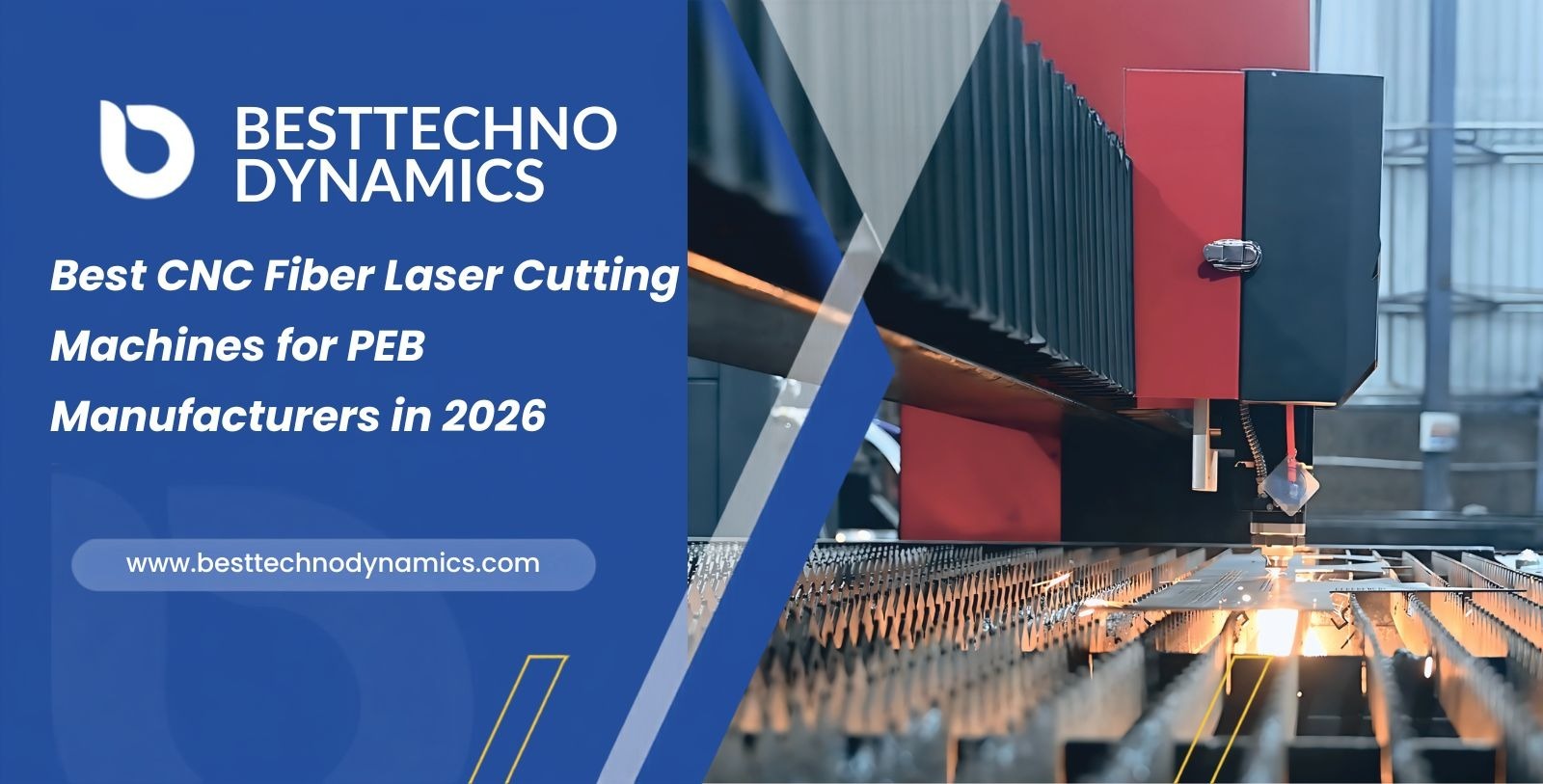
However, a fiber laser sends its beam through an optical fiber and focuses it to a very small spot. The CNC controller follows the nested drawing, so the cut path comes straight from the digital file. Steel absorbs this wavelength well, and fiber sources generally use less electricity than older CO2 lasers.
Next to plasma and oxyfuel, a fiber laser gives a narrower kerf and a smaller heat-affected zone on the thicknesses it handles well. Plasma hasn't gone away, though. On a very thick plate, or where edge finish matters less, it can still be the cheaper choice, and plenty of fabricators run both.
How does fiber laser cutting improve output and quality?
Speed and productivity
Piercing is quick, and cutting speed on thin and medium plate is high. Holes, slots, and profiles that used to need drilling or a second operation come out in the same pass, so parts move from drawing to finished with fewer handoffs. In PEB work, this adds up. One frame can call for dozens of small plates with several holes each, and the seconds saved on every pierce compound over a shift.
Precision and fabrication quality
A narrow kerf and stable motion keep dimensions repeatable across a batch. Bolt holes land where the drawing puts them, which matters when a connection plate meets a flange on site. Edges are often clean enough to limit grinding. Results still depend on material grade, assist gas, and cutting parameters, so test your own steel before you assume anything.
Material utilization
Nesting software packs parts tightly, and the narrow kerf lets them sit closer together. When two parts can share a cut line, common-line cutting trims offcut waste further. If you buy plates by weight, a small gain in yield adds up over a year. Usable remnants can be logged and reused for smaller plates instead of heading to scrap.
Where does it fit in PEB and industrial work?
Fiber laser cutting covers a wide range of fabrication jobs:
- PEB: base plates, gusset plates, end plates, stiffeners, web and flange plate profiles, connection plates
- Structural steel: brackets, cleats, splice plates, platform and support parts
- Automotive: chassis brackets, reinforcement plates, fixtures and mounting parts
- Heavy engineering: machine frames, guards, ribs and wear plates
- General industrial: storage systems, tank components and OEM parts
However, take a warehouse frame. It needs many plates in a handful of sizes, repeated at every bay. Cut from one nested program, they stay consistent from the first bay to the last, and the erection crew is less likely to face field corrections.
6 kW or 12 kW: choosing the right power
Neither rating is the universal answer. Both are practical for PEB work, and the right pick depends on plate thickness, production volume, component size, and application.
When 6 kW makes sense
- Most of your plate is thin to medium, such as webs, stiffeners, gussets, and secondary members
- Thick plate turns up now and then rather than every day
- You want a lower purchase cost and lower power and gas consumption
- Your work is a mix of jobs and materials
When 12 kW makes sense
- Thicker plate, such as heavier base plates and flange plates, is cut regularly
- Volume is high, or the shop runs more than one shift
- Faster cycle times on medium and thick plate would lower your cost per part
- Big orders make throughput the main constraint
Moreover, the maximum thickness in a brochure and comfortable daily production are two different things. Look at the thickness you cut most often, not the thickest sample a vendor can show you. A 12 kW source running mostly thin sheet may sit underused. A 6 kW machine pushed to its limit every day may slow down. Ask for cut samples and speed data on your own material grades.
Other factors to check before buying
- Working area: match the bed to your longest and widest plates
- Automation: pallet changers and loading systems cut idle time between jobs
- Software: nesting, DXF import and part tracking affect yield and programming time
- Assist gas: oxygen and nitrogen differ in edge finish and running cost
- Power and cooling: stable electricity, a suitable chiller and fume extraction
- Service: spares, training and response time matter as much as the spec sheet
Shortlisting a CNC fiber laser machine manufacturer India wide is easier when you ask every vendor for the same samples and support terms. Service deserves early attention too. For fabricators in western India, a CNC machine manufacturer in Gujarat within reach can make spares and site visits simpler.
MAMMOTH CNC fiber laser cutting machine
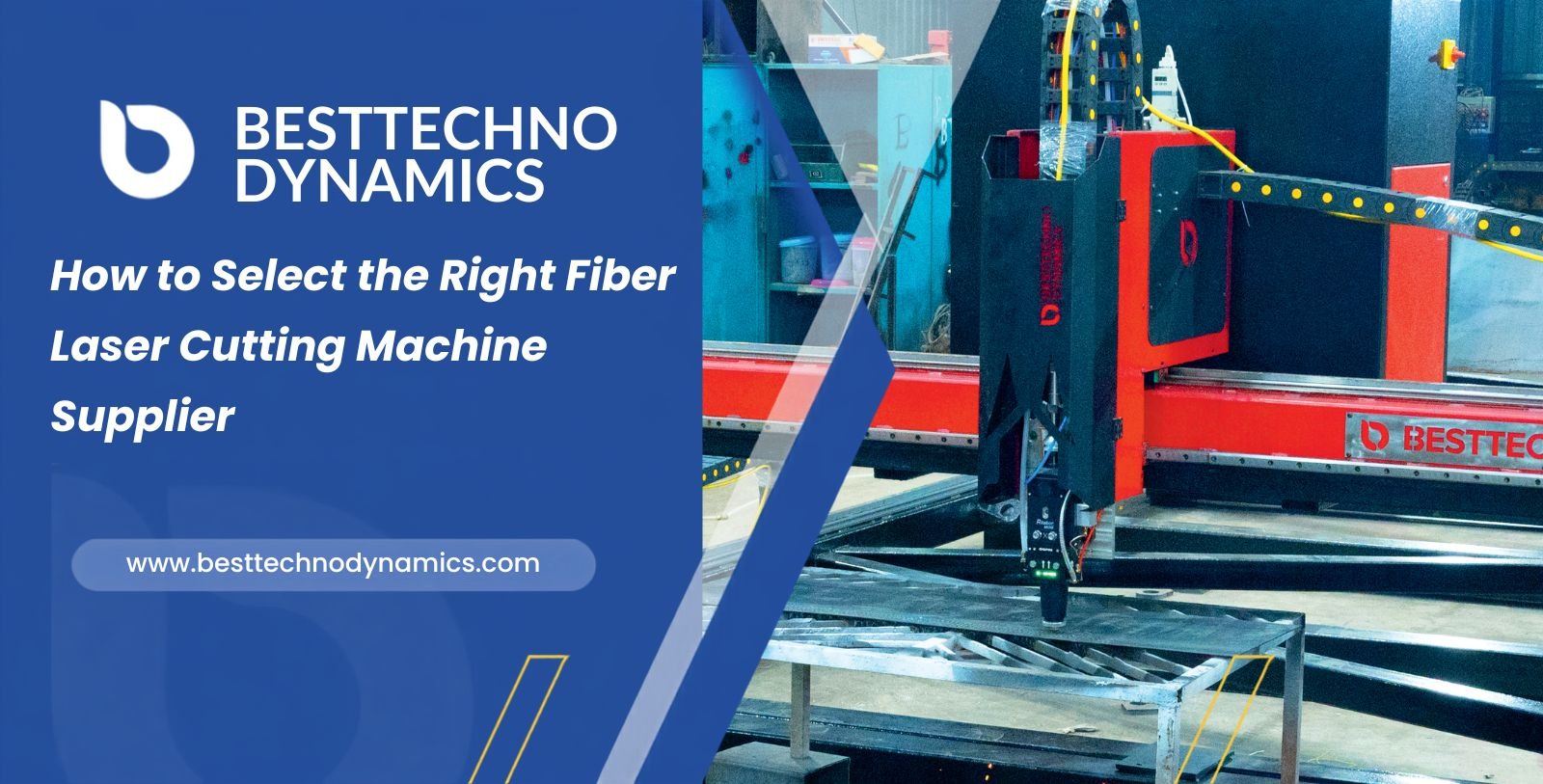
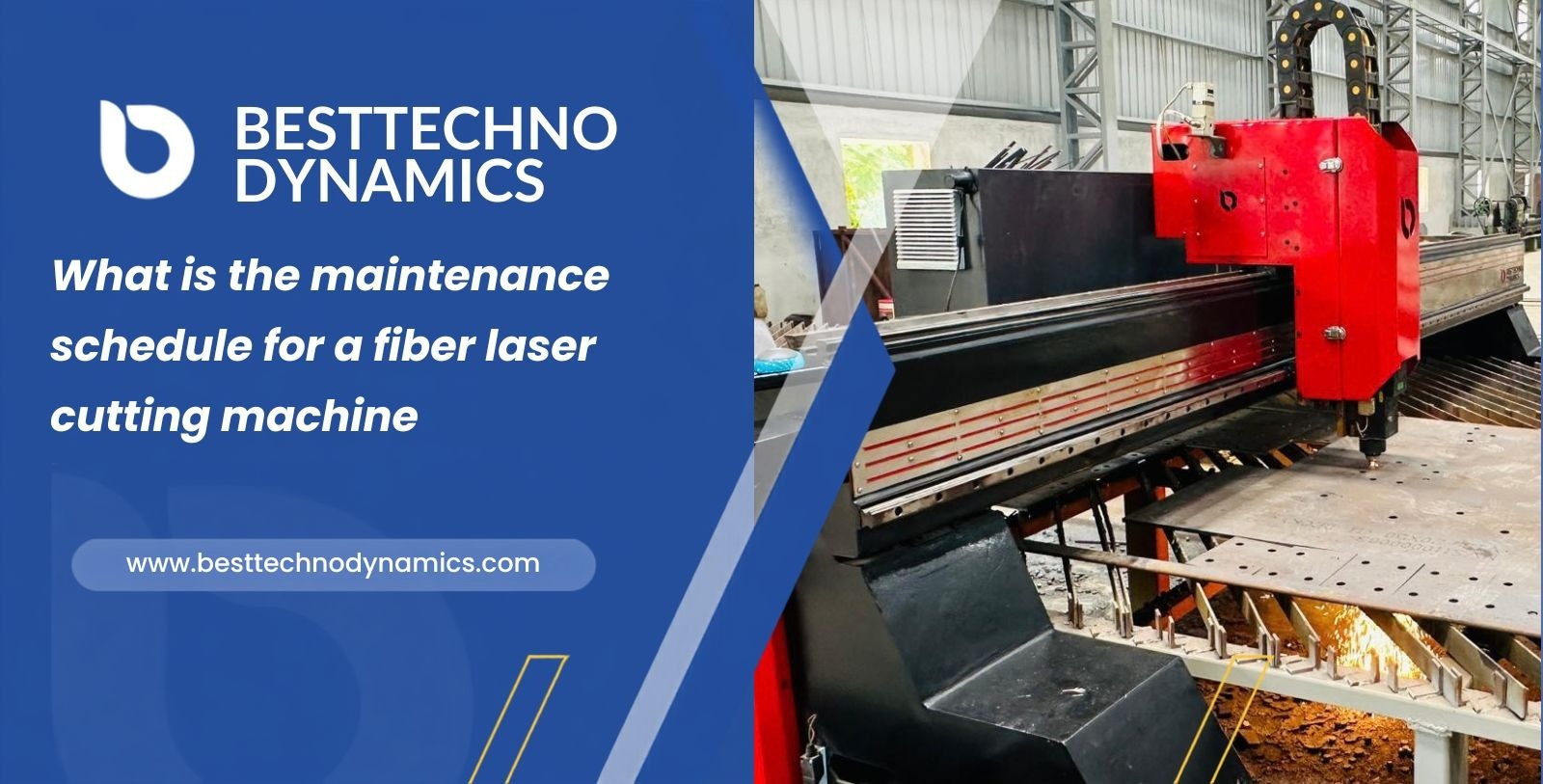
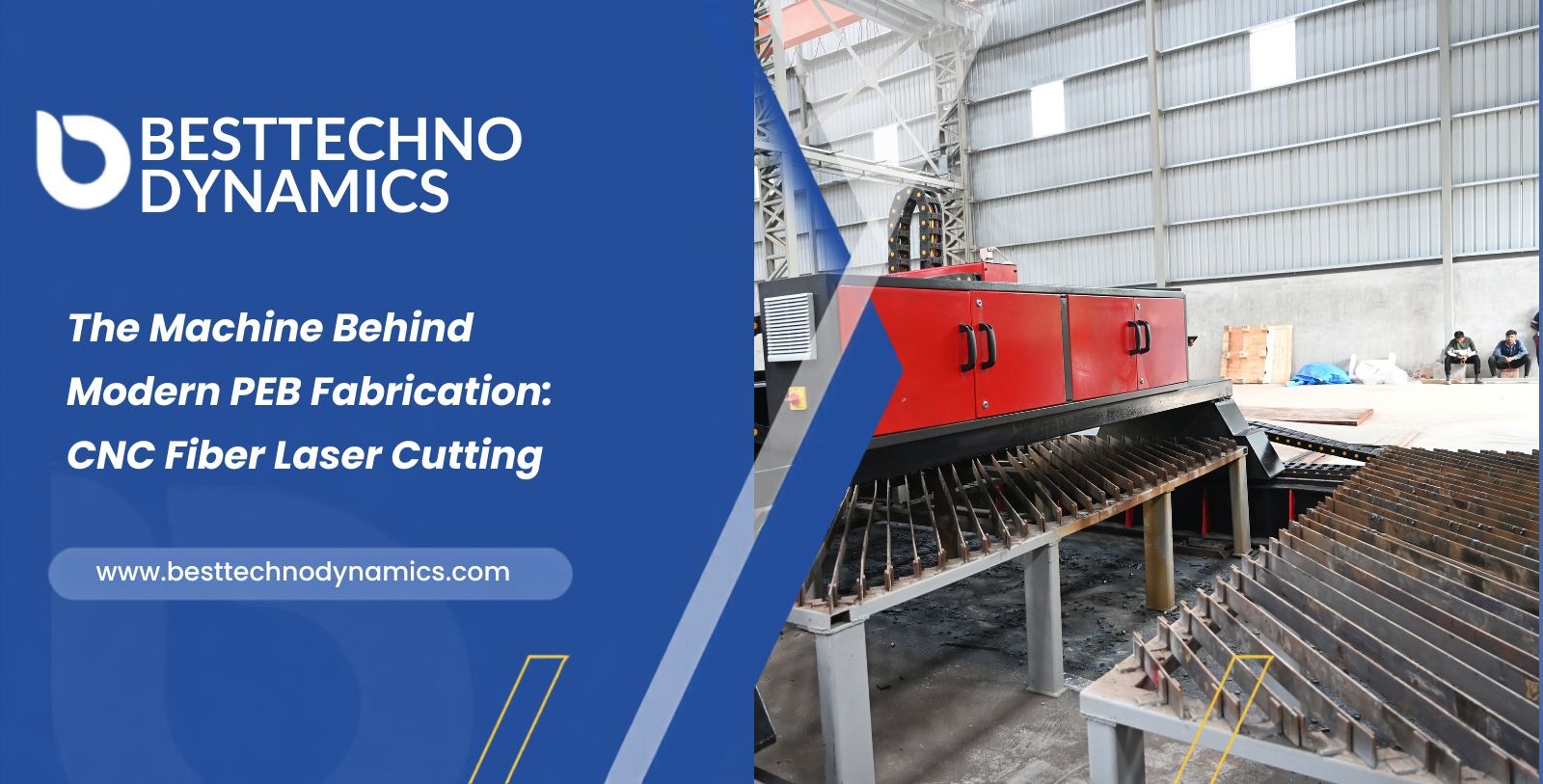
Besttechno Dynamics is a CNC machine manufacturer in Gujarat, based in Vadodara, and the MAMMOTH is built for shops that handle long, large plates. The key specifications:
- Laser source: 12 kW fiber laser
- Cutting area: 3100 mm × 12500 mm
- Designed for: PEB, structural steel fabrication, automotive, heavy engineering, and industrial fabrication
Why does the extra-large bed matter?
Long plates can be loaded and cut in one setup instead of being cut down first. A bigger area also gives the nesting software more room to place parts, which supports better material use. Less handling means fewer chances for positioning error.
What does it cut?
- Primary structural frames
- Secondary structural members
- Base plates, gusset plates, and connection plates
- Brackets
- Reinforcement components
What can buyers expect?
The 12 kW source supports high-speed cutting on both thin and thick metal. The aim is high dimensional accuracy, clean edges, and consistent cutting quality, with less post-processing afterwards. Faster production and tighter nesting cut material wastage. The machine is built for continuous industrial operation, and fiber laser technology generally brings better energy efficiency and lower operating costs than older cutting methods. All of that feeds into the ROI.
MAMMOTH is not the only route for PEB. If most of your work is thin to medium plate, a 6 kW machine may serve you well. Besttechno Dynamics range also includes fiber laser models with a pallet changer and extra-long beds, so the team can suggest a configuration that suits your job mix.
Operating efficiency and ROI
Fiber lasers skip the resonator gas and mirror alignment that CO2 systems need, so routine upkeep is simpler. Electricity use per part is usually lower than on older technologies, though gas, consumables, and service still cost money.
To estimate ROI, compare these figures for your own shop:
- Current cost per part, including outsourcing or plasma cutting
- Cutting time saved per shift
- Material yield before and after nesting
- Grinding and rework hours
- Power, gas, and consumable costs
- Expected machine utilization
Ask the CNC fiber laser machine manufacturer in India for shops' shortlists for power data and sample cutting times, so your numbers rest on real inputs. Payback depends heavily on utilization.
Therefore, a machine running two shifts pays back differently from one running a few hours a day. If someone quotes a fixed payback period without seeing your job mix, treat it as a guess.
Wrapping up
CNC fiber laser cutting gives PEB and industrial fabricators faster cycles, tighter accuracy, and better use of plate, as long as the machine matches the work. Thin to medium plate often points to 6 kW. Regular thick plate, high volume, and long components can justify 12 kW and a large bed like the MAMMOTH's.
When comparing CNC fiber laser machine manufacturers in India, ask for cut samples on your own material and a clear service plan. Your job mix should drive the decision, not a headline number.
To discuss plate sizes, thicknesses, and output targets, contact Besttechno Dynamics, a PEB laser cutting machine supplier India that fabricators can approach with drawings or sample plates for a configuration recommendation and quotation.
Frequently asked questions
1. What is CNC fiber laser cutting used for in PEB?
It cuts base plates, gussets, end plates, stiffeners, and connection plates from steel. Bolt holes come out accurately, and profiles are clean, ready for welding and assembly.
2. Is fiber laser better than plasma for PEB fabrication?
On thin and medium plates, lasers usually give finer accuracy and cleaner edges. On very thick plates, plasma can cost less per part. It depends on your thickness range.
3. Should I choose 6 kW or 12 kW?
Start with your common plate thickness, volume, and part size. A 6 kW machine suits many mixed and medium-duty shops. A 12 kW machine makes sense for regular thicker plate or high-volume work.
4. What thickness can a fiber laser cut?
It rises with power, and it changes with material, assist gas, and the edge quality you need. Ask vendors for samples on your grade and thickness rather than relying on catalog maximums.
5. How large should the cutting bed be?
Match it to your longest plates and usual nesting layouts. An extra-large bed like the MAMMOTH's 3100 mm × 12500 mm helps when long plates are common.
6. Does laser cutting reduce material wastage?
Usually, yes. Narrow kerf, tight nesting, and common-line cutting can improve plate yield, though the gain depends on your part shapes and software.
7. How much does a CNC fiber laser cutting machine cost in India?
Price varies with laser power, bed size, automation, and components. A reliable PEB laser cutting machine supplier in India will quote once you share plate sizes and volumes.
8. How much maintenance does a fiber laser need?
Routine work covers cleaning optics, checking nozzles, servicing the chiller and filters, and following the maker's schedule. Fiber sources have no resonator mirrors to align.
9. What are the MAMMOTH machine's key specifications?
A 12 kW fiber laser source and a 3100 mm × 12500 mm cutting area. It is designed for PEB, structural steel, automotive, heavy engineering, and industrial fabrication.